State of the Market: Access Control 2009

Although the security business is holding up better than other parts of the economy today, one area that is more challenged than others is access control. Five out of six security systems integrators interviewed for this article say the number of new access control installations they are doing today is the same or lower than the number of new installations they were doing a year ago. That’s a bit more pessimistic than the results published in SDM’s earlier State of the Market articles on the intrusion alarm systems market and the video surveillance market.
Yet, there are bright spots within certain segments, services and geographic areas. And standardization, legislation, compliance and economic stimulus efforts may help stimulate the market and maintain a healthy level of sales of access control solutions in 2009.
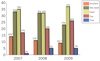
The majority of dealers and integrators who participated in SDM’s 2009 Forecast Study believe the access control market this year will range from “good” to “fair.” A lesser percentage of respondents than one year ago feel confident about the industry’s ability to perform “very good” or “excellently.”
THE PROFIT PICTURE
Access control is the third thing customers think about when considering a security system, says Bob Holland, marketing manager for SecuraKey, a Chatsworth, Calif.-based manufacturer of access control equipment. To most customers, he says, “access is not quite as critical as cameras and alarms — in today’s economy, it’s something they can put off upgrading or expanding.”

Most security dealer/ integrators SDM spoke with say their average revenue per job has remained stable, but some companies have seen a slight decline. “Customers are using fewer readers, so the revenue per job is down a bit,” admits Chris Diguardi, president of Denver-based dealer/integrator Key-Rite Security.


A few integrators, however, have noticed the opposite occur. Tri-Electronics, Hammond, Ind., says its average revenue per job has increased, a fact that Tri-Electronics president Tom Donovan attributes to a change in the company’s customer mix. The type of company that would buy a smaller system is simply not buying, Donovan relates.


Margins are remaining stable compared with last year, most integrators say. But a few businesses have observed a drop in margins, and others expect to see a drop if the downturn continues. “The odds are we’re looking at smaller margins because customers are requiring more concessions,” comments Keith Cahalen, manager of business solutions for San Jose, Calif.-based integrator, RFI Communications and Security.


“Our margins may be going down a hair because we have more competition coming in,” notes Barry Komisar, president and chief executive officer (CEO) of Vision Southeast, based in Birmingham, Ala. “We’re trying to put best practices in place to offset that and keep the same margin.”


Alan Kruglak, senior vice president of Germantown, Md.-based integrator Genesis Security Systems, has experienced a decline in average-revenue-per-job and in average margin as a result of increased competition. “With the general contraction of the market, any time projects come up now, everyone is bidding on them,” Kruglak says. “Margins have dropped and prices have dropped. It’s a very crowded market because there are fewer new projects.”


The poor economy also is causing projects to move more slowly, sources say. “The credit crunch has delayed the execution of projects,” comments Scott Mordell, executive vice president of The Chamberlain Group, an Elmhurst, Ill.-based access control equipment supplier. “It’s delaying the closing of the deal. You can have an order, but if the customer never installs it because they don’t have the cash, that’s not so great.”


Cahalen also has seen customers delay and scale back on projects. Some customers have repeatedly pushed back timelines, he says. But it could be worse. “The one thing that’s different in this economy compared to the early 2000s or mid-1990s is that then customers would say, ‘We won’t do the project,’” recalls Cahalen. “In this economy, it’s much more common that customers are continuing to push jobs forward.”
Looking for quick answers on security topics? Try Ask SDM, our new smart AI search tool. Ask SDM →


Perceptions of the health of the access control market vary by geographic region. “We’re in much better shape than companies on the coasts,” Donovan notes. Noting that many firms on the East and West Coasts are publicly held, Donovan says, “Most of the companies we deal with aren’t public, so they’re not subject to stock market ups and downs.”

OPPORTUNITIES
Despite these challenges, dealers and integrators continue to find opportunities in today’s access control market. Certain vertical markets continue to be strong, they say.

RS2 Technologies, a Munster, Ind.-based solutions provider, is hoping to make significant sales to the educational markets with a wireless, stand-alone card reader that resulted from the company’s partnership with Swedish firm, Assa Abloy. “It will allow us to deploy to doors that were considered undeployable,” explains Gary Staley, national sales director and partner for RS2 Technologies. Colleges and universities have become particularly security-conscious as a result of several high-profile incidents, Staley says, adding that one potential client is considering adding access control readers to 5,000 dormitory room doors.


The government market also continues to be a strong one for access control, sources say. Tom Echols, vice president of access system sales for Louisville, Ky.-based equipment supplier Honeywell, points to the example of a first responder program that his company is involved with. That project uses access control technology to verify the identity of emergency personnel.


Echols adds that, “the biotechnology, pharmaceutical and health care markets still are seeing pretty good growth.”


“The stimulus package has earmarks targeting those specific verticals; all of them will involve and trickle down into security,” describes Sean Leonard, director of access system marketing for Honeywell, in a reference to the stimulus bill that was signed into law earlier this year.


Opportunities in some vertical markets are being driven by regulatory and legislative mandates.


“Hospitals are spending a ton of money to comply with HIPAA,” comments Kruglak, referring to the Health Insurance Portability and Accountability Act which, among other things, requires hospitals to keep track of who enters and exits certain areas and when. “We have hospitals with budgets of $100,000 to $200,000 a year for this, and these are not humungous hospitals.”


Although HIPAA requirements are not new, they continue to drive investment, Cahalen notes. After initially using a manual system to comply with regulations, some hospitals are seeing the drawbacks to that approach and are now seeking a higher-tech solution — while still trying to keep costs to a minimum, he says.


Meanwhile, airports and seaports are beginning to comply with requirements of the federal Transportation Worker Identification Credential (TWIC) program. But as Cahalen notes, “They’re struggling with how to implement it given the fact that they sometimes barely have funding.”


Another credential program for government workers is Federal Information Processing Standard (FIPS) 201, which was created in response to Homeland Security Presidential Directive (HSPD) 12. The FIPS 201 standard defines a common credential that can be used by multiple federal agencies to control physical access as well as logical access to computer systems.


FIPS 201 compliance is largely voluntary and some integrators have been disappointed by its progress. But Martin Janiak, president of Veridt, a Middleton, Wis.-based developer of smart card technology, sees the standard gaining momentum. “It’s starting to be used not just for logical security but for physical access as well, and there will be more activity as we move through 2009,” predicts Janiak, whose company has partnered with access control equipment provider Cypress Computer Systems of Lapeer, Mich., on products targeting the government markets.


Energy companies have their own security requirements to address. The Federal Energy Regulatory Council (FERC) and Nuclear Energy Regulatory Council (NERC) have imposed security requirements on utility companies that include an access control component. Brian Bergstrom, president of integrator SecureNet, in Carrollton, Texas, believes those requirements will present an opportunity for his company.


Bergstrom, one of the most optimistic integrators among those interviewed, outlines several other opportunities that he sees involving access control — as long as the integrator can demonstrate a payback to the customer. “Access control locks and unlocks doors, but there’s so much more it can do today,” Bergstrom comments.


He cites the example of a kiosk system that SecureNet created for one client to allow employees to use their access control credential to determine how many vacation days they had left, saving between $200,000 and $300,000 annually by eliminating the need for human resources personnel to answer those questions.


“Another client was spending $2 million a year resetting employee passwords,” he says. “We were able to get them a common credential and develop a process to save them about $1 million.”


And although several integrators note that the decline in new construction will force installing companies to focus more on upgrades to existing systems, Bergstrom still sees opportunities for new system sales. “Even in bad times people are moving,” he says. “When corporations downsize, there’s always a need for access control.”


Bergstrom even sees upside in customers’ tendency to prioritize video security during an economic downturn. “Integration between video and access control is pulling a lot of access control business, because people like being able to control both through one interface,” he says.
THE ROLE OF TECHNOLOGY
The poor economy is fueling strong growth for companies that offer access control on a hosted or managed service basis. That approach minimizes the amount and complexity of equipment at the customer site, relying instead on a wide area network connection to a secure centralized system operated by a supplier such as Honeywell or Bethesda, Md.-based Brivo Systems. In comparison with traditional alternatives, clients have lower upfront costs, instead paying a monthly service fee.

“Any analysis from The Economist to Information Week is forecasting strong growth for software-as-a-service simply because people want to avoid capital expenditures,” comments Steve Van Till, president and CEO of Brivo Systems.


Brivo Systems experienced 100 percent growth last year and expects to see the same level of growth again for 2009. The company also has seen its average revenue-per-customer increase steadily in recent years. “The revenue-per-customer is going up because we shifted from being a niche player serving smaller companies to being in Fortune 500 companies,” Van Till explains.


The move to managed services involves a mind shift for integrators, Echols believes. To address that, Honeywell has created what Echols calls a “playbook” or “comprehensive sales training tool” which, he says, explains “why you would want to do this, how you do it and how you execute from a sales perspective.”


Hosted access control was not an option until networked systems started to become mainstream — and the move toward more networked systems is creating other opportunities, as well — along with some challenges. Because networked systems minimize the amount of wiring that installers must run, they may be less expensive than traditional offerings. And as Leonard notes, the next advance in network technology could be heavier use of power over Ethernet technology, which could deliver additional cost savings by reducing the cost of delivering power to networked devices. But most sources interviewed for this article do not expect to see revenues drop as a result of these information technology (IT)-related advances. Instead, they say, clients will use the savings to purchase more extensive systems.


“Clients often will secure more doors the less expensive it gets,” Bergstrom says.


The move toward more networked systems may cause companies to have higher overhead, however. “Network technology is making us change our business model,” Komisar comments. “We have Cisco-trained and certified people on staff. If we didn’t have strong IT, we wouldn’t be growing.”


And as more and more client decision-makers come from the IT side, integrators may see declining margins on equipment, because that’s what the IT community traditionally has expected. The solution, Bergstrom says, will be to sell more services, which have a higher margin.


As integrators increasingly find themselves interfacing with a client’s IT personnel, there’s also an added benefit, Donovan notes. “We have much fewer service calls because customers are more educated than they were 10 years ago,” he says.
SIDEBAR: Open Architecture Initiatives Could Create New Opportunities
Security dealers and systems integrators could see bottom-line gains as a result of a security industry initiative to create open architecture standards for access control. The Security Industry Association (SIA) is working to develop two standards with the goal of achieving a higher level of interoperability between equipment from different manufacturers.

As Hunter Knight, a SIA board member and committee chairman explains, both standards are being developed under the guidelines of the American National Standards Institute (ANSI) and will be recog-nized by ANSI. “One standard deals with how a device controls a door,” Knight comments. “The other is an access point controller. We’re hopeful that we can go out for publication review in the next three to six months.” Within SIA, the standards fall under the Open System Integration Performance Standards (OSIPS) program.


“Surveys show that most users of these types of products would like to have systems built on best of breed,” Knight says. The new standards should help achieve that goal by enabling end users to pick and choose among manufacturers for different elements of a system.


In addition, the new standards could give integrators more flexibility in competitive-bid situations. Currently integrators may be barred from bidding on certain projects because the paperwork specifies a particular make and model of equipment, available only through limited distribution channels. But the new standards should enhance the installing companies’ ability to substitute other models that provide the same functionality, Knight predicts.
SIDEBAR: SDM Asked: “What Is the Greatest Challenge in the Access Control Market and How Are You Addressing It?â€
“Connecting the need with what technology can do. It’s about addressing end user needs with a decent value proposition. It needs to be urgent to the end user to make the sale, especially in a retrofit situation.” — Scott Mordell, The Chamberlain Group


“The economy and consciousness of end users about spending money. We’re working harder and smarter. We tout ourselves as a provider of integrated systems.” — Barry Komisar, Vision Southeast


“People are being very competitive on price. We try to sell on service and reputation and we’ve been successful with it.” — Chris Diguardi, Key-Rite Security


“Trained people and competition. We’re spending more money on training.” — Brian Bergstrom, SecureNet


“Locksmiths getting into the access control business. We address it through education. We’re not the cheapest but our track record speaks for itself. We’re selling us, not the product.” — Tom Donovan, Tri-Electronics


“The ability to keep the pace. We’re very actively working on different solutions. We address that by maintaining priorities and keeping the focus on them.” — Martin Janiak, Veridt


“People identify us with barium ferrite, but we also have proximity and the latest contactless technology. Our biggest challenge is to remind customers that we have all these other options. That’s what we’ll be focusing on this year — getting feet on the street and training and more webinars.” — Bob Holland, Secura Key
Looking for a reprint of this article?
From high-res PDFs to custom plaques, order your copy today!