How to Buy: Cards & Readers
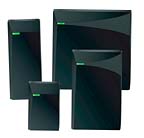
“I see this getting much bigger,†says George Naspo, executive president of Aerwav Integration Services, New York, which does 15-20 percent of its business in access control. From high schools to hospitals, offices to universities, more facilities are considering and installing access control.
As the market grows, so does the variety of cards and readers available. Choosing the best product can be challenging.
The first step to buying a card reader system is understanding the customer’s specific needs.
“The first consideration is, What are you trying to accomplish?†says Jesse Abbott, president of Advance Technology Inc., Scarborough, Maine.
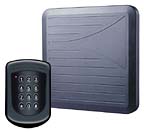
A larger customer, such as a hospital or a high school, may need a system with more nuances. While a hospital emergency room may be open at all hours of the day, the prenatal wing may be closed after 5 p.m. and the burn ward may be only accessible to a small number of doctors and nurses to prevent patient infection.
“Figure out what you want and find a partner who fits what you’re trying to accomplish,†Abbott says.
Card Types and Suitable Applications
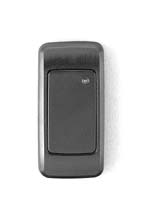
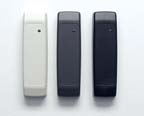
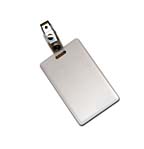
The next step is choosing a type of technology. Proximity cards are currently the most popular. The cards are contactless, meaning that they don’t have to touch the reader in order to communicate. They send an ID number to the reader through radio signal, typically at 125 kHz. The user simply holds or waves the card in front of the reader, “contact†is made, and access is granted. Because they don’t touch the reader, the wear and tear on the cards is low and the cards have a long product life, even with frequent use.But proximity cards don’t hold much information, usually 32-128 bits. This is enough space for a simple ID number to permit or restrict access, but not enough space to add more information for more complex access control. For customers who want to secure an office building or a warehouse, a proximity card is a good choice because of the system’s durability, ease of use and relatively low cost of card replacement.
Looking for quick answers on security topics? Try Ask SDM, our new smart AI search tool. Ask SDM →
Another type of technology that is becoming more popular is the smart card. Originally, all smart cards were built with a magnetic stripe, similar to a credit card. Because the reader makes physical contact with the card, it can use a more powerful microprocessor and share more information – like more powerful algorithms and longer access codes – with the reader. This is important for customers who need a higher level of security.
Contact smart card technology is also popular with college campuses. Because it can hold more information than a proximity card, the smart card gives customers the ability to tie many different functions to the same card. Many campuses want to give students one card to hold vending machine money, laundry money, bookstore money, printer and copier money, dorm access, and library withdrawals. However, contact smart cards wear out more quickly than proximity cards because frequent contact with the reader creates more wear and tear on the card.
The solution is contactless smart cards. Originally developed in Europe to hold money for mass transit fares, the contactless smart card is similar to the proximity card because it doesn’t need to touch the reader to communicate. But the contactless smart card operates at a higher frequency, typically 13.54 MHz, than the proximity card, allowing it to send more data at quicker speeds. The contactless smart cards can hold anywhere from 256 to 4000 bytes of information.
Like the contact smart card, the contactless smart card can hold longer access codes for increased security and also incorporate additional data, such as vending cash and transit money.
Though a contactless smart card carries a higher price tag than contact cards, individual cards have longer lives. For a customer who wants a higher level of security – such as a laboratory or bank – or wants to put many different functions on the same card – such as an office with a vending machine – contactless technology may be a good choice, especially if the customer is willing to pay a higher price for a longer-lasting card.
Long-term View
After you select a type of technology for your application, durability and simplicity are key issues in choosing which system to purchase, because cards and readers are built for daily use by many different people.The right system will be simple to install, program, and repair. Ask to see a demonstration of an installation. If the process seems too long or complicated, it probably is.
Look for a reader that can be mounted on any surface without harming its ability to communicate with a card. If the necessary wiring is already included in the package with the reader, it will make installation go more smoothly. Reading installation instruction manuals, some of which are available on manufacturer’s Web sites, can give you a familiarity with the product and a good idea of how easy or difficult it is to install.
A product with an easy-to-remove housing, clearly marked wiring, and a clear, user-friendly instruction manual will facilitate smooth maintenance.
“[Simplicity of design] doesn’t reflect the sophistication of the system. It reflects good, smart engineers,†Cardaci says.
Another important factor is expandability. If a customer only needs a system to open a building with three doors and doesn’t plan to ever add another building, then a simple system will work fine. But many will want their access control system to grow with them.
“I would not put a low-end system in a university right now,†Naspo says. “In two years, we would have to take it out.â€
Assessing how well a manufacturer provides technical support may be one of the most difficult things to do before making a purchase.Instead of learning the hard way, Naspo recommends calling the technical support number with a possible problem. If the support is satisfactory, then you can add that manufacturer to your shopping list of access control systems.
Sidebar
Lasting Value
Durability is key for an access control system that serves many different users all day long. Walter Meyer, president of Meyer Smith Inc., Houston, Texas, looks at durability as absolutely essential. His company provides security for apartment building parking lots in Houston, where the scorching heat and humidity take a serious toll on his access cards and card readers.“Everything that can humanly go wrong, we’ve seen it. It’s been a long and painful road,†he said of the company’s 20 years of trying out different kinds of access control technology. “It’s been a lot of trial and error.â€
After years of seeing units hit by cars, vandalized or simply used carelessly, he’s learned to invest in a durable system.
Jesse Abbott, president of Advance Technology Inc., Scarborough, Maine, says he asks manufacturers to supply installer references before purchasing.
“Ask them for 10 or 15 references and call down the list. Call the middle, not the beginning. Call four or five, not one or two,†he says.
Looking for a reprint of this article?
From high-res PDFs to custom plaques, order your copy today!