SDMmag logo
search
Go to Ask SDM AI
cart
facebook twitter linkedin youtube
  • Sign In
  • Create Account
  • Sign Out
  • My Account
SDMmag logo
  • NEWS
  • PRODUCTS
  • TOPICS
    • Access Control & Identification
    • Integration & Network Solutions
    • Life Safety & Fire Alarm
    • Monitoring
    • Smart Home
    • Trends & Industry Issues
    • Video Solutions
  • COLUMNS
    • Digital Shuffle
    • Editor's Angle
    • Insider News & Business
    • Integration Spotlight
    • Marketing Madmen
    • Security & the Law
    • Security Comings & Goings
    • Security Networkings
    • Technology @ Work
    • Technology Solutions & Skills
    • SIA Waypoints
    • Cybersecurity Chronicle
  • EXCLUSIVES
    • Annual Industry Forecast
    • Dealer of the Year
    • Project of the Year
    • SDM 100
    • State of the Market Series
    • Systems Integrator of the Year
    • Top Systems Integrator Report
    • TMA Excellence Awards
  • BLOG
  • MEDIA
    • Videos
    • Podcasts
    • Polls
    • White Papers
  • EVENTS
    • Industry Calendar
    • Webinars
  • MORE
    • Classified Ads
    • Newsletters
    • SDM Store
    • State of Security eBook
    • Sponsored Insights
  • BUYERS GUIDE
    • Buyers Guide
    • Take a Tour
  • EMAG
    • eMagazine
    • Archive Issues
    • Monitoring Today
    • Advertise
  • SIGN UP!
Security & the Law

One Case Showcases Two Common Issues

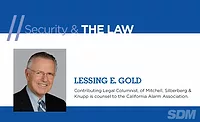
By Lessing E. Gold, Contributing writer
January 17, 2012

Two issues came to the forefront of a case in New York: the definition of gross negligence and contract interpretation. An insurance company filed suit against an alarm company to recover insurance payments made to the insured following a fire at the insured’s premises, a restaurant. The alarm company filed a motion to dismiss.

The alarm company agreed to sell to the insured a fire alarm system and install it at the restaurant. The alarm company agreed to “make every reasonable effort” to notify the police and fire department upon receiving a signal. The alarm company allegedly made inspections and repairs to the alarm system after the installation.

A fire broke out and the alarm system failed to detect the fire in its early stages due to alleged “defects.” Weeks prior to the fire, the alarm company had repaired the alarm system and installed new parts, and indicated to the insured that the system was working. The fire caused significant damage to the restaurant, and the insurance company paid its insured to cover the losses.

The insurance company’s complaint asserted claims for negligence, breach of contract and “gross negligence” of the alarm company in its failure to properly install, test, monitor and repair the alarm system. The contract between the insured restaurant and the alarm company contained a disclaimer of warranty, an exculpatory clause and a limitation of liability provision.

The alarm company argued that the agreement’s exculpatory clause barred any liability resulting from the fire.

In discussing the motion to dismiss, the court pointed out that whether the exculpatory clause barred the insurance company’s claims was a matter of contract interpretation.

The insurance company claimed that the contract governed only the installation and monitoring, and did not apply to claims relating to the alarm company’s other obligations; to install, test, maintain and repair the alarm system itself. The court pointed out that the contract could not be read so narrowly. The paragraphs limiting the alarm company’s liability expressly encompassed the alarm system as a whole. The contract also stated that the alarm company was absolved from liability or loss or damage resulting from “any cause whatsoever.”

Looking for quick answers on security topics? Try Ask SDM, our new smart AI search tool. Ask SDM →

Most importantly, the court held that the rule was well settled in New York that the court could not, under the guise of interpretation, make a new contract for the parties or change the words of a written contract so as to make it express the real intention of the parties if to do so would contradict the clearly expressed language of the contract. The court concerned itself with what the parties intended, but only to the extent that they evidenced what they intended by what they wrote.

With reference to the insurance company’s claim for gross negligence, the court pointed out that a burglar alarm company’s failure to wire its skylight, “while perhaps suggestive of negligence or even ‘gross negligence’ as used elsewhere, does not demonstrate recklessness necessary to cancel an agreement to absolve the alarm company.”

In this case, the complaint alleged no more than the alarm company’s failure to properly install, monitor, adjust and repair the alarm system, coupled with a broad conclusory statement that the alarm company was “reckless and/or grossly negligent.” Such an allegation was deemed insufficient to state a cause of action for gross negligence when there was not a single fact to suggest why the alarm company was grossly negligent.

Between the contract interpretation and the insurance company’s failure to plausibly allege gross negligence on the alarm company’s part (and other factors), the alarm company’s motion to dismiss was granted in its entirety.


Readers Ask

Q: We recently received a phone call from an irate customer, as the customer had a fire and the alarm system didn’t work. The reason that the system did not work was because the phone line was down, unknown to us and apparently unknown to the customer. The customer advised us that they contacted the phone company and the phone company said they would be out to repair it and apparently did not. My question is: What is the responsibility of the telephone company?

A: The phone companies in each state are governed by a state tariff. It is my understanding that although the tariffs may vary, the telephone companies are shielded from liability other than an adjustment for rates when the phone system is down. I am not certain about the tariff in your state, but I would assume that the phone company has no liability and if the subscriber pursues the claim against you, your contract will protect you from any claims for negligence or breach of contract.

KEYWORDS: gross negligence

Share This Story

Looking for a reprint of this article?
From high-res PDFs to custom plaques, order your copy today!


Lessing E. Gold of Mitchell, Silberberg & Knupp is counsel to the California Alarm Association and a contributing legal columnist. He can be reached at sdm@bnpmedia.com.

Recommended Content

JOIN TODAY
to unlock your recommendations.

Already have an account? Sign In

  • SDM 100

    SDM 100: Top 100 Security Dealers of 2026

    The top 100 security dealers navigated a complex...
    SDM 100 Report
    By: Karyn Hodgson
  • Security camera

    State of the Market: Video Surveillance

    As video surveillance shifts from siloed systems to...
    Exclusives
    By: Brianna Wilson
  • 2026 Industry Forecast

    SDM 2026 INDUSTRY FORECAST

    Rapid technology advances meet shifting economic...
    Exclusives
    By: Karyn Hodgson
Manage My Account
  • SDM Newsletters
  • Online Registration
  • eMagazine Subscriptions
  • Subscription Customer Service
  • Manage My Preferences

More Videos

Sponsored Content

Sponsored Content is a special paid section where industry companies provide high quality, objective, non-commercial content around topics of interest to the SDM audience. All Sponsored Content is supplied by the advertising company and any opinions expressed in this article are those of the author and not necessarily reflect the views of SDM or its parent company, BNP Media. Interested in participating in our Sponsored Content section? Contact your local rep!

close
  • Doctor examining child patient with mother present in medical clinic
    Sponsored byHID

    The Human Side of Hospital Security: How Modern Visitor Management Protects People First

Popular Stories

Video surveillance camera

Why Video Health Monitoring Is a ‘No Brainer’

ESA Board of Directors Q2 26 Elections

Electronic Security Association Announces 2026 Board of Directors Election Results

TMA & SDM Logos

Becklar, Elite & Puget Win 2026 TMA/SDM Monitoring Center Excellence Awards

SDM Dealer of the Year 2026 Promotion

Poll

What’s the most promising trend in the industry?

What’s the most promising trend in the industry?
View Results Poll Archive

Products

Physical Security Assessment Handbook An Insider’s Guide to Securing a Business

Physical Security Assessment Handbook An Insider’s Guide to Securing a Business

See More Products
SDM 100 2026 Rankings

Related Articles

  • Numerous Issues, 1 Case

    See More
  • Security  Law 2019

    What Is Illegal Search & Seizure in Dog Shooting Case

    See More
  • Security  Law 2019

    Can Insurance Company Sue Alarm Company in Subrogation Case?

    See More

Related Products

See More Products
  • GSEC.jpg

    GSEC GIAC Security Essentials Certification All-In-One Exam Guide, 2E

  • CASP.jpg

    CASP+ CompTIA Advanced Security Practitioner Certification All-In-One Exam Guide...

  • Physical Layer Security in Wireless Communications

See More Products

Related Directories

  • American Two-Way

    Backed by more than four decades of experience, American Two-Way is a trusted leader in wholesale monitoring, supporting security dealers and central stations nationwide. We deliver reliable, fast, and innovative solutions, including hybrid monitoring, security, fire, video, IoT, PERS, and mPERS, with support in over 70 languages. UL Listed: S6037-UUFX, BP6368-CVSU
×

Be in the forefront of security intelligence when you receive SDM.

Join over 10,000+ professionals when you subscribe today.

SIGN UP TODAY!
  • RESOURCES
    • Advertise
    • Contact Us
    • Directories
    • Store
    • Want More
  • SIGN UP TODAY
    • Create Account
    • eMagazine
    • Newsletter
    • Customer Service
    • Manage Preferences
  • SERVICES
    • Marketing Services
    • Reprints
    • Market Research
    • List Rental
    • Survey/Respondent Access
  • STAY CONNECTED
    • LinkedIn
    • Facebook
    • YouTube
    • X (Twitter)
  • PRIVACY
    • PRIVACY POLICY
    • TERMS & CONDITIONS
    • DO NOT SELL MY PERSONAL INFORMATION
    • PRIVACY REQUEST
    • ACCESSIBILITY

Copyright ©2026. All Rights Reserved BNP Media, Inc. and BNP Media II, LLC.

Design, CMS, Hosting & Web Development :: ePublishing