Fire Alarm Monitoring Technology

- A digital alarm communicator transmitter (DACT) shall seize the telephone line when it is required to transmit a signal.
a. True
b. False
- A fire alarm system utilizing a DACT shall employ one telephone line and a:
a. second telephone line.
b. cellular telephone connection.
c. approved radio system.
d. Any of the above
e. None of the above
- What is the minimum number of telephone lines that a digital alarm communicator receiver (DACR) shall have?
a. 1
b. 2
c. 3
d. 4
e. 5
- What is the time interval in hours that a DACT shall transmit a signal to the DACR?
a. 1
b. 12
c. 24
d. 36
e. 48
- A DACT shall be programmed to call a second DACR telephone number if unable to connect to the first number.
a. True
b. False
- Which signal type has the highest priority?
a. Trouble
b. Supervisory
c. Alarm
d. They all have the same priority.
- You cannot use call forwarding for DACR telephone lines.
a. True
b. False
- Ground start telephone lines are acceptable as the primary telephone line for DACT use.
a. True
b. False
- What is the maximum time, in seconds, between initiating of an alarm at the protected premises and display at the supervising office?
a. 30
b. 60
c. 90
d. 120
e. 200
- There is no limit to the number of DACTs that can communicate to a single DACR.
a. True
b. False
- A single spare DACR can be used as backup to how many active DACRs?
a. 1
b. 2
c. 3
d. 4
e. 5
- You cannot use WATS or long distance lines for DACR telephone lines.
a. True
b. False
- The DACR shall supervise the incoming telephone lines for loss of voltage.
a. True
b. False
- The DACT shall supervise both telephone lines that it is utilizing for transmission of signals to the remote monitoring office.
a. True
b. False
- How many DACTs can be connected to a DACR that uses two parallel processing telephone lines in a single hunt group?
a. 50
b. 100
c. 500
d. 1000
e. 5000
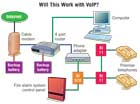
What’s Wrong with This?
Wally `Larman installed a fire alarm system for a commercial customer who had a broadband Internet connection with a voice over Internet protocol (VoIP) telephone line. He verified that the DACT he used could transmit signals using a VoIP telephone line, carefully installed an RJ-31X jack to ensure line seizure, connected the FACP as shown in this diagram, and tested the system. Everything seemed to work OK, but when the local AHJ inspected the installation, he was not satisfied. Can you see what Wally did wrong and what he must do to correct the problem?5-Minute Tech Quiz Answers
- a
- d — All DACTs require a second means of communication to ensure that signals can be transmitted to the monitoring office.
- b
- c — NFPA requires that a DACT transmit a test signal to the monitoring office every 24 hours to ensure operation of the system. If an automation system is employed at the monitoring office, any successful signal transmission during the 24-hour period can fulfill this requirement.
- a
- c — Alarm signals always have priority over other types of signals.
- b
- b — Ground start telephone lines are not acceptable because they cannot be properly supervised.
- c
- b — The maximum number of DACTs that can be connected depends upon the number of telephone lines connected to the DACR and the types of communicators connected to the DACR.
- e
- b
- a — Any failure of an incoming DACR telephone line shall be annunciated visually and audibly at the monitoring office.
- a
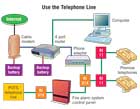
Answer to: What's Wrong with This?
Wally’s problem is caused by using only one telephone line as a communication path to the remote monitoring office. Wally should connect a POTS line using the public switched telephone network as the primary telephone line and connect the VoIP telephone line as the second communication path as shown in this diagram. As an alternative, Wally may be able to install an approved Internet communication module that can be fully supervised and may not require any telephone lines for communication. Wally should check with the manufacturer of the FACP and the local AHJ to determine if this option is viable. Whenever using VoIP lines, you should verify that the DACT is capable of proper communication and that sufficient battery standby is installed to meet the requirements of the system and the AHJ.
Looking for a reprint of this article?
From high-res PDFs to custom plaques, order your copy today!