Life After DACT
New installations of DACT are in steady decline. What does this mean for the industry? Collaboration with cable, Internet and the FCC is in order.
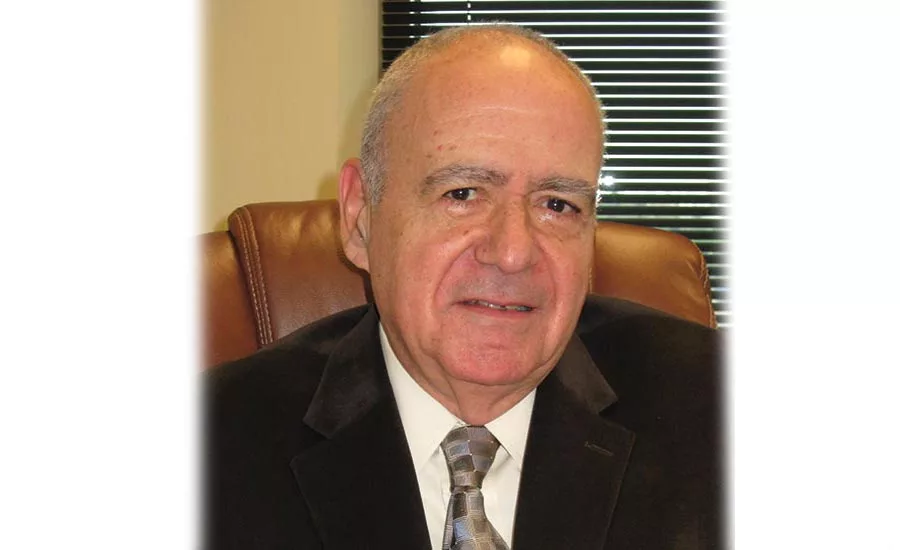
Lou Fiore, principal, LTFiore Inc. stresses the need for the industry to work closely with carriers, cable companies and others, to affirm a protocol (or standard) that once and for all will allow DACTs to transmit reliable information. PHOTO COURTESY OF CSAA
Is the DACT, or “dialer” as we know it, it in its death throes or is there to be new life for it? DACT is an acronym for the Digital Alarm Communicator Transmitter, given to the technology by the NFPA Supervising Station Fire Alarm Systems Technical Committee of NFPA 72. That committee first gave the nod to the DACT with the 1989 issue of that documents forerunner, NFPA 71.
Where are we now? The most recent survey shows the overall use of DACT is at 58 percent, down from 65 percent the previous year and has steadily declined from 84 percent in 2012. Telling is that new installations of DACT are now at 38 percent and are on a steady decline. This drop combined with other causes of attrition lead to the decline in overall use of DACT. There has been a flight mainly to wireless as a reasonable alternative. Wireless (cellular and private radio) as a sole means of communications in new installations is up to 58 percent.
Among the causes is the discontinuance of the Public Switched Telephone Network (PSTN), also known as Plain Old Telephone Service (POTS). The copper pair with power originating at the telephone central office is a thing of the past. But for many reasons it has become unsustainable by the telephone companies. The telephone companies and their cable competitors have changed over to packetized digital versions (Voice over Internet Protocol or VoIP) over cable, fiber and cellular to transmit telephone calls. Except for those carriers that have signed on to the tenets of MFVN (described below), there has been little regard for the undistorted transmission of DACT signals.
A managed facilities-based voice network, or MFVN, is a physical network from a voice service provider such as a cable company or carrier that delivers traditional telephone service. MFVNs are interconnected with the public switched telephone network (PSTN) and provide dial tone to end users. MFVN providers include cable operators and telephone companies, but do not include so called “over the top” Internet-based providers such as Vonage, Magic Jack, and others that use the public Internet to carry calls.
In many cases these initial service offerings had little regard for the type of tone signaling DACT used. Thus, many DACT signals failed to communicate to central station receivers. To complicate this, it is difficult to track when a customer decides to switch service from POTS to VoIP. A system might communicate today but doesn’t tomorrow.
The alarm industry worked out the MFVN protocol with the cable operators. This serves all well when signals propagate in a restricted service area totally under the control of the MFVN providers. However, when signal must traverse greater distances, for example cross country, as is very often the case today, and traffic is handed off to a “least cost routing provider,” quality degrades, often significantly. Part of the FCC rules should be that the carriers require compliance from their interexchange (least cost routing) providers.
Recently the FCC released an order on July 15, 2016 called “In the Matter of Technology Transitions” (You can download the full version by an Internet search of “FCC 90-10”).
Looking for quick answers on security topics? Try Ask SDM, our new smart AI search tool. Ask SDM →
The introduction of the FCC order states: “In recent years, the Commission has focused closely on the ongoing transitions from networks based on time-division multiplexed (TDM) circuit-switched voice services running on copper loops to all-Internet Protocol (IP) multi-media networks using copper, co-axial cable, wireless, and/or fiber as physical infrastructure.”
In the order the FCC puts forth the concept of “adequate replacement,” basically leaving it to the carriers to assume compliance. The FCC adequate replacement concept has three prongs:
-
Network Infrastructure and Service Quality, addressing reliability and availability;
-
Access to Critical Applications and Functionalities, such as 911; and
-
Interoperability with Key Applications and Functionalities, specifically mentioning security systems.
AICC and ADT are quoted in the order as contributors.
It is now up to our industry to once again collaborate with the carriers, cable companies and others, to affirm a protocol (or standard) that once and for all will allow DACTs to transmit reliable information. The inter-carrier dilemma can be solved via a number of proposed solutions.
If DACT cannot be considered reliable, its “sunset” in the NFPA Fire Alarm Code and in UL standards is inevitable, leaving many alarm systems subject to changing over to other transmission methods.
We are in this dilemma because current formats were designed under the cover of the very reliable public switched telephone network. This is not criticism. There was certainly no way to predict what the future would bring. In this vein, another perhaps out-of-the-box solution is to create one or more new formats that are immune to the possible distortion created by the IP transition. Of course, considering how ubiquitous current formats are, any changeover to a new format would be a monumental effort. Perhaps it would only be viable for new installations.
I am certain that a reasonable accommodation, such as MFVN, will be struck with all the carriers. It’s their handoff to interexchange carriers that remains problematical. It’s the “works sometimes and not at other times” scenario that has caused the decline of DACT usage.
DACT is certainly a low cost, easy to implement communication technology that has endured from about 1980. It is suited for lower security installations and, with adequate safeguards such as redundancy, can be used for commercial fire. It certainly can be used as a backup transmission method.
So can there be new life for the DACT? Time will tell.
Looking for a reprint of this article?
From high-res PDFs to custom plaques, order your copy today!