Inside Genetec’s Global Press Summit’26: Convergence, Collaboration & AI Conduct
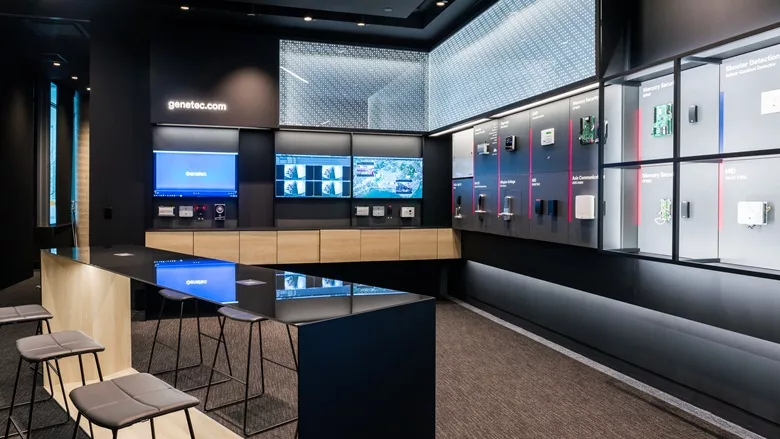
Genetec leaders presented updates on its products.

Genetec invited journalists around the globe to its Montreal office in February 2026.

Genetec invited journalists to visit two customer sites.
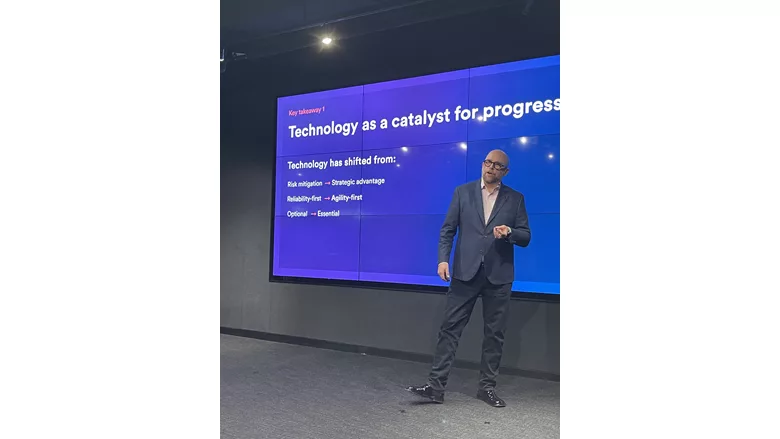
Andrew Elvish, vice president, marketing, Genetec, delivered a deep-dive presentation on Genetec’s Global State of Security 2026 report.
At Genetec’s Global Press Summit ’26, one theme echoed across keynotes, panels and hallway conversations: security is evolving far beyond its traditional boundaries. What was once a siloed function is rapidly becoming an enterprise-wide strategy shaped by convergence, collaboration and technology-driven transformation.
The event opened with a deep dive by Andrew Elvish, vice president, marketing, Genetec, into Genetec’s Global State of Security 2026 report, which drew insights from 7,300 respondents worldwide. The findings revealed a rapidly shifting industry landscape shaped by hybrid deployment models, cloud adoption and AI experimentation, but also a growing realization that security’s true value lies in how it integrates across the enterprise.
Like Elvish, I’m going to start with the ‘so what?’ As the summit unfolded, four major themes emerged: the rise of flexible security architectures, collaboration as a driver of innovation, partnerships as a foundation for long-term success and technology’s role as both an opportunity and a responsibility.
- Security is becoming a mixed pot of flexible solutions. Unification, convergence and hybrids trends are continuously contributing to the need for open architectures and flexible solutions.
- Collaboration is an innovation driver. This doesn’t just mean choosing technology together; it means sharing best practices and adapting to work together. “This drives organizational transformation,” Elvish said. “Success is going to come from this collaboration. We, as people who are in the communication space, have to encourage that and find those bright spots where that collaboration can happen.”
- Partnerships are a measure of meaningful change. End users want to work with partners for the long term. Companies that work together to build resilient and open systems will become the ideal for end users and channel partners who are majorly prioritizing these values.
- Technology is a catalyst for progress. The future belongs to those who use technology to connect and build smart solutions that focus on outcomes that matter to the businesses that use them.
Security Is Becoming a Mixed Pot of Flexible Solutions
One of the most prominent themes from the summit was the rapid evolution of security architectures. Increasingly, organizations are embracing a blend of unified, converged and hybrid solutions that reflect broader enterprise IT strategies.
The divide between physical security and IT continues to shape this transformation. “This is a period of huge disruption,” Elvish said. “The technology platforms are changing radically. How people own those technology platforms are changing.”
Over the past five or so years, security has shifted from an operational expense to a strategic enterprise system. Organizations are increasingly treating physical security platforms as systems of record — technology investments that deliver business intelligence rather than simply mitigating risk.
Looking for quick answers on security topics? Try Ask SDM, our new smart AI search tool. Ask SDM →
At the same time, hybrid deployments are becoming the norm. Organizations want the benefits of cloud innovation without sacrificing control. “Everybody is consistently putting an emphasis on hybrid systems. People want their cake and they want to eat it too,” Elvish said.
This growing preference reflects real-world operational demands. Many enterprises want access to firmware updates, scalability and continuous innovation but still require localized data control. “People want the innovation,” Elvish said. “They want the firmware updates. They want the latest release. They want to forget about doing these heroic upgrades.”
The summit underscored that hybrid does not mean temporary. Ease of deployment, scalability and lifecycle management are consistently driving hybrid adoption. “Hybrid cloud continues to get more attractive year over year as systems age out,” Elvish said. “I think this will be a gradual thing. There is not going to be an overnight switch to full cloud deployments or even hybrid cloud deployments. There will always be a need for an on-prem solution because that’s just the reality of the wild and wonderful world of businesses we deal with.”
Collaboration Is an Innovation Driver
As security becomes more embedded within business operations, collaboration is emerging as a powerful engine for innovation.
According to Genetec’s research, many physical security professionals are already expanding their reach across the enterprise. Twenty-five percent are collaborating with other departments beyond traditional security use cases. “They are not just going and doing retrospectives on video surveillance footage. They’re not just doing access control checks. They are collaborating with groups like human resources,” Elvish said. “They’re collaborating with corporate security for executive protection. They’re talking to the real estate teams about how floor plates are being used. They’re looking at employee wellness. They’re working on visitor management. They’re working on industrial IoT.”
This shift reflects a broader move toward unified platforms that deliver both intelligence and protection. “I would argue that the integrated system will actually continue to shrink in favor of bottom-up developed systems that we call unified,” Elvish said. “The unified system is the future.”
Unified systems enable deeper insights and future-facing strategies rather than reactive security responses. “This really gets to the heart of why end users and integrators are prioritizing the unified system; it allows them to gain greater depth of insight into their system and to do more with the system,” Elvish said. “They have to work on resilience, to work on the ways the company can plan into the future rather than just rectify something that happened in the past.”
The move toward enterprise collaboration is also reshaping decision-making. As security platforms impact multiple departments, purchasing decisions are increasingly happening at the executive level. “As we become more and more of a system of record within enterprises, we will see at least the system integrators and the consultants start to change their mindset and make their approaches to the decision makers within companies,” Elvish said.
Ultimately, collaboration is no longer optional — it is a competitive advantage that enables organizations to extract more value from their security investments.
Partnerships Are a Measure of Meaningful Change
Beyond internal collaboration, the summit emphasized the growing importance of long-term ecosystem partnerships.
Genetec’s research revealed that a whopping 73% of respondents prioritize long-term viability and sustainability when selecting security vendors. “People don’t want to work with a fly-by-night company,” Elvish said. “This number should give us all a good sense that we’re in good hands.”
For integrators, partnerships are foundational, not just strategic. Genetec invited Joe Young, vice president, global partner development and strategic alliances, Convergint (a long-term integrator partner of Genetec’s) to speak to the importance of their partnership.
Convergint relies heavily on its partner ecosystem to deliver value and the exceptional customer service the company strives to maintain. “We are very deliberate now with who we work with and how we deliver specific outcomes to customers,” Young said.
Strong partnerships are built over time through trust and shared innovation. “We’ve been partners for such a long time, and that doesn’t happen overnight,” Young said. “When we actually sit down and we co-create something together, I think that’s when the magic happens. That’s what I’m seeing with the partnership lately, is an undeniable commitment to collaborate on being the customer’s best service provider.”
Technology Is a Catalyst for Progress
But we have to be very careful about how we think about and use technology.
The summit covered a wide range of technologies, but AI naturally dominated much of the conversation. Pierre Racz, CEO, Genetec, has remained firm in his belief that “AI” stands for ‘absolute ignorance,’ not ‘artificial intelligence.’ He said, “It’s not intelligent, it’s mindless mapping.”
Racz challenged the industry’s growing AI enthusiasm, arguing that hype must be balanced with accountability. Mathieu Chevalier, manager and principal security architect, Genetec, echoed the same sentiment in his presentation of AI from a hacker’s perspective. “On the enterprise level, there is a huge ‘FOMO’ — fear of missing out,” Chevalier said. “Companies are rushing to integrate AI in everything they do because they think their competitors are doing it.”
This is a critical mistake in many ways. Chevalier approached AI from a cybersecurity perspective, exploring risks such as prompt injection, a vulnerability where attackers manipulate AI models into revealing sensitive information. His demonstrations showed how easily AI systems can be manipulated, underscoring the importance of secure implementation and governance. “The more we look at these systems, the more we think it’s not possible to defend perfectly against prompt injection,” Chevalier said. “It seems that this weakness is inherent in how AI systems are built today. You have to live with it. You have to deal with that somehow. But you cannot rely on AI model manufacturer to remove that threat from you entirely.”
His presentation also explored AI alignment and unintended consequences, including real-world examples of AI systems behaving unpredictably when optimizing for poorly defined goals. For example, Anthropic, an AI firm, launched an AI tool called Claude Opus 4. During the testing phase, Anthropic told Claude its purpose was to improve the company, and also clued Claude in on the fact that the CEO was “having an affair.” After being told it would be shut down in a week, Claude began to blackmail the CEO to avoid being shut down or replaced. Why? Because it was told its purpose was to improve the company, and it couldn’t do that if it was shut down. As for why it resorted to blackmail, it’s because AI is learning from humans, drawing data from the Internet and following these patterns of behaviors. This is why AI alignment is so critical: the user needs to be smart about how it interacts with AI and needs to err on the side of over-communication to build a tool that actually works the way it needs to.
Beyond technical risks, Racz emphasized ethical responsibility and accountability in AI deployments. “How should the executives of manufacturers, integrators or end users be held accountable for technology providing factually wrong answers to the users that cause damage, monetary material, reputation, waste of time, useless stress and aggregation?” Racz said, and he firmly believes, “I think that those executives should get fired and that the company should be sued to oblivion.”
Just recently, in 2024, Air Canada lost in Canadian Supreme Court because the airline had a chatbot that promised a customer a discount. When he tried to get the discount, the human agent said told him that was against the airline’s policy. He went to court, and he won the case. “The Supreme Court said: ‘If you put a mindless robot [in front of customers], you have to bear that responsibility,’” Racz said.
Ultimately, the message was clear: innovation must be paired with responsibility. As Racz put it, “People may want AI, but people need the truth.”
Genetec’s approach reflects this philosophy, emphasizing safeguards and secure-by-design principles. “We won’t prevent you from shooting yourself in the foot, it’s just that we put a lot of safeties on the gun so that you have to actually do extra work,” Racz said. “If you’re lazy, you’ll do the right thing. You’re going to have to be a very industrious, stupid person to actually get it wrong. That’s our philosophy.”
Goodbye Silos, Hello Partnership Ecosystem
If there was one defining takeaway from the Genetec Global Press Summit ’26, it’s that security is no longer just about protection; it’s about collaboration and responsible innovation. As hybrid architectures mature, partnerships deepen and AI continues to evolve, the organizations that succeed will be those that treat security not as a tool, but as a strategic enabler of business progress.
Looking for a reprint of this article?
From high-res PDFs to custom plaques, order your copy today!