HiveWatch Report Finds Growing Operational Gaps in Enterprise Security
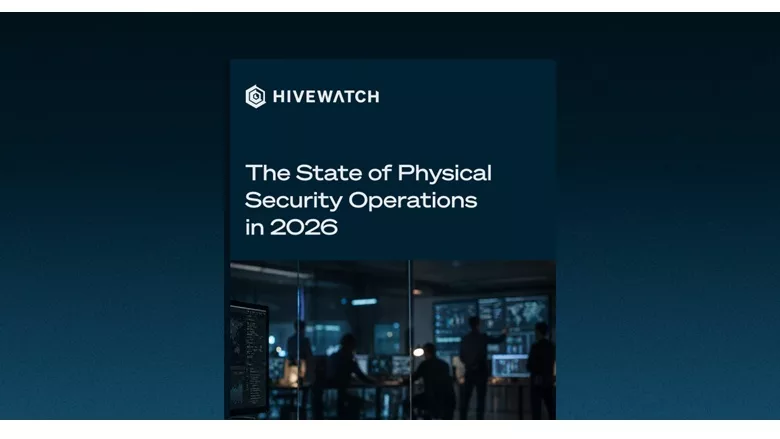
HiveWatch, a physical security software company, released The State of Physical Security Operations in 2026, a new benchmark report examining how enterprise physical security programs actually perform when measured against operational realities, including alarm volume, SLA attainment, operational maturity, and AI adoption.
Commissioned through independent research firm Censuswide, the report surveyed 300 U.S.-based professionals responsible for physical security operations at organizations with 500 or more employees and at least $5 million in annual revenue. The findings reveal a striking disconnect between confidence and operational effectiveness across modern security operations centers (SOCs).
“At a time when security teams are being asked to manage more devices, more alerts, and more operational complexity than ever before, many organizations still lack the visibility and operational benchmarks needed to understand how effectively their programs are actually performing,” said Ryan Schonfeld, co-founder and CEO, HiveWatch. “This report highlights the growing gap between perceived readiness and measurable performance, while also showing how AI and automation are beginning to separate mature security operations from those struggling to keep pace.”
Among the report’s key findings:
• Large enterprises report false alarm rates approaching 44%.
• Nearly 30% of organizations still rely on manual device health checks instead of fully automated monitoring systems.
• 97% of respondents are either currently using AI or actively evaluating it for security operations.
• AI adoption reaches 75% among organizations that rate themselves at the highest maturity levels, compared to 43% among lower-maturity programs.
Looking for quick answers on security topics? Try Ask SDM, our new smart AI search tool. Ask SDM →
The report also identifies a growing “automation deficit” across the industry, with operators spending significant time on repetitive administrative work such as manual alarm triage and routine notifications instead of higher-value threat analysis and response.
“The physical security industry has spent years talking about technology adoption, but the more important question is whether security programs are remaining operationally effective as complexity scales,” said Jordan Hill, Co-Founder & Head of Product, HiveWatch. “The organizations making meaningful progress are the ones operationalizing AI and automation to reduce noise, improve response, and give operators the ability to focus on actual threats.”
The report combines independent survey data with operational benchmark insights from HiveWatch customer environments to provide security leaders with comparative data across operational maturity, AI adoption, device monitoring, alarm management, and SOC structure.
The State of Physical Security Operations in 2026 is available now.
Looking for a reprint of this article?
From high-res PDFs to custom plaques, order your copy today!