VIDEO MONITORING ROUNDTABLE
What’s Coming Next for Video Monitoring?
Monitoring professionals discuss the technologies, trends and business strategies that will shape video monitoring over the next 18 months, and what dealers and integrators can do now to position themselves for success.
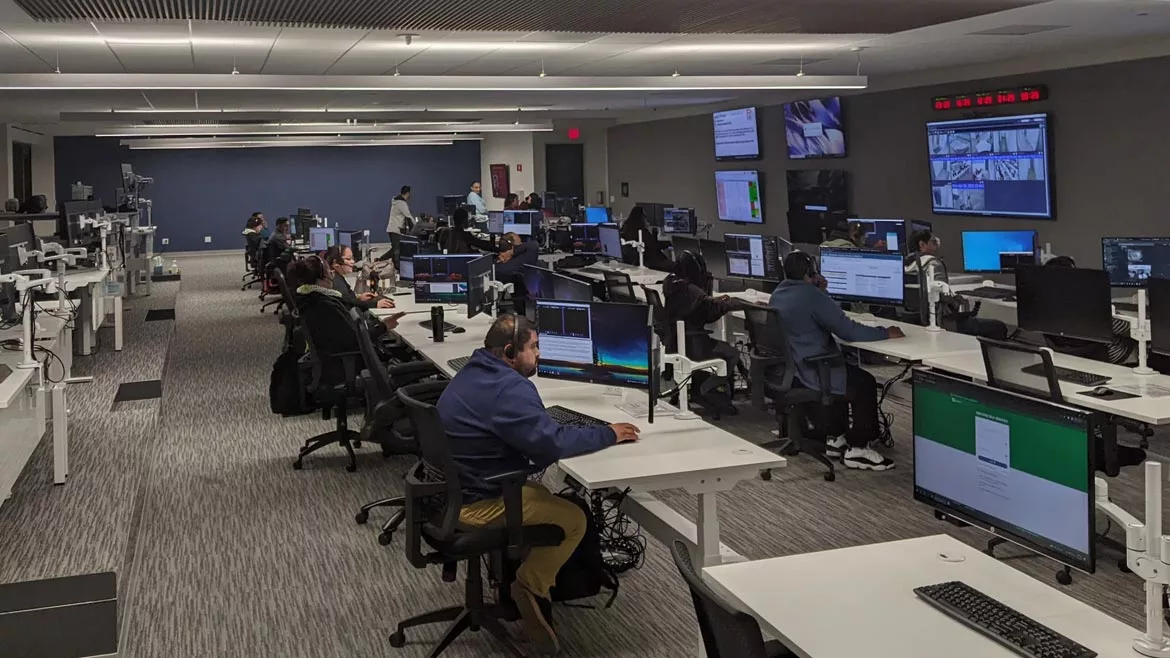
Dealers share their perspectives on the video monitoring market, which is moving toward proactive, preventative protection.
Advances in technology and shifting demands from end users are transforming video monitoring from a primarily reactive tool into a proactive solution capable of detecting, assessing and responding to events with greater speed, precision and analytics. As security dealers and integrators look to capitalize on the expanding world of video monitoring, they must also navigate new challenges surrounding system design, workforce expertise, customer expectations and the role of generative and agentic AI.
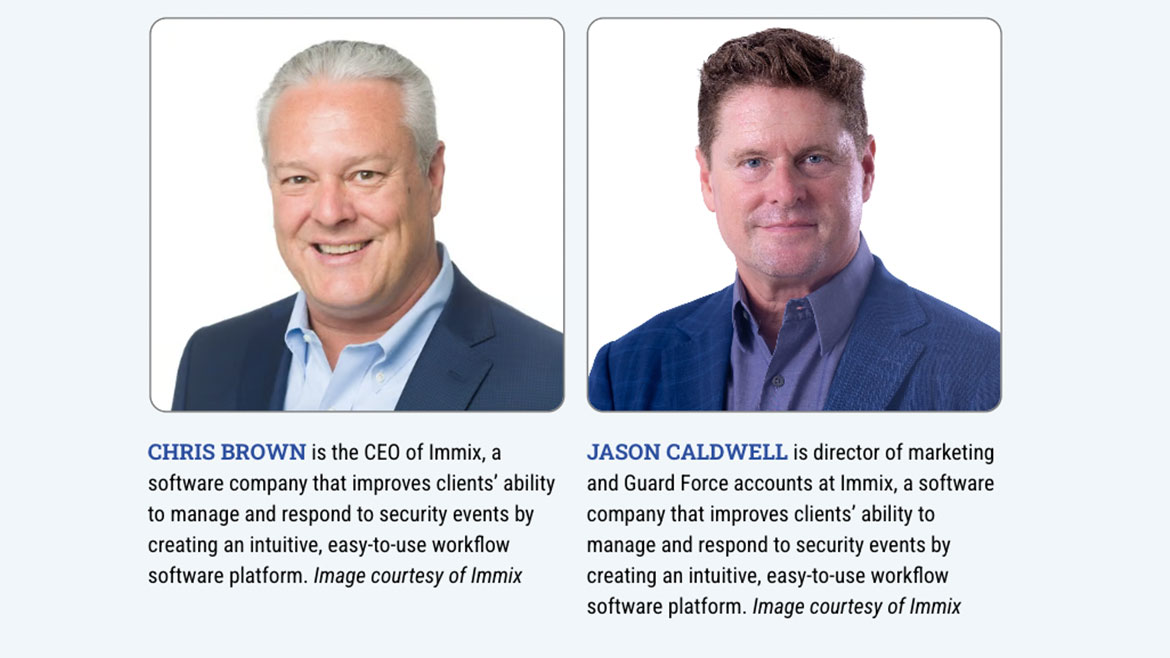
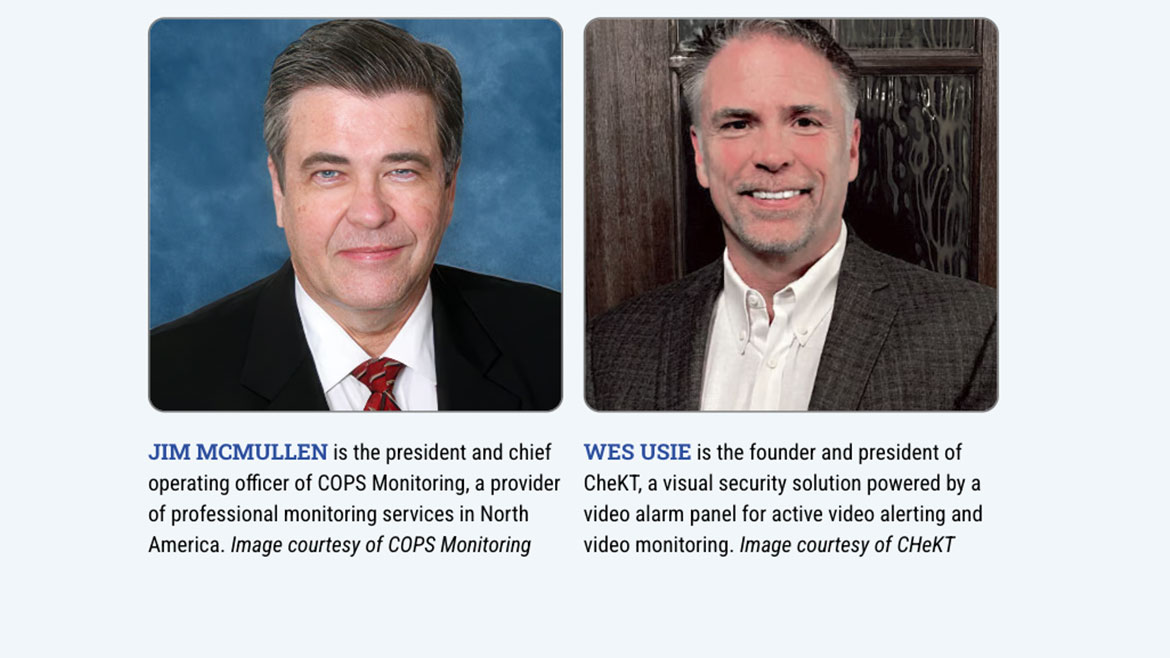
In the following Q&A, Wes Usie, founder and president, CHeKT, Shreveport, La.; Jim McMullen, president and chief operating officer, COPS Monitoring, Williamstown, N.J.; Chris Brown, CEO, Immix, Charlotte, N.C.; and Jason Caldwell, director of marketing and Guard Force accounts, Immix, discuss the next 18 months of video monitoring and lay the foundation for dealers and integrators to build or maintain successful video monitoring services.
SDM: If you had to pinpoint one or two developments that will have the biggest impact on the next 18 months of video monitoring, what are they? In what ways will these developments influence or even shape the market in this timespan?
Wes Usie, CHeKT: The large language models and the vision language models. These models are improving so quickly because they’re in environments where they get smarter the more data you push through them. In the next two years — it might be the next two months, with as fast as this is improving — you’re going to see your cameras and systems that are able to filter out when people are in front of it with normal behavior. We’re already seeing environments where a person can walk in front of the camera, and we’re not sending that information into the monitoring center. We’ll begin to be able to understand what anomalies are and present anomalies only into the monitoring center. But if it appears to be something normal, it’ll be suppressed. By doing that, service level will go up, cost will go down and the market will continue to open.
Jim McMullen, COPS Monitoring: The first major development is continued improvement in AI-assisted analytics. Better analytics can reduce event noise, improve detection quality and make monitored video more efficient. The second major development is deeper integration between video platforms and monitoring center workflows. Video should not be treated as something separate from the alarm event. The value comes when the operator has the alarm signal, video, account data, site instructions, location information and response protocol in a unified workflow.
Chris Brown, Immix: Agentic AI will play a strong role. You’ve got a fairly competitive landscape out there, and you need to offer a menu of services that’s robust and unique. When you get a little more strategic in what you offer or vertical markets you serve, you can hold your ground a lot better and grow your business a lot more smoothly. But it’s all about the people in the center. How well-trained are they? How do they manage the end client? How do they handle the toughest events? Because it’s always going to be human.
“Video should not be treated as something separate from the alarm event. The value comes when the operator has the alarm signal, video, account data, site instructions, location information and response protocol in a unified workflow.”
SDM: Where do dealers/integrators struggle with video monitoring? What is your advice for dealers/integrators to overcome these hurdles?
Looking for quick answers on security topics? Try Ask SDM, our new smart AI search tool. Ask SDM →
Usie: You have to take the approach of, ‘I’m going to figure this out.’ You’ve just got to get in and figure out how to do it, which companies to partner with and make the mistakes early, then progress forward to get the kind of skillsets you had when you first started putting in IP cameras. Also, start in an area where the business has normal hours of opening and closing and, preferably, a fence.
McMullen: Dealers most often struggle with aligning system design with customer expectations. A camera may be acceptable for general viewing or recording, but that does not mean it is well-positioned for monitored video. Lighting, angle, field of view, motion patterns, environmental conditions and connectivity all affect whether the event is actionable. Event quality is just as important. If a system generates too many nuisance events, the service becomes harder to support and less valuable to the customer. Dealers should be selective about what they send for monitoring and should test the application under real conditions whenever possible. Customer expectations also have to be clear. Start with the question: What do we need the monitoring center to know or verify when this event occurs? Then design the system around that answer.
Jason Caldwell, Immix: Finding the right labor is a big challenge. This is especially true from the back-end IT perspective because that’s where all the nuances live in this world, especially with all these new cloud systems. You have to have quality IT personnel to really pull it off and make sure that that 24/7 operation, which is what it is, is seamless.
How Dealers View Video Monitoring
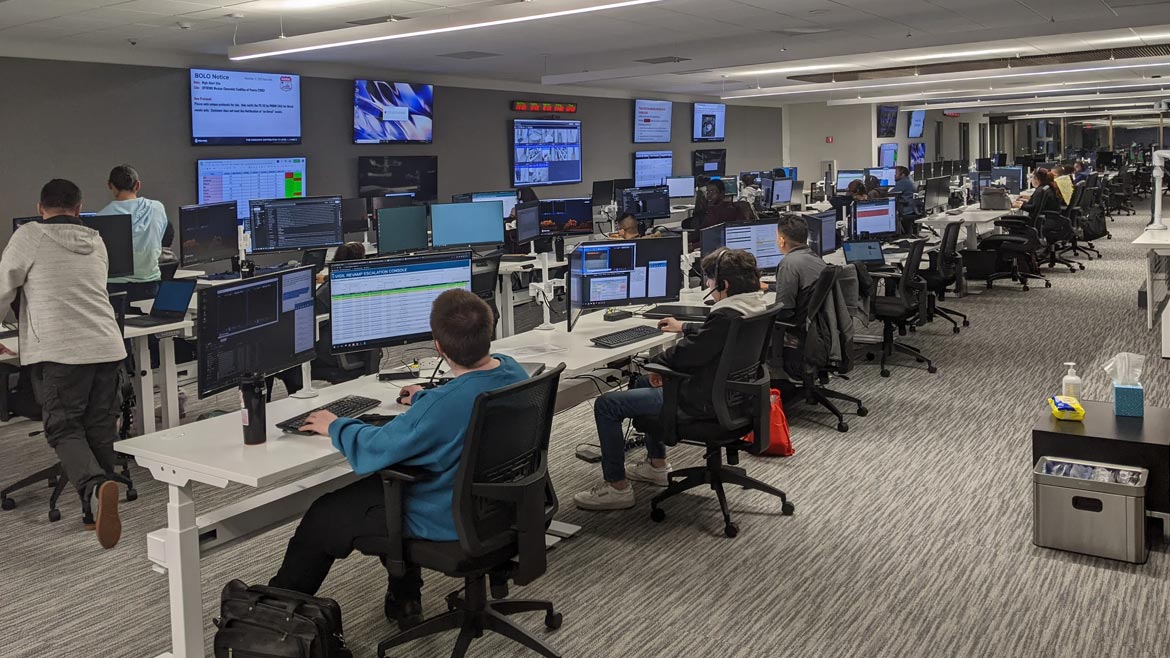
From the dealer perspective, the video monitoring space is heading toward proactive, preventative protection rather than reactive response. “The next evolution is early detection, automated escalation and real-time intervention using audio, lighting and defined workflows,” says Aaron Duxbury, general manager, remote services of Protos Remote Services, Protos Security, Norwalk, Conn. “Clients are increasingly expecting measurable reductions in incidents, faster response times and clear ROI.”
The providers who can deliver and prove those outcomes will define the next phase of the market. AI is going to help dealers push this differentiation forward. “With AI, when something seems unusual, you’ll be notified,” says Kylie Smith, business development, video monitoring and security, KMT, Marietta, Ga., who is featured on this year’s Video Monitoring Today cover. “It will know your patterns based off watching the camera, enough to know that a truck should not be coming 2:00 a.m. or that an area has been empty for too long. It will know your site better than you’ll know your site.”
AI is evolving at an extremely rapid pace. David Charney, senior vice president, video command center, Everon, Boca Raton, Fla., sees the ability to use natural language search recognition as the next evolution of AI in video monitoring. “For example, you could say, ‘give me a person wearing a red shirt carrying a box inside my office,’ but you don’t have to say that person passed cameras 12 through 15, and you don’t have to tell it what a red shirt is,” he says. “It’s starting to get that context very nicely and very quickly, but it’s not yet doing that in real time.”
Through all the current and up-and-coming applications of AI, human response and operational expertise will continue to play a major role. “Technology is becoming smarter, but customers still want trusted people behind the systems making informed decisions when it matters most,” says the Allstate Security team, Amarillo, Texas.
The perimeter isn’t the only place to be proactive, though it is an ideal starting point. Shane Sullivan, CEO, Solid Security, Gainesville, Ga., sees video monitoring applications coming inside the building more frequently. “It will have that same form of actionable intelligence, replacing motion detectors and replacing door contacts,” he says.
Beyond security applications — including integration with access control, intrusion, environmental sensors, etc. — Jeremy White, founder and CEO, Pro-Vigil, San Antonio, Texas, sees video monitoring expanding into broader business intelligence, i.e. traffic flow analysis, safety compliance and operational efficiency.
“You’ve just got to get in and figure out how to do it, what companies to partner with and make the mistakes early and then progress forward to get the kind of skillsets you had when you first started putting in IP cameras.”
SDM: How should dealers/integrators prepare themselves for the next 18 months of video monitoring?
McMullen: Dealers should prepare for video monitoring to become a more common part of the security conversation, especially in commercial applications and markets where verified information is increasingly important. They should understand the differences between video verification, AI-generated alarms, perimeter detection, remote guarding and other monitored video services. These are not interchangeable offerings. Each has different design requirements, pricing considerations, operational implications and customer expectations. Dealers should also prepare their sales teams to position video monitoring around value rather than hardware. They should expect higher standards around event quality. As video monitoring grows, poorly designed applications will stand out. Dealers who focus on proper design, reliable integrations, clear procedures and customer education will be in the best position to benefit.
Brown: We’re back to the world of when we started doing analytics. AI is this huge, broad brushstroke. People are starting to want to adopt AI; it’s at what level that’s different. We just have to be careful that the AI is delivering the level of value that you’re paying for. It’s moving into this agentic world, where the AI starts to not only give you more information, but makes the decision. But with AI making the decision, people have to be much more careful with it. They have to get comfortable, at a minimum, with running their business with some level of AI. I think a good place to start is maybe not in the front-facing of security, but in their office. Are you using AI to review your Excel spreadsheets and make reports? You’ve got to get your hands on it. You have to become comfortable with AI as a tool that can help you be more efficient and effective.
“People are starting to want to adopt AI; it’s at what level that’s different. We just have to be careful that the AI is delivering the level of value that you’re paying for.”
SDM: Any additional comments to share?
Usie: Many dealers are afraid their businesses are going to get bypassed because of technology, but the thing that makes our industry different is security being a human need. You just have to understand how to meet your customers’ needs, and your business is going to thrive. I don’t think you’re going to earn money in five years the same way you’ve done the past 25. We’ve all got to figure out how to change and understand that AI is there to be an enabler.
McMullen: Video monitoring is one of the most important growth opportunities in professional monitoring because it changes the ‘value’ conversation. Traditional alarm monitoring tells us that something happened. Video can help us understand what is happening, but video monitoring has to be done correctly. It requires reliable technology, thoughtful design, disciplined workflows and trained people. The future of video monitoring will be defined by the combination of AI, integrations, dealer expertise, monitoring center workflow and human intelligence.
Brown: Right now, we’re in the third inning of this journey. We’re still in the very early stages of real penetration to the customer base that’s available. There’s so much room for everybody. A couple things we have to be careful of is regulating the industry properly so that we can maintain an industry that delivers. And we have to be very cautious about how we handle our law enforcement partners so they continue to be partners because, without them, it’s really limiting to the industry.
Looking for a reprint of this article?
From high-res PDFs to custom plaques, order your copy today!