ecurity integrators must embrace a constantly changing technology market. Such an embrace of technology must be compatible with all facets of the IT infrastructure and the Internet around us.
On October 22, AT&T Inc. said it agreed to buy Time Warner Inc. for $85.4 billion. However, then Republican presidential nominee Donald Trump vowed at a rally to block the deal if he won, saying, “It’s too much concentration of power in the hands of too few.”
Kevin Lehan, executive director of the Illinois Electronic Security Association (IESA), said a new Schaumburg law would be tantamount to the government confiscating customers from private alarm companies.
The Federal Trade Commission (FTC) has selected AMAG Technology and its Symmetry Homeland Access Control System to secure its headquarter building, office of the executive director.
The Electronic Security Association (ESA) announced professor of criminology and criminal justice Dr. Joe B. Kuhns, Ph.D., will be the keynote speaker for the inaugural general session, sponsored by Security America RRG, at the 2017 ESA Leadership Summit Feb. 12-15 in Tampa, Fla.
The Consumer Technology Association (CTA) announced publication of two new standards: ANSI/CTA/NSF-2052.1, Definitions and Characteristics for Wearable Sleep Monitors and ANSI/CTA-2056, Physical Activity Monitoring for Fitness Wearables: Step Counting. These standards define terms and functionality for step counting wearables and sleep measuring devices.
Parks Associates announced new primary and industry research examining the technology needs of SMBs (small-to-medium businesses) in the U.S. market. The international research firm found that 91 percent of U.S. SMBs use antivirus/malware protection software and 77 percent use cloud storage/backup services, although 80 percent of SMBs have concerns about using cloud-based services.
Protecting critical substations is an expensive and difficult proposition given locations and topography, and the answer may lie in a Design Basis Threat approach.
Recent history has given rise to an almost feverish obsession with regard to thinking about “grid security” and large-scale national or regional cascading events.
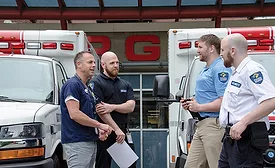
According to the Association of Workers’ Compensation Boards of Canada, there were more than 4,000 reported incidents of workplace violence against Canadian nurses between 2008 and 2013, and still, sources in the industry believe that these types of incidents are woefully underreported.
 RSS
RSS