2025 SDM Systems Integrator of the Year
Standing at the Ready
October 2, 2025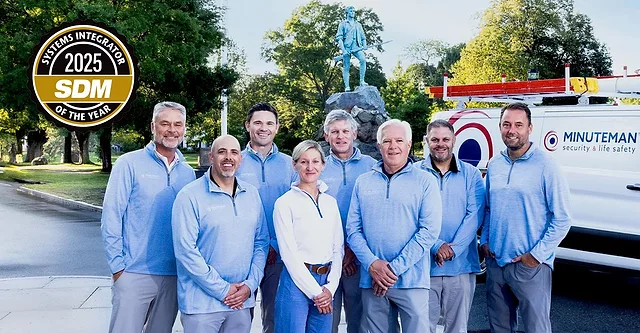
2025 SDM Systems Integrator of the Year
Standing at the Ready
October 2, 2025The Minuteman management team poses in front of the Minutemen statue in Boston. Pictured from left are James Palkovic, COO; Jason Roberts, CIO; Kevin McCullough, CFO; Liz Boivin, CHRO; Jack Johnson, CRO; Joe Lynch, CEO; Jay Slaughterbeck, CTO; and Ron Oetjen, Corporate President.
On the night of April 18, 1775, Paul Revere made his famous “midnight ride” to alert the colonial militias that the British were coming. Revere was more than just a messenger. In his day, he was a key figure in organizing the alarm and intelligence system for the region. Hundreds of years later, when Joseph Lynch was looking for an appropriate name for his new Massachusetts-based alarm company, this lore would prove to be an inspiration.
“I was looking for a name that represented an organization that was formed to ‘protect our country, communities, and our citizens,’” Lynch says. “The minutemen of the colony of Massachusetts ultimately became the nation’s first National Guard unit, and the 12 other colonies followed.”
Thus, this year’s SDM Systems Integrator of the Year — Minuteman Security & Life Safety — was founded.
Lynch was not new to the security industry, even then. “I have been in the security business since I was 13 years old,” he says. After his family home burned down a few years before, forcing him to escape out a second-story window, Lynch determined he wouldn’t want this to happen to anyone else. So, he picked up a book about alarm systems to learn how to install them for friends and neighbors. This experience came in handy when he interviewed for his first job at a Sonitrol branch in Florida, where he was quickly hired. He ultimately moved to Massachusetts to go to tech school and worked for a defense contractor for a few years, while keeping his hand in the security industry working part time for a Sonitrol dealer in Boston.
SDM spoke with Joe Lynch about the company founding and history, changes he has seen in the industry, where he sees AI’s role going forward, and much more. Listen here.
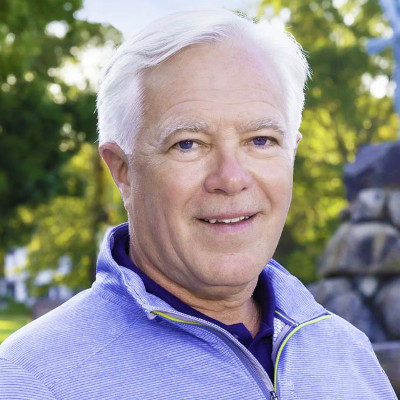
Joe Lynch, Minuteman founder and CEO. Image courtesy of Joel Laino / Maverick Productions Boston
Then, in 1988, Lynch decided he really wanted to go into business for himself. “I started Minuteman part-time on nights and weekends,” he says. The company grew to a full-time enterprise by 1992, with the mission to install and maintain security systems for companies and schools in the Boston area and a strong focus on safety, reliability, and community trust.
“I began installing residential and small commercial alarm systems,” Lynch recalls. “By the end of the ’90s, I had migrated away from those into large commercial office buildings and eventually into large, multi-site campus systems in the higher education and healthcare space.”
Transitioning from a “simple installer” to a true systems integrator was a necessary step on the company’s growth path, Lynch says. By 2016, Minuteman made its first acquisition of a New Hampshire-based company to help support customers in that state. In 2017, Lynch took Minuteman farther afield, acquiring a company in Chicago that was focused on city-wide surveillance — a branch that remains, so far, the outlier geographically.
“We bought another company in Northern Maine, and we were mostly New England-based until 2022 when we acquired Skynet in Tampa, Fla.,” Lynch says. After that, Lynch set out to “fill in” the East Coast with new branches and acquisitions.
Looking for quick answers on security topics? Try Ask SDM, our new smart AI search tool. Ask SDM →
Looking for a reprint of this article?
From high-res PDFs to custom plaques, order your copy today!
Minuteman has had two private equity partners that helped with this effort. The first was Prospect Partners, out of Chicago. Then, in mid-2023, the company recapitalized with Tenex Capital Management, a move that made the last two years’ growth — with seven acquisitions and counting — possible. “They have been a great partner for us and transformative in terms of the numbers of locations,” Lynch says.
Beginning with Strategic Security Solutions (S3) in Raleigh, N.C. in 2023, Minuteman has transformed itself from a regional to a super-regional to a now national systems integrator, growing revenues by 106% in 2024, and rising to No. 12 on the SDM Top Systems Integrator Report in both 2024 and 2025. With an estimated $205 million in revenue in 2025, Minuteman is nowhere near done expanding — now setting its sights on moving westward. Read on to learn about the company’s acquisition strategy, its efforts to unify company processes and culture, and the “momentum and moxie” that Corporate President Ron Oetjen says will carry Minuteman forward for the foreseeable future.
‘Feel for Fit’ Acquisition Strategy
Between October 2023 and June 2025, Minuteman has completed seven acquisitions: S3 (N.C.); Security Technologies Inc. (Conn.); Secuni (N.J.); Access Security Corp. (Penn.); AdaptToSolve (Ga.); Shanix (R.I.); and Split Pine (Fla.). Collectively, these partnerships have helped the company increase revenues by 345% and employee count by 300%.
But for as many acquisitions as the company has completed, they have turned down even more. That is because Minuteman has a defined criteria for what would make a good “fit” for a potential acquisition.
“We look for similar companies that have similar customer profiles and use similar products,” Lynch says. “We also look for similar cultures. Some of this is certainly feel for fit.”
While S3 was not the first acquisition Minuteman had done in its history, it was the one that became the launching point for the fast growth and expansion the company has achieved over the past two years. One of the attractions for acquiring S3 was the company’s Program Management Office, which deployed for global and national clients in an organized way.
The S3 acquisition was also a steep learning curve that helped inform how Minuteman would approach all acquisitions going forward.
Jay Slaughterbeck, founder of S3 and current chief technology officer at Minuteman, says the benefits of the acquisition were a two-way street. “We had gone through a period of significant growth (at S3) and had more in front of us. We made the decision that a partnership with Minuteman would allow us to better serve our customers. We had similar cultures, a family-type environment and no geographical overlap. It was a comfortable place to land.”
Still, the process was not without its bumps. “We were the first acquisition with our new financial partner (Tenex), so a lot of the book was still being written at that point,” Slaughterbeck says. “Fortunately, we were in the position to help write the book. We learned from the mistakes we made and adjusted course for future acquisitions moving forward.”
Minuteman President and former S3 President Ron Oetjen recalls, “Actually, the financial sponsor wasn’t yet on board when we started talking to Minuteman; they were in the process. … Nobody knew what to expect. In retrospect, it was maybe a risky move, but Jay and I are pretty good judges of people, and, sitting at that table with the managing partners, I kind of thought I knew, and it turns out I was right.”
Lynch says the two deals were struck almost simultaneously: “I had been talking with S3 over the course of their growth, but only started talking more seriously about acquisition potential in 2023. When Tenex joined us, we went to see Ron and Jay approximately the same week Minuteman was acquired by Tenex, and we moved very rapidly to leverage the capabilities of S3. That was the catalyst that got us going.”
At a Glance
2025 Systems Integrator of the Year:
Minuteman Security & Life Safety
Employees: 523
2025 Revenue: $212 million (est.)
2025 SDM Top Systems Integrator Report Ranking: No. 12
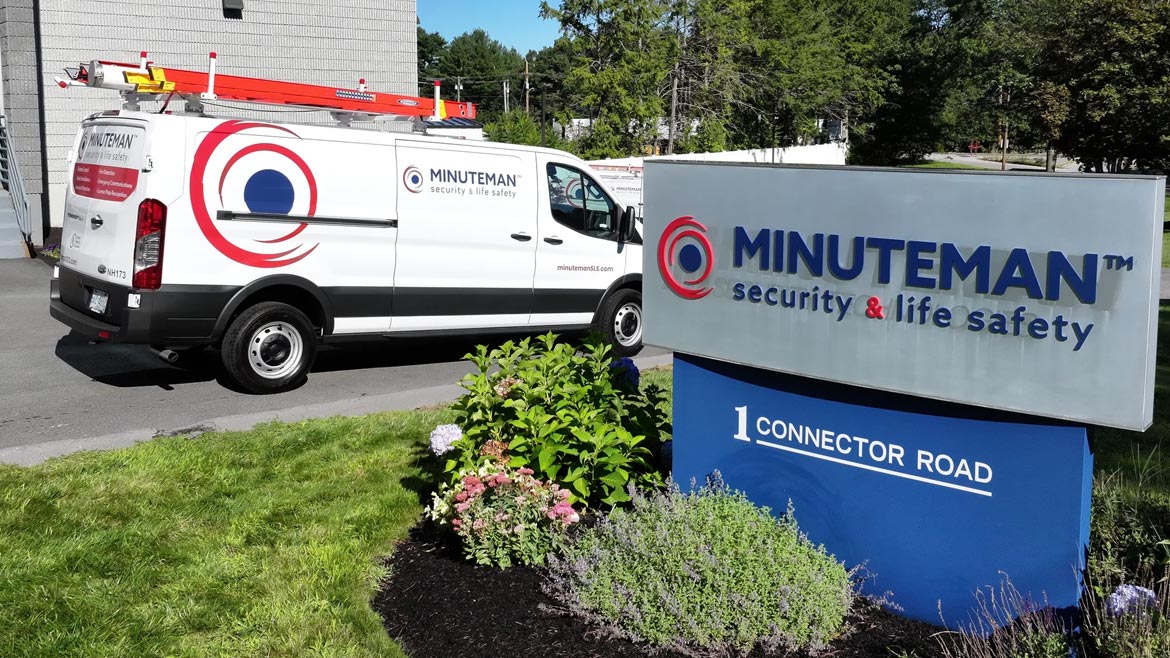
Image courtesy of Connor Callanan, Defined Marketing
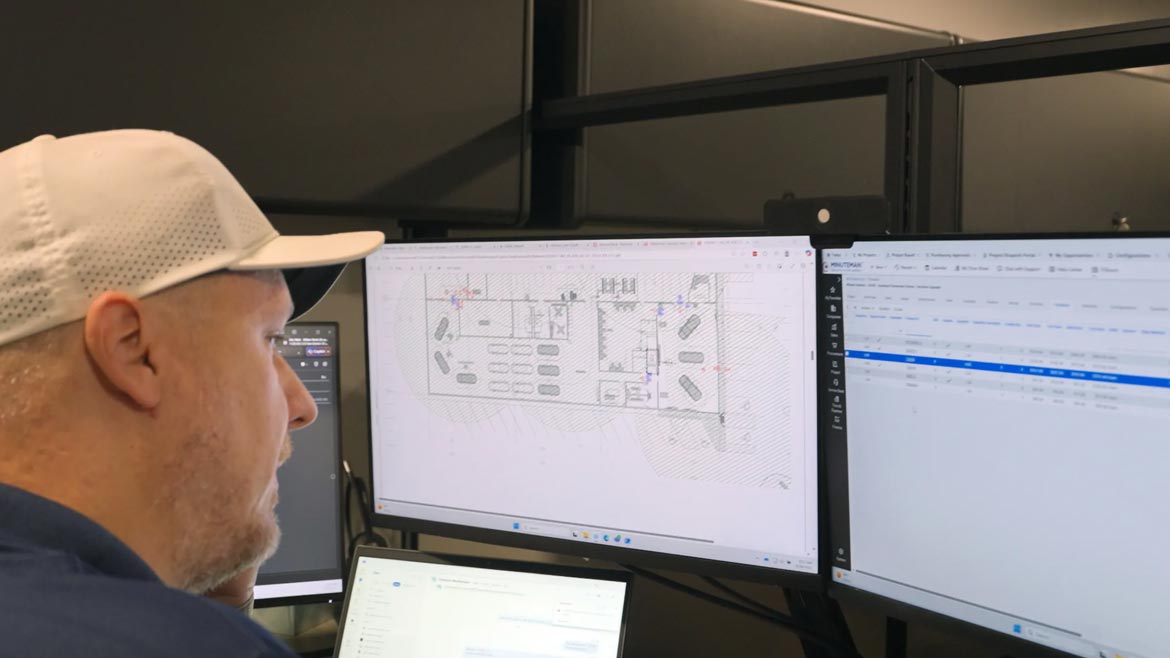
One lesson the company learned immediately was the critical importance of having a process, particularly for back-end office integration. “The back office is extremely important,” Lynch says. “You need to know what inventory levels are at any given time and have it all in one system. Quotes and communication — all of that has to be on one system. This is the most important and difficult task that companies might be tempted to skip, but there is no escaping it. It must be done. It helps make the business more efficient, valuable, and maintains our sanity and the sanity of our staff, so we aren’t dealing with 10 different systems. It is very difficult, but we have become very good at it, because it is absolutely necessary to survive, as we have had multiple offices spinning up.”
The process after acquisition is important, but so is the intentional way the company goes about seeking acquisition partners. After getting a few acquisitions under their belt, Minuteman formed a special integration team that is dedicated to helping with this process, Slaughterbeck says. “Based on lessons learned through these acquisitions, we have a dynamic playbook on how we do it that gets better and better each time.”
This process starts in the prospecting process of a potential acquisition — many of which don’t end up coming to fruition. “Bolting on companies just to do it doesn’t work,” Slaughterbeck says. “You have to define cultural synergies. There are some cultures that just don’t mesh. … What does the company have that we can leverage the rest of Minuteman for? … It is insanely important to do it right. Otherwise, the value in what we just acquired can just turn to nuts and bolts in a hurry. There is a lot of effort put into getting that right.”
These synergies work in both directions, Slaughterbeck says. “It is our desire to provide a path for accelerations that these smaller companies couldn’t provide themselves, [such as] technical services we can provide that they couldn’t do in-house …. Smaller organizations that become part of Minuteman are able to capitalize on that, and that changes the world for them. That is our superpower.”
Oetjen describes this philosophy as “the best idea wins,” whether at an individual or company level. “Things from our technician’s per diem policy to our project management process, Minuteman largely developed those from S3, for example,” he says. “Embracing our PMO really changed Minuteman, and that is part of the moxie of Minuteman. We figured out this PMO thing and Minuteman dialed it in. It could have been thrown out with the bathwater in the acquisition, and it wasn’t.”
Another particularly impactful acquisition for Minuteman was Secuni, which had its own cloud and hosted managed services offering with a dedicated team. Minuteman rolled that out to all its branches, and now it is the company’s fastest growing segment at 400% growth, Oetjen says.
“What we do matters, and what we are building matters. Not every company is a good fit, and we have passed on more than we moved forward with. We spent a lot of time and money only to walk away,” Oetjen says. “We look to see if there is a cultural fit. Are there vertical market fits? Do they do something special in the market we would like to but aren’t? How well have they adapted to change in our industry? We also look at the talent on their team. We look to increase our bench strength with every acquisition and position ourselves better with our manufacturing partners.”
‘Minuteman Nation’
For all its efforts in ensuring each new acquisition is a good mesh culturally and service-wise, the fast acquisition strategy Minuteman has embarked on since 2023 has presented significant opportunities, but also challenges.
“When we came on board, Minuteman was predominantly a Northeast company with an office in Tampa (and one in Chicago), and nothing in between Massachusetts and Florida,” Oetjen says. “We (S3) came in and brought Virginia, Pennsylvania, and North Carolina. Culturally, we were more Southern/Mid-Atlantic. Initially, there was a little bit of people jostling to establish their place, but that didn’t last long. We figured out quickly that we were a good fit for each other; we are cut from the same cloth, even though we have our differences. Now, we can take the people in Richmond and take them to Maine, and they would fit in on day one.”
While it was a company-wide effort to come together, Oetjen and Lynch both say Liz Boivin, Minuteman’s chief human resources officer, was instrumental in the process. Boivin was brought on shortly after the S3 acquisition just as the company was in the middle of rapid growth and cultural transformation. With a background in healthcare software and a passion for culture integration, Boivin saw Minuteman as an opportunity to do what she does best: bring people together during times of growth and change. “This is my specialty, and my vision of merging cultures resonated with Joe and his team,” Boivin says.
Boivin relocated her family to New England and immediately began to strengthen the company’s culture and employee experience. “The first step was to establish clear, consistent communication across a workforce now spanning from the Canadian border to Florida, and finding ways to keep all employees engaged was a major focus,” she says. She introduced formalized company-wide town halls, which serve not just as a forum for leadership to share updates, but as a platform for employees to ask questions and be heard.
“We had a town hall just yesterday and spent 20 minutes on questions from employees,” Boivin says. “This is the kind of engagement we want to see from our employees. Listening is essential. When you are growing quickly, it’s easy to lose sight of that, and we need to make sure we are always thinking about our employees.”
The Leadership Team
Joseph Lynch, CEO
Ron Oetjen, Corporate President
James Palkovic, Chief Operating Officer
Kevin McCullough, Chief Financial Officer
Jack Johnson, Chief Revenue Officer
Jason Roberts, Chief Information Officer
Jay Slaughterbeck, Chief Technology Officer
Liz Boivin, Chief Human Resources Officer
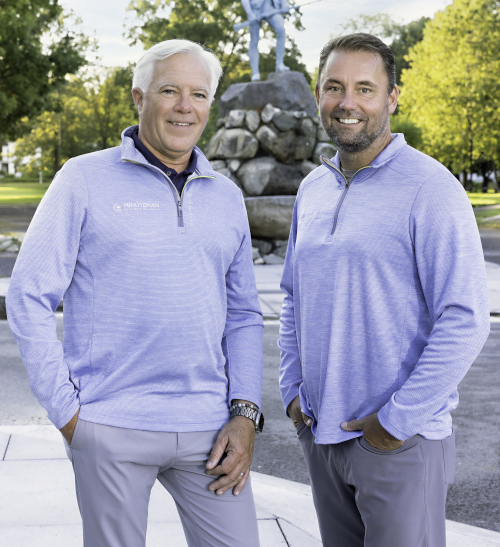
A few months after Minuteman acquired S3, Joe Lynch (left) asked Ron Oetjen to become the corporate president.Image courtesy of Joel Laino / Maverick Productions Boston
She backed that up by implementing engagement surveys and making changes based on feedback, even when it meant revisiting tough policy decisions. Change can be challenging, and sometimes feedback may be negative. “We recognize that we may not always get things right, and by us being open with employees, they are comfortable being open with us, and if we need to fix something, we will,” Boivin says. Another way the company does that is through engagement surveys, particularly when there are policy changes. Sometimes, the feedback is negative, as was the case with a policy change on per diems, so the company changed it based on employees’ input. “We are open with them that we won’t always get things right, but if we get it wrong, we are going to fix it,” Boivin says.
Boivin also tackled one of the biggest challenges of rapid acquisitions: standardization. “Harmonization was my initial focus; even the original Minuteman had three different cultures,” she says. Boivin led the harmonization of job titles, pay scales, performance management, pay transparency, and job frameworks, ensuring fairness across all regions. “We set out to build a true career framework — a clear ladder that shows employees how they can grow their career with Minuteman,” Boivin says. “It gives everyone joining Minuteman confidence that they have the opportunity and the information they need to succeed.”
This is particularly important for Minuteman, as one of its goals and strengths in its acquisition strategy is providing career paths that employees might not have had at their original company.
“We have this philosophy that there is a right seat on the bus for everybody as we go down the road,” Lynch says. “We have really straightforward conversations with everybody and collectively agree on what makes sense.”
Oetjen and Slaughterbeck are two examples of this philosophy in action. “I was happy in my region and went about my day managing the offices down here,” Oetjen recalls. But, after he helped with two potential acquisitions, Lynch asked him to take on the role of corporate president.
As CTO, Slaughterbeck now focuses on the technology aspect of the business. Oetjen says, “S3 couldn’t afford a CTO at the size we were. Now, Jay gets to dial in on technology, where he loves to be; he is in his happy place.”
Slaughterbeck says this was the case for many of his employees, and for subsequent acquired company employees as well. “I can name numerous instances of upward mobility,” he says. “These were people with high ceilings advancing higher than we could have provided.”
Boivin adds, “We are growing, and our goal is to bring everyone along with us. One of the biggest advantages of our acquisitions is the chance to offer career growth that smaller organizations didn’t have available. We have already seen employees step into elevated roles at Minuteman, and our focus is making sure every person feels engaged, valued, and part of the journey.”
This focus on the employee is something the leadership team spends a lot of time thinking about, Oetjen says. “The simple truth is: if we take care of our employees, they will take care of our customers, and our customers will take care of us. From leadership on down, this creates a different culture. We are developing our talent internally where we can.
“To me, it is more beneficial to invest in the people you have and work to develop them,” Oetjen continues. “That is pretty different here. Other companies might hire a recruiter and bring in talent and a hodgepodge of culture. What we try to do is stay focused on the current employees and the high performers.”
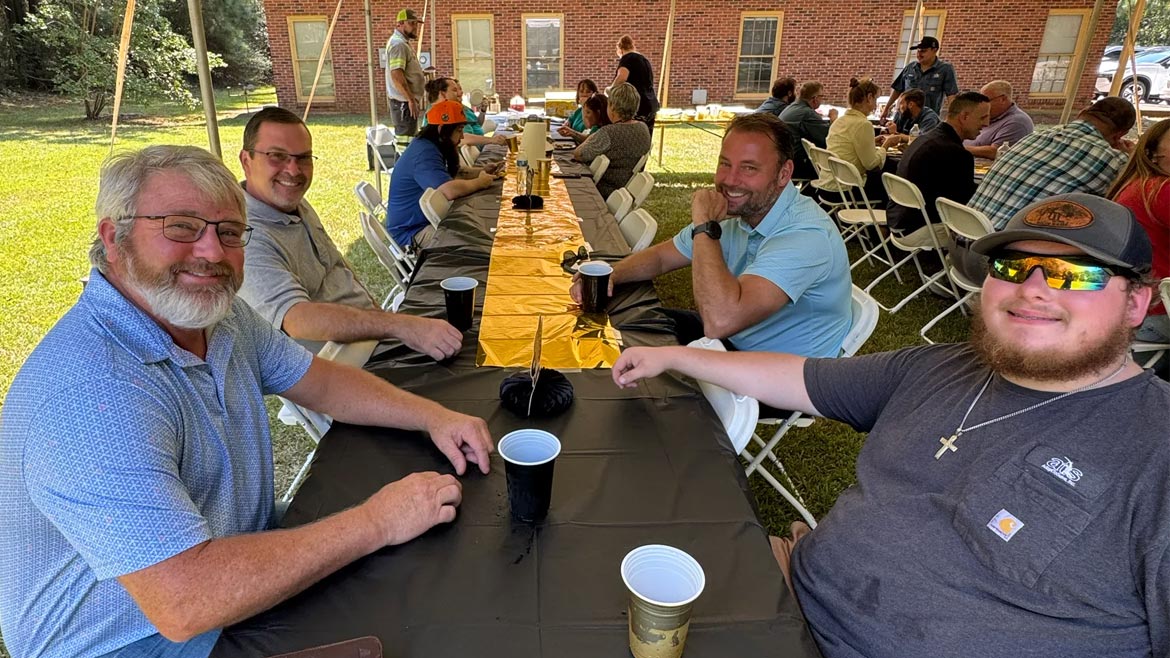
The company’s commitment to people goes beyond systems and policies. “It’s about giving people the chance to connect outside of a square on a screen,” Boivin says. “Whether that is cookouts at various branches on a Friday of a long weekend, or employee resource groups based on shared experiences or hobbies (the resource group for veterans is due to roll out this fall), the company fosters true belonging. In 2025, we started having more in-person group meetings. We brought the sales team together to align on strategy, and a project management summit is scheduled in a couple of weeks to strengthen collaboration.”
It is our desire to provide a path for accelerations these smaller companies couldn’t provide themselves. … Smaller organizations that become part of Minuteman are able to capitalize on that, and that changes the world for them. That is our superpower.
It was at one of these meetings that a new company motto was born: Minuteman Nation. In the process of writing his opening address for the sales meeting, Oetjen began thinking of the different offices as tribes coming together. “Then I thought, maybe I should call them Minuteman Nation, and the phrase just stuck,” he says. “It started out as a gimmick, but people really rallied behind it and turned it into something more, so then we had to define what it was. We concluded that it is this unique group of people from Maine to Florida that decided to come together and embrace the grind of working their way to being a dominant force in the security industry.
“That sounds good, but what does it mean, really? I think it is in our name: Minuteman Security & Life Safety,” Oetjen says. “Paul Revere made his midnight ride not far from our headquarters. Why was he riding to the minutemen? Because they were known to be ready at a moment’s notice to do whatever was necessary to defend the nation. To me, that is Minuteman today. We will get on a plane and go where we are needed. Minuteman is actually the right name for us: a group that is willing to do whatever is necessary for the team.”
Boivin agrees. “Minuteman Nation is the perfect phrase,” she says. “At one time, it felt like seven different tribes, but today we stand united. My focus in 2024 and 2025 was on harmonizing programs, processes, and people to build that unity, with Ron’s leadership shaping the idea of Minuteman Nation. He captured and communicated how we are all united around the same vision and values, helping turn us into one nation.”
‘Momentum & Moxie
Now united with backend support and a strong company culture, Oetjen says this is just the beginning of their journey. “We have a lot of momentum and moxie right now,” he says. “I don’t see anything stopping that. There are things left to be done internally, but I feel like we can make an impact on the industry.”
One thing the company is still working on is brand awareness. With a name that was traditionally most recognized in the Northeast, Minuteman is now embarking on a campaign to make it a nationwide household name. The company recently hired an outside marketing firm to help with these efforts. “We don’t want to change our history,” Oetjen says. “Joe built a good, New England-based company with a New England-based name. Initially, I wasn’t sure how the Southern states would adapt to that, but what we have seen is that both the acquired companies and their customers have embraced it. So, we have rallied behind that and take it forward wherever we go.”
Geographically, the company is already set to expand, both in its current stronghold as well as with new locations. “We have a very impressive density on the East Coast, but we have some holes in major areas,” Oetjen says. “There is definitely room to expand.”
The Midwest, where the company currently has one office in Chicago, is one area Oetjen suggests the company could be expanding in the next 24 months, if not sooner. And, at the time of this writing, Lynch said there were two Texas branches (one in Houston and another in Austin) due to open shortly, not through acquisition.
“We don’t usually do green field opportunities, but, sometimes, we need to if customers want us there,” Lynch says. “We are beginning to move west now. The plan is to continue along the journey of building Minuteman and the culture, coming together to reach nationwide. We want to self-perform as much as we possibly can.”
On the technology front, Oetjen says the company’s growth philosophy is to embrace the “good change,” but with caution.
“The way I look at it, change is inevitable,” Oetjen says. “We have to be careful and thoughtful about it. We have a ton of people in this company who like to test new technology, whether that is AI or drones. For me, it is really about finding the right things. We don’t want to offer our customers a solution that doesn’t turn out to be what we thought it was going to be.”
We have this philosophy that there is a right seat on the bus for everybody as we go down the road. We have really straightforward conversations with everybody and collectively agree on what makes sense.
Cybersecurity Stance
As a technology-forward systems integrator, Minuteman prioritizes cybersecurity on all the systems it provides. To take it a step further, the company recently became SOC 2 Type I certified, which independently validates that the company’s systems and controls are designed to meet the American Institute of Certified Public Accountants (AICPA) Trust Services Criteria for security, confidentiality, and privacy.
“Our SOC 2 Type I journey began mid-Q1 of last year and was completed in under nine months,” says Jay Slaughterbeck, CTO, crediting company CIO Jason Roberts with being instrumental in the effort. “This year, we kicked off our SOC 2 Type II audit in mid-Q1. … We pursued the SOC2 certification because enterprise-class customers often request it during their vendor vetting process, which is something that doesn’t always apply to integrators. Rather than resist, we chose to lean in, and we’re glad we did. The process revealed several areas where we could improve, strengthening our operations and internal controls.”
After the initial certification, Minuteman saw the value in continuing to get the Type II certification as well, Slaughterbeck says. “Many integrators claim to have cybersecurity systems, policies, and procedures in place,” he says. “SOC2 Type I demonstrates that you do; SOC 2 Type II proves it.”
He adds, “When I came to the industry it was all about the digital dialer and it eventually evolved to IP networks and now it is evolving to AI. Nothing stays the same. Change is imminent for our customers, and it is about educating them and ourselves so we can effectively navigate that.”
Slaughterbeck stresses the importance of being up front with customers about what technology such AI can — and cannot — do. “We want to grow with AI, but it needs to be sustainable,” he says. “I would rather have a long-tenured customer because we were truthful about AI’s capabilities, and it’s limitations.”
Slaughterbeck also refers to the transition between analog and IP, suggesting part of the struggle at the time was due to some “sleepiness” on the part of the industry, and stressing the importance of not falling into that with AI. “It is happening whether we like it or not,” he says. “It is here in every aspect of our lives. It is going to be something we have to understand and leverage; otherwise, we will be like the sleepy little analog company that didn’t survive.”
Minuteman also plans to continue striving to be part of the community, both physically and as part of the wider security community. Last year, local employees were instrumental in helping bring food and supplies after Hurricane Helene hit communities in Eastern North Carolina in October 2024, and branch-wide community service efforts — from local scholarships to charity bike rides — are ongoing across the Minuteman Nation. Also, as one of the 10 largest integrators in the PSA network, Minuteman is dedicated to helping the Security Industry Association train fellow integrators on topics such as project management. In these ways and many others, Minuteman is looking to give back to the industry, which, in turn, comes full circle to helping motivate employees to be their best every day.
This is further helped by the cohesive culture efforts the company now has in place. “Our monthly town halls are awesome,” Oetjen says. “We chat about wins and remind people of the good things that are going on. That is what keeps the employees excited about who we are and where we are going. We have the same challenges as everyone else, but we have been successful in overcoming challenges, and, when you have momentum, it is just another hurdle. The team embraces it as something they have to figure out, and, miraculously, someone always does, and the best idea wins. It has been a journey, and it has not been easy, don’t get me wrong. There are other companies with great momentum in this industry, but we have as much as any of them, and I don’t see anything stopping what we are doing.”
Merging Technologies
Jay Slaughterbeck, CTO, says one of the most challenging aspects of his job is pulling in all the disparate vendors the company is continually adding through acquisitions. Currently, the company manages more than 15 different manufacturer lines and counting.
“If you try to do everything for everybody, you risk becoming mediocre,” Slaughterbeck says. “I believe we need to have the right arrows in our quiver, but not so many we can’t carry it around. We have brought a number of organizations into the fold, and it is tough to say, ‘You can’t work with this product anymore,’ because they have found success there.”
Instead, Minuteman chooses carefully — both in the acquisition process and in terms of which systems it is going to keep — and then makes sure they have the process in place to take that knowledge company-wide. They actively connect subject matter experts with service teams across the country to ensure that even if the best qualified engineer is 500 miles away, their knowledge is accessible to solve local challenges. The company also requires certifications on all its products. Approximately half of all Minuteman employees collectively hold over 1,000 industry certifications.
“We are going to have a large line card,” Slaughterbeck says. “But if we sell a system in Maine, we can implement that same system in Tampa because we have the same level of training. If an issue comes up, we want to use one of those arrows in our quiver, but, when we add a solution, we never want it to be a one-off. We want to do a good job of it.”
Company CEO Joe Lynch adds, “Our enterprise technical services group has certified engineers directly in the field. We have a lot of high-level expertise internally and geographically to support multiple brands and regions. And the more we grow, the more opportunities we have where we have a customer using brand A, B, or C, and the expectation that we can support them. We are everywhere now.”