Wireless Access Control
Unlocking Opportunity: Strategy, Service & Scalability for Wireless Locking Solutions
Evolving end-user expectations, mobile credentials, and cloud ecosystems are making wireless locks indispensable. Learn how to turn wireless locks into long-term revenue through strategy, integration, and smart service offerings.

Wireless locks can be installed for various applications depending upon the end users’ needs and preferences.
Wireless locks are increasingly ideal access control solutions for environments that require high security, flexibility, and speedy deployment, ranging from healthcare to education facilities. Modern technology, evolving consumer demands, and market shifts can create openings for security integrators to position themselves as experts who are part of a wholistic security solution.
Market Shifts Driving Opportunity
Changes in the market, from key product development to technological advancements, also present opportunities for security integrators to position themselves as security partners. “When wireless locks first entered the market more than 20 years ago, they were typically reserved for niche applications — primarily where running wires wasn’t practical,” says Lester LaPierre, director of business development for electronic access control, ASSA ABLOY Opening Solutions – Americas, New Haven, Conn. “Since then, advancements in semiconductor technology and RF design have completely transformed their capabilities.”
LaPierre adds, “Today’s wireless locks are far more efficient and secure. They require significantly less energy to operate, extending battery life while enabling real-time communication. Improved RF range and coverage reduce the need for additional infrastructure, simplifying deployment. At the same time, stronger encryption standards make them suitable for even the most security-sensitive environments. And with support for mobile credentials, they now deliver … convenience, scalability, and user experience.”
End users increasingly expect tap or hands-free phone access at doors, says Sundar Raj Dore Vasudevan, product manager for electronic locks, Allegion, Carmel, Ind.; these demands are driven by Apple and Google wallet credentials becoming more widely supported in security ecosystems and by manufacturers leaning into open, credential-agnostic strategies. Dore Vasudevan highlights key benefits in the market: wireless locks can reduce installation time and cost by up to 50% compared to fully wired solutions, while delivering access control intelligence at the door; audit trails and event reporting; and remote updates and lockdown capability.
“Wireless door hardware has evolved from a convenience feature to a core building platform,” Dore Vasudevan explains. “Two forces drive this shift: the rise of mobile credentials and the move to cloud-based, interoperable ecosystems. Together, they’re enabling organizations to extend access control deeper into facilities, beyond perimeter doors to every practical opening.”
Steve Rowlands, divisional director of product management, Paxton, Greenville, S.C., has also observed several trends. For example, a shift toward mobile-first access control was driven by user preference for smartphone credentials, and demand is increasing in multifamily housing and co-working spaces. He adds that there is a greater emphasis on hybrid solutions, allowing standalone operation during a building’s construction phase and transitioning to a networked solution once the construction is complete. There is also an increased focus on cybersecurity as wireless and mobile-based credentials become more widespread, Rowlands says.
Dore Vasudevan adds, “Wireless access control is undergoing a significant transformation, driven by evolving customer expectations, technology convergence, and new use cases across verticals.” The major market shifts he has observed include mobile-first access, cloud-based platforms, hybrid connectivity, AI and analytics, and security convergence with IT.
Looking for quick answers on security topics? Try Ask SDM, our new smart AI search tool. Ask SDM →
Wireless access control is undergoing a significant transformation, driven by evolving customer expectations, technology convergence, and new use cases across verticals.
Expertise, Training & End User Collaboration
Installing today’s wireless solutions requires expertise in available solutions and technological advancements, continuous training to keep up with product and technology developments, careful evaluation of the end users’ needs, and being part of a bigger solution. “We don’t sell locks anymore; we sell solutions,” says Darren Weinstein, senior manager sales, multifamily housing access solutions, dormakaba North America, Indianapolis, Ind. “So where our locks fit within the solution is what [integrators] need to know first.”
Dore Vasudevan agrees. “Installing wireless locks today is no longer a standalone task; it’s part of a broader journey from discovery to ecosystem integration,” he says. “Integrators are key enablers of this transformation.”
Weinstein recommends integrators first consult with end users to figure out how they want the lock to work within their environment. “It used to be where the lock was just the access point to secure somebody from getting into a space. Now, the lock has become a frictionless point to get people into a space securely instead of keeping them out,” he says. “Where we used to talk about access control and keeping people out, we’re now securely getting them into the building. It’s very important to understand the users’ needs on what they want the lock to accomplish within their ecosystem. I would recommend a consultative approach from the integrator to understand the entire ecosystem.”
Similarly, Dore Vasudevan suggests integrators begin with discovery and site assessment. “Conduct a site survey to assess signal strength (Wi-Fi, 900 MHz), door materials, power availability, and structural details (wall, pillar, columns, HVAC ducts, etc.). Identify customer pain points and future scalability needs,” he says.
The next step is evaluating the ecosystem and must-haves. “Before selecting hardware, integrators should understand the customer’s existing network infrastructure and suitable path forward, and align on future-ready features like mobile credentials, cloud sync, and real-time lockdown capabilities,” Dore Vasudevan says. He adds that credential planning and software are also integral to setup and integration, which requires further communication with the end user on their current capabilities, needs and future plans.
Finally, integrators should also plan for long-term serviceability. “Stock modular components for quick field repairs, and schedule maintenance and plan battery replacement cycles,” Dore Vasudevan says. “[The final goal] is a seamless ecosystem that delights end users,” he adds. “Integrators should think beyond installation, such as offering managed services, proactive maintenance, and credential lifecycle support.”
Solutions in the Market
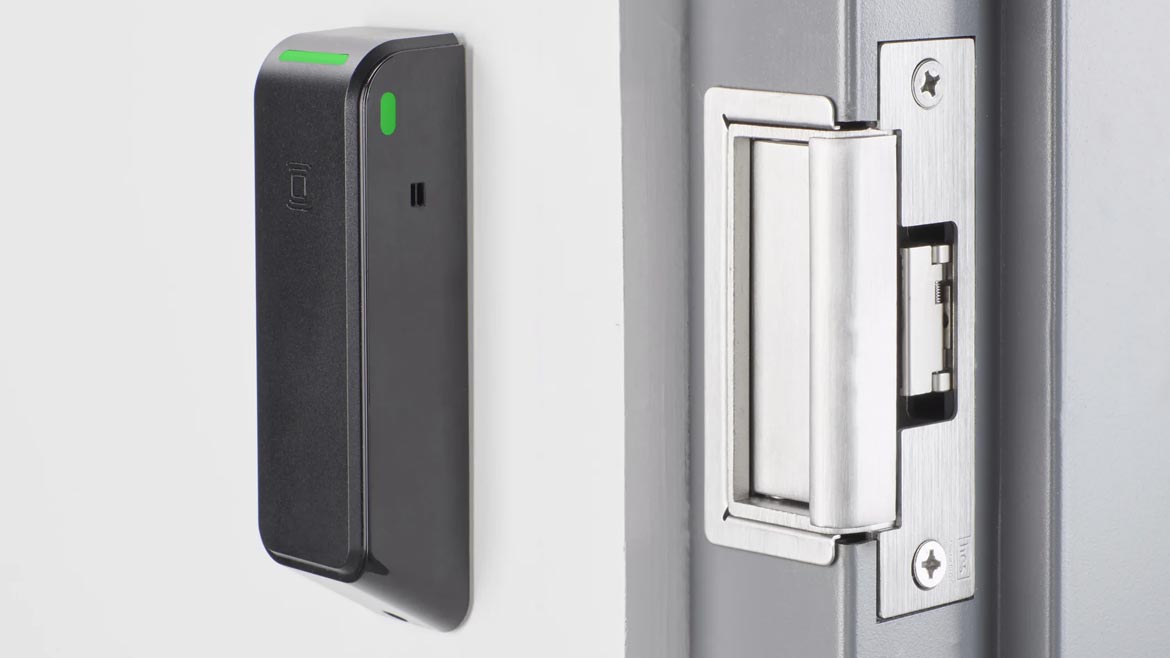
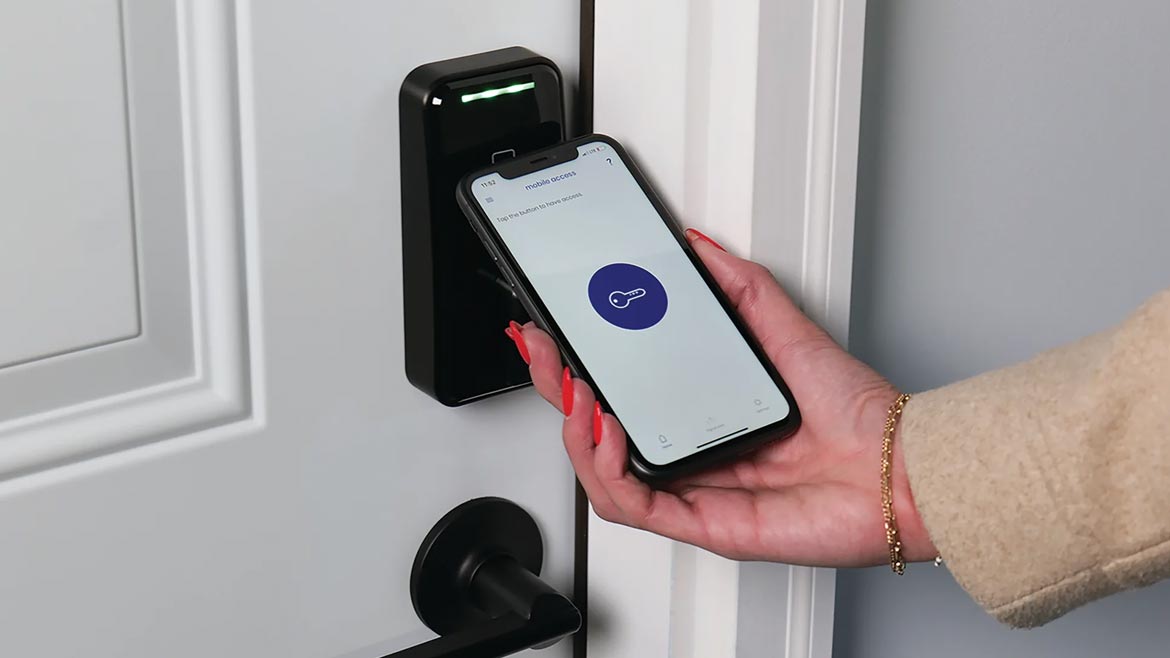
Sundar Raj Dore Vasudevan of Allegion says security is no longer a checkbox; rather, it is a core buying decision. “Organizations, especially in government, healthcare and education demand end-to-end security that covers both physical and digital layers,” he says.
Thus, Schlage, an Allegion company, engineers wireless solutions to meet the highest standards for data protection and regulatory compliance. The company offers a full spectrum of wireless solutions, from the standalone/non-connected offline CO-200 / AD-200 electronic locks; NDEB (Cylindrical Chassis) and LEB (Mortise Chassis) combining a reader, sensors, and a lock; and the NDEB/LEB/AD-400/AD-402 locks that use BLE/900 MHz wireless to communicate with a Gateway/Panel Interface Module (PIM) for real-time integration with PACS platforms.
dormakaba sells a wide range of RFID locks that include NFC chips for future expansion as well as BLE (Bluetooth Low Energy) options for mobile technology and mobile credentialing in different verticals. dormakaba goes to market in a few different ways with its locking solutions. “We have holistic software environments, and we call it an ecosystem,” says Darren Weinstein of dormakaba North America. “We’re part of an ecosystem, and we have software that runs our locks in different verticals. Our software for hospitality is going to look a little different than multifamily.”
Paxton’s PaxLock range consists of two variants of wireless electronic door handles, most commonly deployed in offices, educational facilities, healthcare environments, and multifamily housing. Recent developments in the PaxLock range include wireless communication via Bluetooth for remote management, dual frequency RFID support, real-time event reporting, and battery efficiency with low-power consumption and alerts for replacement.
ASSA ABLOY’s commercial division offers both 802.15.11 Wi-Fi and 802.15.4 Zigbee-based wireless locking devices (or Aperio), the primary benefits of which are real-time communication and a variety of form factors to fit unique applications (i.e. a wireless reader for glass entrances). As a company that never stops developing and improving its solutions, ASSA ABLOY greatly values end-user and partner input for its development roadmap. “Top requests include smaller profiles, improved energy efficiency, extended RF range, cyber hardening, and ease of use,” says Lester LaPierre of ASSA ABLOY Opening Solutions – Americas.
The Road to Recurring Revenue
Wireless locks create several recurring monthly revenue (RMR) opportunities for integrators. “An advantage of wireless locking solutions is the ability to secure more openings for the same budget in a much shorter timeframe,” LaPierre says. “This means integrators can add more secured openings to their maintenance contracts for additional recurring monthly revenue.”
Rowland says, “[RMR opportunities include] managed access control services (outsourced system management for end users); mobile credential subscriptions for end users who prefer smartphone-based access; software maintenance agreements (including updates, support, and analytics); and battery replacement/service contracts as part of preventative maintenance.”
Dore Vasudevan agrees, listing mobile credential licensing (many integrators bundle credentials plus admin as a per-user monthly line item) and lifecycle maintenance (battery replacement cycles, complete health checks, and periodic firmware/security updates can be packaged into annual or monthly service agreements) as opportunities. “Today’s wireless locks are part of a broader ecosystem, one that demands thoughtful installation, seamless integration, and ongoing support,” Dore Vasudevan says.
We don’t sell locks anymore; we sell solutions.
Strategy is Key
Opportunity is especially abundant for integrators who do the leg work of staying up to date on developments in wireless solutions and technology, training and continuing education of verticals they serve, and becoming part of a wholistic solution.
“Wireless locking solutions offer tremendous value, but only when deployed with the right strategy,” Dore Vasudevan says. When it comes to selling, he says leading with use cases (rather than specifications), hardening credentials early, bundling services, highlighting the vertical fit, and leveraging demos are all important. “Focus on solving problems, such as lockdown, mobile access, retrofit, or cloud management, rather than just listing features. … Offer mobile credential licensing, cloud/app management, and lifecycle maintenance as recurring service packages. … Tailor messaging for education, healthcare, multifamily, and government,” he says.
Using configuration/commissioning tools, planning for connectivity, retrofitting smartly, and testing thoroughly are important in the installation process, Dore Vasudevan says. Finally, on the maintenance front, Dore Vasudevan emphasizes the need to stock modular parts, standardize your toolchain, schedule lifecycle services, and remember that field serviceability matters.
Rowlands advises integrators to do the following:
- Sell the value of flexibility. “Highlight the ability to scale from standalone locks to fully networked systems, and emphasize the cost-effectiveness compared to traditional hardwired solutions,” he says.
- Invest in training. “Ensure smooth installations and position yourself as a trusted expert for your clients,” he says.
- Promote ongoing services. “Offer credential management, software updates, and maintenance programs, which deliver long-term value to customers and create recurring revenue opportunities for integrators,” he says.
“The real takeaway is we’re really part of a solution,” Weinstein says, adding that understanding the consultative approach comes before picking a solution. “Understand the tech stack around it and then work your networks around the tech stack.”
Weinstein also believes that training and focus are imperative. “That’s where I would start as an integrator, understanding the space and where you’re selling,” he says. “We very rarely in the market see somebody on the integration side of the business doing an airport today and a multifamily building tomorrow. They’re usually set in their verticals.”
LaPierre sees a huge opportunity for integrators in the market. “Start adding wireless locks to your systems designs today. Wireless locks have a proven track record with over 20 years in the market — some installations include tens of thousands of units,” he says. “They’re quick to deploy, with installation times averaging around one hour, which can drastically improve operational efficiency.”
Integrators Aren’t Alone
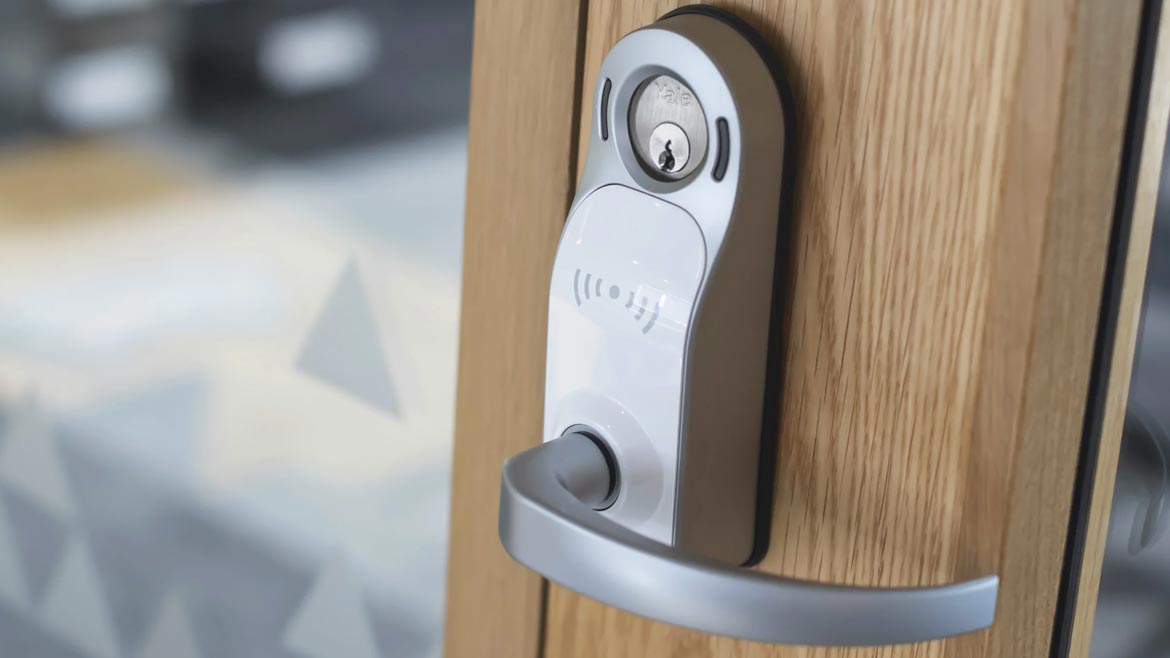
Manufacturers have various resources available to support dealers and integrators throughout installation, maintenance and upgrades. For example, Paxton offers step-by-step installation guides and video tutorials, technical support, training programs designed specifically for integrators to build expertise, and regular software upgrades.
ASSA ABLOY has a team of field sales engineers who train and certify technicians on the nuances of wireless technology, installation, configuration and commissioning. “They often accompany technicians at the job site to provide coaching in a real-world environment,” says Lester LaPierre of ASSA ABLOY Opening Solutions – Americas. In addition, ASSA ABLOY has a dedicated technical support team available via phone call or text through the ASSA ABLOY Customer Support app to provide that first-line support.
ASSA ABLOY also offers pro services to guide integrators for successful deployments, including IT requirements, credential management and migration to mobile, test bed set up, and, ultimately, final lock configuration and commissioning.
As a company that emphasizes continuing education, dormakaba offers certification training. “I’d recommend integrators get involved in one of those classes and get certified within the product,” he says. “It would be vertically split between commercial and possibly multifamily, where they’d learn different things about that vertical. If they work in the commercial space versus the multifamily space, understand how to differentiate the products and utilize those certification classes.”
Finally, Allegion offers a suite of tools, apps, and services designed to support integrators across the entire lifecycle of wireless lock deployment. “These tools not only simplify installation and commissioning but also enable predictive maintenance, remote diagnostics, and seamless upgrades,” says Sundar Raj Dore Vasudevan of Allegion. Allegion’s suite of services includes web and mobile apps, modular service kits, guides and data sheets, and training and field support.
Looking for a reprint of this article?
From high-res PDFs to custom plaques, order your copy today!