Pro-Vigil Survey: Nearly Half of Businesses Fear Economic Uncertainty Will Impact Physical Security in 2026
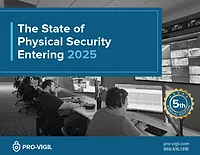
Pro-Vigil, a provider of AI-enabled remote video monitoring (RVM), management and crime deterrence solutions, published its The State of Physical Security Entering 2026 research report. The sixth annual study shows that physical security incidents remain persistent: 88% of respondents reporting incidents at their business either increased or stayed the same in 2025, on par with the 91% who reported the same in 2024.
The survey polled business leaders across industries including construction, dealerships (car/truck/boat/RV), retail, manufacturing and more to understand how crime, economic conditions and technology are shaping physical security strategies in the year ahead. Key findings include:
Security Incidents Steady, Bottom Lines Remain at Risk
In 2025, 12% of respondents reported an increase in physical (non-cyber) security incidents, while 76% said incidents stayed the same and only 12% saw a decrease. When incidents occur, they hit operations hard: respondents cited damage to assets (27%) as the top impact, followed by impact to inventory (21%) and project delays (18%).
Local Crime and Economic Uncertainty Driving Concerns
Respondents looked at local conditions and the broader economy as key drivers of physical security risk. Among those experiencing more incidents, rising local crime (20%) and the state of the economy (16%) were stated as top factors behind the increase.
Looking ahead, 46% of respondents said they fear economic uncertainty will negatively impact their business’s physical security in 2026. In the face of economic uncertainty, Jeremy White, founder and CEO, Pro-Vigil, anticipates customers will either cut their security budget or hold flat. “Maybe they’ll look at operational improvements that they can make,” White said. Regardless, this uncertainty could lead to a volatile market that makes it difficult for business to surge. “I really do believe that it’s about how we position ourselves with our customers and the solutions that we’re providing for them and making sure that that they understand what you’re doing day in and day out to help protect their businesses.”
Looking for quick answers on security topics? Try Ask SDM, our new smart AI search tool. Ask SDM →
The most worrisome economic issues for security programs were inflation (22%), unemployment (15%) and tariffs (14%), followed by interest rates (8%). “We thought that tariffs were going to be a major concern, and it fell below inflation and even unemployment. It really is not what I would call a headwind … with inflation being much more of a concern,” White said.
These statistics point to a dynamic landscape for security in 2026. “Tighter budgets, higher crime … those are double whammies,” White said. He encourages security companies to be open-minded, explore different services and substitute products, and try to get in clients’ CapEx range. “You have to show value. I recommend holding quarterly business reviews with your clients and going over just what you’ve done for them. As an industry, we have to do a better job at showing the value that we’re providing day in and day out.”
AI Awareness Surges, but Adoption Still Lags
The 2026 report also tracks how businesses are thinking about and using AI in their physical security programs:
- 15% of respondents now say their physical security strategy utilizes AI, more than double the 7% who reported using it in 2024.
- Perceptions have shifted even more dramatically: 61% believe AI can be a useful tool in stopping physical security incidents at their business, while 29% are unsure.
- Yet 60% still say they are not using AI for security, and a further 25% don’t know if their systems include AI, indicating significant room for opportunity and adoption.
Despite rising awareness of AI and ongoing incident levels, most organizations have been slow to change course: only 23% of respondents said their physical security strategy changed in 2025, and many who did not change pointed to a perceived lack of incidents or confidence that they are already secure.
“I absolutely believe that the adoption will continue to probably double, if not at a greater rate,” White said. I would expect it not to slow down by any means at all at this point. It’s just too available. It’s reasonably priced. The adoption the skill set needed to understand it and utilize it is pretty low.”
Confidence in AI isn’t stellar yet, though, and White pinpoints fear of the unknown, and fear of losing jobs, as the primary drivers of this doubt. “It only does what you tell it,” he assured. “It doesn’t have a mind of its own. It’s very accurate. It’s very fast. I do believe that the lack of education, or just the understanding of how it’s going to help these businesses, is diminishing.”
Looking Ahead to 2026
The outlook for 2026 reflects ongoing anxiety about crime and uncertainty: 45% of respondents said they are more worried about crime than they were a year ago, and a majority, 52%, expect physical security incidents at their business to increase in 2026. “Security is top of mind with no end in sight of it reducing itself,” White said.
As Pro-Vigil celebrates its 20th anniversary, the company is optimistic about 2026. Between evolving technologies and new, exciting markets the company began to explore in 2025, White sees a year of growth ahead. “We’re excited about the technology roadmap. We’ve really kind of turned a corner where we’ve been forcing new technologies into an industry that’s still growing, and now it’s all coming together. So we’re able to push out new features that are customer facing, increasing the customer experience, among other things,” he says. “We’re super excited to grow into new industries. It’s new learnings for us. It’s different business cases all the way around, so it challenges us. It keeps us on our toes. And that’s when we’re at our best.”
Looking for a reprint of this article?
From high-res PDFs to custom plaques, order your copy today!