2 Expert Opinions on Emergency Communications
|
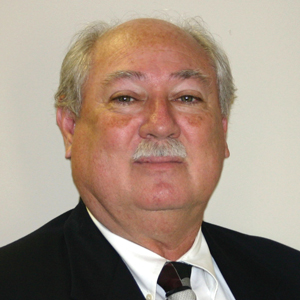
| Larry Mann |
Effectively notifying the public of a situation today will test the integrator’s knowledge of the vast array of possibilities.
The ability to communicate with the public when an emergency occurs is critical. Each new incident that occurs on site or elsewhere highlights the issues, deficiencies and problems that can occur if people can’t be informed in time that there is a shooter on a campus, or a bomb entering a military site. The days of specific tones for tornado or fire are long past, and the era of voice arrived several years ago.
The latest technologies follow the course of society in general. When the Egyptians decided to protest the government, their primary means of communication was social media. The security and fire industry is quickly realizing that such methods — and other technological means — are embedded in society today.
SDM recently spoke with two experts in emergency communications to find out what the trends are, how they can be applied, and what integrators need to be aware of when implementing them. Tom Hammerberg is president and executive director for the Automatic Fire Alarm Association, Jasper, Ga. Larry Mann, project manager, Central Station Inc., Birmingham, Ala., is a committee member on UL 2572, a developing standard for emergency communications.
SDM: What types of systems and components fall under the term “emergency communication systems?”
Tom Hammerberg: Emergency communication can include a number of different systems. These include emergency voice communication systems in large buildings and high rises; public address systems that can be used in some cases as emergency communication systems; mass notification systems; fire department radio systems; phone systems; and pretty much anything else that sends emergency communication using voice. In addition, when you start getting into mass communication, it includes other types like text messaging, text 911, and e-mail messaging.
Larry Mann: The original systems were part of just the fire alarm. But that was only local to the building. Now when we think about communicating with lots of people, we refer to what we call giant voice systems (outdoor alerting systems), SMS text messaging, and network-based notification systems for employees of a company that have their own internal LAN or WAN. We use telephone dialing systems to make phone calls, like one of the local cities here in Alabama recently did to alert the public when a tornado was coming.
SDM: How are emergency communication systems changing or evolving to incorporate new technologies?

|
| Tom Hammerberg |
Tom Hammerberg: I think it is more about the use of technologies that the fire alarm industry is not used to. For instance if you go to an arena to watch a basketball game they have a big scoreboard over center court. That could be used to flash messages much more effectively than having smaller speakers or strobe lights. It is not necessarily new technology, but it is new on the fire alarm side. The Internet is another one, as is Twitter or e-mail or text messaging. This is the way many people communicate today.
Larry Mann: They really are starting to incorporate phone systems, computer systems, instant messaging and text messaging. Display signs, terminals in airports can be part of this. It is a fantastic growth opportunity in our industry. The roots were from fire alarm side but it has taken off.
SDM: What is mass notification and how does it apply to emergency communications?
Tom Hammerberg: The whole concept of mass notification systems was originally brought to NFPA’s attention by the military as protection against terrorist attacks. The trends today are to have mass notification systems in schools and colleges because of shootings and other incidents.
Looking for quick answers on security topics? Try Ask SDM, our new smart AI search tool. Ask SDM →
Larry Mann: The driving force behind mass notification was the bombing of a U.S. military facility in 1994 in Saudi Arabia. That is when the military got involved. There was a guard on top of that building. He saw the truck, knew it was suspicious and started going through the building alerting people, but had no way of alerting everybody. That was a shortcoming and why they started looking at mass notification systems.
What is driving the public sector sale of these systems now is salespeople getting out and educating facility managers. It doesn’t have to be an emergency. If you need to notify your sales force of meeting schedules, it can be used for that. If you can get people used to receiving these and acting on these, when an emergency does come and they are used to it, they will react. A fire system is limited to when a fire alarm goes off.
SDM: Will mass notification systems take the place of more traditional emergency communications?
Tom Hammerberg: Mass notification is only one aspect of emergency communications. You can never rely totally on just one aspect. You can use Twitter or e-mail or text messaging, but the challenge is a lot of people change e-mail addresses. Unless they are on an updated list they are not receiving notifications.
If you need to let someone know something, whether it is a weather or terror alert, that would be one way to get information out to a number of people very quickly. But it is not going to be used exclusively.
Larry Mann: Not everyone is in contact all the time. When there was a shooting at a college campus in North Carolina they had messages that didn’t reach some of the students. It took almost 20 minutes from time the message was initiated until one student got it. In the tornado incident, they found out they have 25,000 to 30,000 phone numbers in the database and had a leeway time of what they thought was 5 to 15 minutes before it was expected to hit. By the time they gave the “all clear” they had only alerted about a quarter of their population. They never took into consideration how many phone calls you can make in a minute. The people who sold them the system said they can alert 20,000 people in the same phone call, but not if you only have 300 incoming trunk lines.
This stuff is not guaranteed. Some of the systems out there do not meet the high standards we normally set for life safety systems. I don’t think it is ever going to be a replacement for a hardwired fire alarm-based system that can get information immediately right there. But on the other hand, an alert siren doesn’t give you the information that mass notification can give.
SDM: What codes or standards are in place or in the works that affect emergency communication or mass notification?
Tom Hammerberg: There is a new chapter in the 2010 NFPA 72 code on emergency communication systems. In there it gives the requirements for each type. One would be emergency voice communication systems. They talk about survivability requirements for the circuit. They talk about speaker locations. It is the first edition of the code that had any requirements for installing emergency communication systems.
Larry Mann: Mass notification derived from the military or government side. There is a standard for it, but it is in the Unified Facilities Criteria, which is a DOD communication. What they have done in the fire alarm code, NFPA 72, is to try to give some guidance as to system design and good engineering practices, because it is not covered as a requirement in a building code. What we are working on right now is the 2013 code and it will take up a major chapter then. NFPA is moving forward along those lines.
UL is also working on UL 2572, which is a standard for the manufacturers, mainly for the head end and how it interfaces with SMS texting, e-mail and computer. We can’t control those. Once you send text messages out you lose control of it. But we can control the head end that will send it and make the provider of that service meet certain requirements.
SDM: What advice do you have for integrators?
Tom Hammerberg: My primary advice is if you are going to be in a situation to install any of these systems, get educated on the process. It is a lot different than a typical fire alarm system. Take advantage of seminars or webinars. Get familiar with the requirements in the 2010 edition of NFPA 72. Talk to manufacturers of the equipment. Ask a lot of questions.
Larry Mann: [Look at] where there is a lag in adopted code. To make that be a system that will actually last for a while, they need to use — even though it’s not adopted yet — the latest edition of codes they can get their hands on. 2010 is definitely critical. If their area has only adopted the 2007 edition of the code, that does not give them the guidance that they need. They need to increase their awareness of what the Unified Facilities Criteria guidelines.
SDM: What do you think the future holds?
Tom Hammerberg: The trends I have seen are more requirements for voice systems in facilities. Whereas before, if someone installed a fire alarm system they might just use horns, there is now more of a trend toward voice, even in smaller schools. Then once they have speakers in, it is easier to upgrade and include mass notification.
Larry Mann: It is going to continue to evolve based on technology. There are going to be things that we use three to four years from now that we have not thought of yet. There will be new ways of communicating. Smart phones are relatively new. As more and more people move to that technology, we will find we can get information to more people. A lot of our notification will be either networked or some type of computer-based communication system. It will definitely continue to change. We will see new players in the industry.
Looking for a reprint of this article?
From high-res PDFs to custom plaques, order your copy today!