Alarm Transmissions
Gasoline, POTS & New Ways to Communicate Alarm Signals
|
|
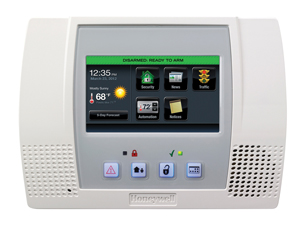
Honeywell’s LYNX Touch 5100 control panel comes with a Wi-Fi transceiver and can be programmed to send alarm signals over a client’s existing Wi-Fi. PHOTO COURTESY OF HONEYWELL |
As much as I dislike the idea of turning into an extra cranky version of the late Andy Rooney, as time goes on, I truly believe that in many ways the devices and technologies we used in years past were better than what we have today. Or, at least they were easier for me to understand and use.
Take outboard motors. The DNA of the Engebretson family has always required that male members must own a functional outboard motor, preferably a Johnson, with which to propel our boats into angling misadventures. In my case, it was a 5-horse 1949 Johnson Sea Horse. This motor has been in our family since it was new, and always started and ran well, even after all the paint had been scraped off.
However, like everything that is more than 60 years old, the mighty Johnson has lost its thrust. After a couple of visits to the outboard MD, it was determined that the ignition points (remember those?) were defective. A determined search of the Internet and numerous telephone calls yielded no replacement part availability, so it was time to buy a new motor.
After a trip to one of the huge outdoor sporting goods stores, I was the proud owner of a brand-new, major-brand outboard motor (no names, but think Roman mythology). This will be great, I thought. The new motor was a four-stroke, no more messy mixing gas and oil, low emissions — all the latest technology.
It hasn’t worked out that way, as the motor has been back to the shop three times within the past two years. The latest problem was simple; it wouldn’t start regardless of the scores of times the motor was pulled. The mechanic reminded me that today’s gasoline isn’t the same as the old stuff; current gas is a blend of gasoline and methanol, and those components will start to separate within three weeks after purchase. Although I understood this and was using a “gasoline stabilizer,” apparently I was using the wrong brand for that particular motor. It was this “new technology” gasoline that messed up my motor. I can’t buy the old kind of gasoline, so I’m stuck with a finicky device that sometimes works and sometimes doesn’t. I’m not built for rowing, so I’ve traded the family flashback roar of an outboard motor for the silent but functional push of an electric trolling motor. I had to make the change.
Our industry is going through the same type of technology shift right now, as the old reliable POTS (Plain Old Telephone Service) phone lines are disappearing faster than we had planned. Let’s review the history of alarm signal transmission: direct wires (typically leased from phone companies) were exchanged for digital dialers connected to POTS as the 1970s turned into the 1980s. As customers have disconnected their phone lines, alarm dealers have responded with various technologies, with many alarm transmitters utilizing cellular technologies to transmit the signals to a central station.
Having been involved in the initial installations of radio-based alarm transmitters, as well as being an early cellular phone customer, I’m aware of the various problems that cellular and radio-based alarm transmitters can pose to dealers. It can be difficult to get the proper signal strength, and often the radio needs to be mounted some distance from the existing alarm panel, which means that the installer must pull new cable for the “last 50 feet” (I plan to trademark this phrase) inside the building. The need to wire the radio means increased installation time and cost, along with the time it takes to find a good location for the transmitter.
Looking for quick answers on security topics? Try Ask SDM, our new smart AI search tool. Ask SDM →
Security dealers might not be thinking about another problem. When we install a cellular-based alarm transmitter, we are depending on the wireless carrier to bring the signals to the central station. As can be seen from the current blizzard of television and radio ads, our domestic cellular carriers are currently upgrading their networks to “4G” technology. As the cellular companies perform their upgrades, they will be turning off older technologies, as their FCC-issued radio spectrums are limited in capacity, and the cell companies want to push the new technologies so the users of iPhone, iPad, and other wireless devices can download massive files such as movies and television shows over the wireless networks.
The cellular companies want their customers to transmit huge amounts of data, as they are charging the customer by the amount of bits and bytes used each month. It is interesting to see that almost all of the major cellular carriers are dumping their “unlimited” data plans and putting their customers on some form of pay-to-play billing plans. After all, they are in the recurring revenue business, just like our industry.
I do not believe the cellular companies care about carrying our alarm signals, for the simple reason that an alarm transmitter does not gab for hours over the air every month. A few short test messages is the likely amount of data a transmitter will send, which doesn’t translate into a bill for sending buckets of data.
I believe that the long-term solution to central station alarm signal transmission is sending the alarms via IP over the Internet. While cellular carriers can change their technologies, there is simply too large of a base of Internet users (basically everybody, everywhere) for this signal transmission method to change dramatically. Virtually every alarm control panel manufacturer is supplying various types of IP alarm transmitters either as separate add-on devices or integrated into their control panels. The problems of finding the proper place to put a radio are eliminated; we just need to communicate the alarm signals to the customer’s Internet-connected LAN network.
You might agree with me, but also see that the problem of the “last 50 feet” still exists. It is very likely that the location of the existing alarm control is in a different room than the client’s LAN network switch, and we’re back to pulling wire in an existing structure.
There are currently work-arounds for this issue, including the use of Ethernet transceivers that can be plugged into AC outlets and use the building’s power cabling to carry the alarm communications to the network switch.
There is an easier way, and it’s going to get better as time goes along. The future of our industry is leveraging and using the existing network connectivity, wired or wireless, that the client already has implemented. Honeywell recently introduced a new model to its self-contained wireless control panel series, the LYNX Touch 5100. This control panel comes equipped with a Wi-Fi transceiver and can be programmed to send the central station alarm signals over a client’s existing Wi-Fi connectivity, eliminating the wiring from the control to the client’s network switch. This panel also can have a Total Connect wireless alarm transmitter connected, providing a redundant or backup alarm signal transmission path.
Honeywell gets it, and is providing the technologies that our industry needs now. Hopefully in the future we’ll see this Wi-Fi alarm signal transmission technology offered on a wider spectrum of the company’s control panel line.
Now all I need is a set of points for a Johnson A-20 1949 Sea Horse. Let me know if you’ve got ‘em.
Looking for a reprint of this article?
From high-res PDFs to custom plaques, order your copy today!