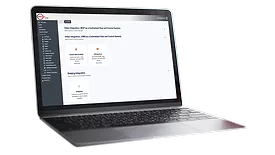
Natively integrated with Gallagher’s site management platform Command Centre, the visitor management solution delivers a smooth user experience for both visitors and staff across multi-tenant and campus environments.
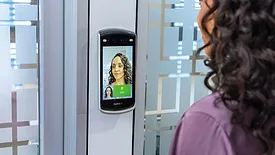
Once considered mostly a niche security tool, biometrics are finally gaining traction as mobile adoption, improved technology, and deeper integrations make it easier and more desirable to deploy.
After a protracted adolescence, biometric technologies — particularly fingerprint, facial and iris recognition — are finally reaching maturity, according to subject matter experts SDM spoke with for this article.
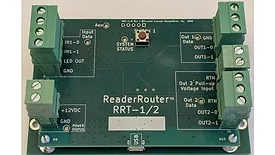
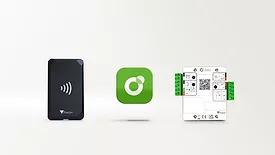
The ReaderRouter RRT-1/2 provides a one-input, two-output solution for smaller access control installations that require card reader sharing between two control systems.
The integration enables HR, security, facilities and administrative departments to efficiently onboard employees and visitors, issue credentials and manage access privileges through intuitive cloud-based platforms accessible from virtually anywhere.
The tech perspective, created by ZBeta LabZ, examines how PKOC — an open credential standard based on asymmetric/public key encryption and developed by PSIA — could influence the future of physical access control.
Terms like ‘single pane of glass,’ ‘AI’ and ‘consultative selling’ may dominate today’s security conversations, but real-world integrations remain far more complex.
The Pye-Barker team drew up a detailed security plan for the clinic, involving access control from PDK as well as integrated video surveillance cameras. The final security plan saw the Pye-Barker team setting up controlled access throughout the interior and exterior of the facility.
The new capabilities advance access control from reactive alarm handling to a new operating model designed to eliminate unnecessary work, prevent recurring issues at the source and focus operator attention on the events that actually matter.
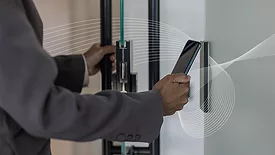
As today’s workforce becomes more connected and employees expect seamless, mobile-enabled experiences, legacy credentials introduce friction, inefficiency and security risks to organizations.
Solo combines the straightforward installation of a standalone system with the capability of networked access control. There is no requirement for an on-site data network, server or centralized PC. The system is created and managed entirely from a smartphone. In effect, the phone is both the system itself and the key in your hand.