Access Control & Identification
Biometrics Comes of Age
Once considered mostly a niche security tool, biometrics are finally gaining traction as mobile adoption, improved technology, and deeper integrations make it easier and more desirable to deploy.
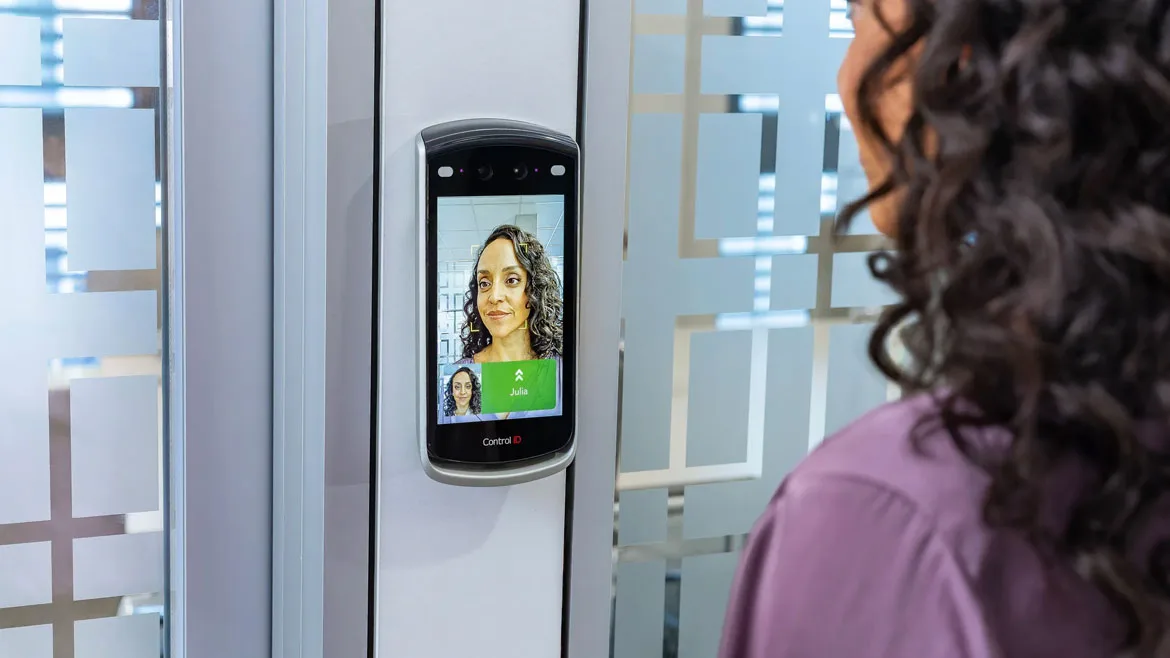
Biometric technologies are more cost-effective, convenient and easier to deploy and integrate with other systems than ever before.
After a protracted adolescence, biometric technologies — particularly fingerprint, facial and iris recognition — are finally reaching maturity, according to subject matter experts SDM spoke with for this article.
One reason is an increased focus on the importance of trusted identity.
“Biometrics now sit at the center of identity-first access control,” says Hanchul Kim, CEO, Suprema Inc., Lake Mary, Fla. “In traditional systems, identity was often represented by something a user carried, such as a card or mobile credential. Biometrics strengthen that model by verifying the actual person behind the credential.”
Jeremy Bragg, strategic advisor, access control, Axis Communications, Chelmsford, Mass., adds, “Organizations are looking to combine identity data with information from multiple systems to create a more comprehensive understanding of activity across a facility. As a result, biometrics are increasingly viewed not simply as an authentication tool, but as one component of a connected system designed to enhance security and operations.”
What has changed, Bragg continues, is that the surrounding ecosystem has matured. “As access control systems continue to move toward IP-based devices, open platforms and standards-based communication, it is becoming easier to incorporate biometric technologies into broader security and operational workflows,” he says. “Standards such as OSDP (Open Supervised Device Protocol) also support more secure and interoperable communication between devices, helping reduce some of the integration challenges that previously limited adoption.”
While biometrics still have a primary spot as a higher-assurance technology in sensitive applications, they are increasingly being looked at for convenience (“frictionless”) as well as a potential savings measure when compared to the cost of replacing cards.
“Biometrics typically fit where organizations need either a more convenient access experience, a higher level of identity assurance, or both,” says Ben Saunders, senior manager, biometric readers solutions, HID, Austin, Texas. “They also fit naturally in higher-security areas, such as data centers … and financial environments where organizations want stronger proof that the person requesting access is the authorized individual. But in the larger integration space, biometrics are becoming part of the complete identity and access ecosystem that can serve small businesses through large enterprises. The trend is toward biometric capability being integrated into the larger access control and identity management environment rather than operating as a secondary system.”
Looking for quick answers on security topics? Try Ask SDM, our new smart AI search tool. Ask SDM →
It has been a long road to get to this place, and there are still hurdles to overcome. But trends like trusted identity, AI, mobile credentials and frictionless access are all friendly to biometrics and add to the appeal. At the same time, costs have come down for many biometric solutions, and ease of deployment has gone up.
“As organizations look for ways to tighten security without adding friction, the idea of making the person the credential is gaining real traction,” says Jeff Bransfield, regional director of digital access solutions, ASSA ABLOY, New Haven, Conn. “It’s a straightforward concept with meaningful advantages: unlike a keycard, you can’t leave your face at home. Unlike a PIN code, you can’t accidentally share it with a coworker. Biometric identifiers are tied to the individual in a way no physical credential ever can be.
“There’s a practical business case here, too,” Bransfield adds. “In large facilities, credential loss and replacement might seem like a minor line item until you factor in the material costs and overhead of reissuing credentials or rekeying. Reducing even a modest rate of lost or forgotten credentials can translate into meaningful savings in administrative time and replacement costs, making biometrics an easier conversation to have when budgeting.”
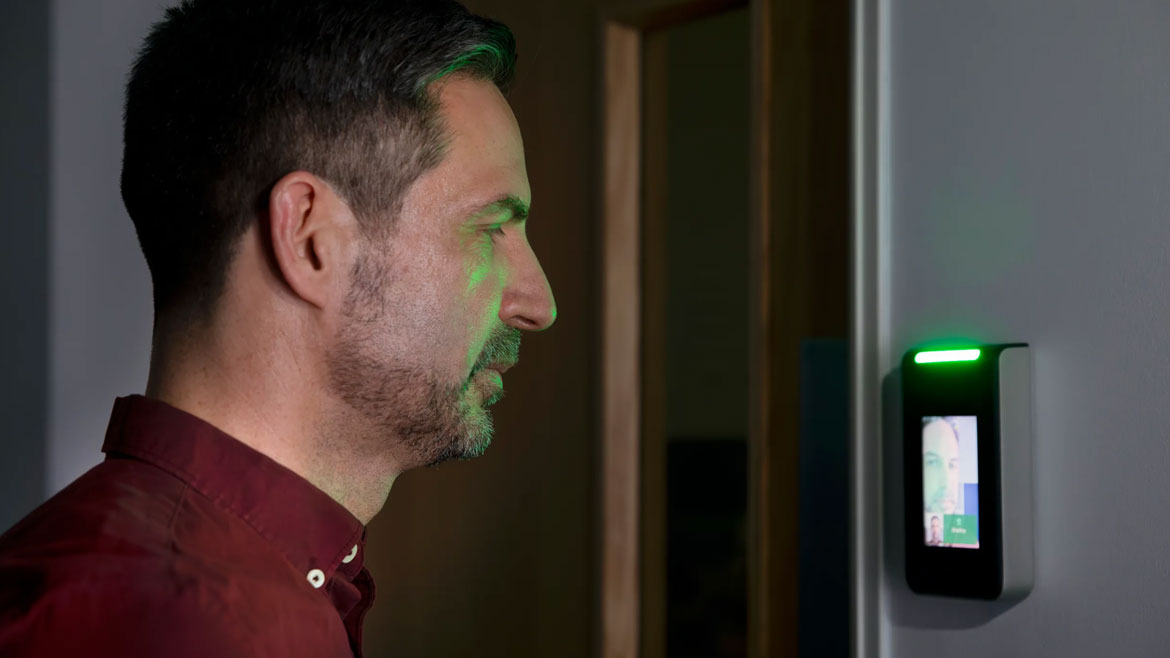
“Privacy concerns and regulations are important considerations, but they are not preventing adoption. Instead, they are shaping how biometric systems are designed and deployed.”
The Long Road to Acceptance
Unlike technologies coming up at the same time, like IP cameras and smart cards, biometrics has had a longer adoption path. One reason was the cost. Biometric solutions were initially standalone units that were both more expensive and challenging to enroll, leading to their more niche status in high-security applications. Another reason, and one that continues today, was privacy concerns and the perception that it stores personal data like fingerprints or faces.
“Historically, adoption has been held back by a combination of privacy concerns, cost, use-case uncertainty and the simple fact that many organizations were comfortable with cards and other familiar credentials,” Saunders says. “Biometrics also had to overcome perceptions around accuracy, throughput and user acceptance.
“That is changing because people now use fingerprint and facial authentication every day on phones, laptops, banking apps and payment systems,” he continues. “That familiarity has made biometrics feel less exotic and more practical. At the same time, biometric technologies have become more accurate, reliable and able to support higher throughput. Those improvements, along with cost-efficient designs, are making biometrics more viable for mainstream access control applications, especially where organizations want to combine convenience with higher assurance.”
Some of the challenge has been simply perception, Bransfield says. Once pigeonholed into a high-security specialized technology, biometrics has struggled to overcome its reputation.
“Ask most locksmiths or security integrators who work with small and mid-sized businesses whether biometrics are on their radar and for a long time, the honest answer was, ‘Not really,’” Bransfield says. “Biometrics felt like something you’d find in a hospital, a government facility or a data center, not a local office or retail operation. That assumption, layered on top of real concerns about cost and complexity, is a big part of why biometric authentication never quite broke through in everyday access control deployments.”
Perhaps the biggest hurdle has been privacy concerns. With several states or municipalities passing laws restricting certain biometric use and user concerns, it is an issue that continues to plague biometrics today.
Yet, it is not an unsurmountable challenge. “Privacy concerns and regulations are important considerations, but they are not preventing adoption,” Kim says. “Instead, they are shaping how biometric systems are designed and deployed.”
Bransfield agrees, noting, “Privacy concerns and biometric regulations are often cited as reasons biometrics haven’t taken off faster. The reality is a bit more nuanced, in that they’re typically not so much as a wall as a speed bump. … One thing that often surprises administrators is that pushback rarely comes from the people using the system. Students, employees and staff tend to be genuinely enthusiastic about biometrics once they experience the convenience first-hand. … The caution tends to live at the administrative level.”
Mohammed Murad, chief revenue officer, Iris ID Systems Inc., Cranbury, N.J., says it is a common misconception that biometrics threaten privacy. “In reality, when implemented properly, biometrics create a protective envelope around an individual’s identity,” he says. “By binding identity to the person rather than credentials that can be lost, stolen or shared, biometric technologies strengthen privacy and reduce fraud. Through the use of encrypted biometric templates, strict access controls and privacy-by-design practices, biometrics become not just a security tool, but a powerful technology for safeguarding personal identity.”
Much of the pushback on privacy can be mitigated by responsible deployment, Saunders says. “Privacy concerns and regulation are certainly influencing adoption, but they are not stopping the market overall,” he explains. “In some jurisdictions, particularly at the state or local level, rules around facial authentication can create meaningful restrictions. … In commercial settings, adoption often comes down to transparency, policy and user choice. Many organizations are taking an opt-in or opt-out approach and are working through how to implement biometrics responsibly. The key is finding the right balance between security, convenience and privacy.”
Overcoming Privacy Concerns
One of the most frequent hurdles to adopting a biometric solution is the concern around privacy. The most successful deployments make sure all stakeholders are involved and understand what the technology does and does not do.
“Most organizations that are serious about deploying biometrics aren’t walking away from the idea because of privacy considerations,” says Jeff Bransfield of ASSA ABLOY. “They are slowing down to do it right. That means getting legal counsel involved early, building clear opt-in policies and ensuring transparent communication to users, especially in schools or public-sector environments where consent and disclosure are paramount. That process takes time, and it should. But it’s a planning challenge, not a deal breaker.”
Hanchul Kim of Suprema says when biometrics are transparent, secure and purpose-built for authentication, they are more likely to be accepted. “In access control, the key distinction is between biometric authentication and broader identification and surveillance. Authentication is a consent-based interaction with enrolled users, which is fundamentally different from open-ended identification in public spaces.
“Biometric technologies are generally well accepted when deployed with clear user communication, appropriate data governance and security at both the device and platform level,” Kim adds.
Jeremy Bragg of Axis Communications says biometric deployments should not be treated as simple product decisions. “They require clear policies around consent, data handling, retention, access and oversight,” he says. “Key considerations include what data is being collected, why it is being used, how it is protected, how long it is retained and how the system is governed. Technologies and deployments that can clearly address these questions are more likely to gain acceptance.”
What drives acceptance more than the technology itself is transparency and control, particularly around opting in or out, Bransfield says. “When users understand what’s being captured, how it’s stored, how long it’s retained and what happens if they opt out, resistance tends to soften considerably. The organizations that have had the smoothest deployments are usually the ones that over-communicate early and make the opt-out path easy to find and fill out.
“Privacy and compliance will continue to shape how biometric deployments get structured,” he concludes. “But for organizations willing to invest time up front in governance and policy, they’re increasingly finding that the path forward is not as problematic as they initially believed.”
“Users already authenticate to their phones biometrically, and organizations are now looking at how those same expectations for convenience, security and digital identity can extend into physical access control.”
The Mobile Connection
One of the bright spots in biometric acceptance has been mobile phones, and, for access control in particular, mobile credentials.
“It is interesting that people have been using some form of biometrics to access their phone for nearly a decade now, but only recently have biometrics become more commonplace for access control,” Murad says. “Mobile credentials have raised the market’s expectations around convenience and user experience. They have made users more comfortable with digital access and pushed the broader industry toward frictionless, app-based experiences.”
Increasingly, the two technologies are merging, or are at least complementary to one another, Bragg says. “Mobile credentials have changed the conversation by bringing a familiar authentication experience into the access control workflow,” he says. “Many users already protect their phones with a PIN, fingerprint or facial recognition, so some organizations may choose to leverage authentication that is already happening on the user’s own device, rather than deploy a dedicated biometric reader at every access point.
“In that sense, mobile credentials and biometrics are often complementary, rather than competing technologies,” he adds. “The mobile device becomes part of the identity and authentication workflow, while dedicated biometric solutions can still be used where a higher level of assurance or specific operational requirement exists.”
Saunders agrees that mobile credentials and biometrics are complementary. “Mobile has helped normalize the idea that a credential does not have to be a plastic card or physical object,” he says. “At the same time, the biometric capabilities built into smartphones have made users more comfortable with using fingerprint or facial authentication as part of their daily lives. That familiarity has created a stronger bridge between mobile access and biometrics. Users already authenticate to their phones biometrically, and organizations are now looking at how those same expectations for convenience, security and digital identity can extend into physical access control.”
Bransfield says that mobile credentials have changed the access control and biometric conversation in a meaningful way. “Tying access to a registered device that requires a PIN, face scan or fingerprint just to unlock introduced a level of identity assurance that a standard keycard never really had. It also made the everyday experience of getting through a door noticeably better — no card to dig out, no fob to track down. Just your phone.
“What biometrics and mobile credentials have in common is more important than what separates them,” he adds. “Both are moving away from the idea that access control means managing a piece of physical collateral and toward the idea that access should be tied to the person. … There is also a softer benefit worth acknowledging. Mobile credentials helped normalize the idea of frictionless, identity-based access, and that groundwork made biometrics an easier conversation to have. Once people were comfortable with the concept of their phone replacing their badge, the leap to their face or fingerprint doing the same thing became much more palatable.”
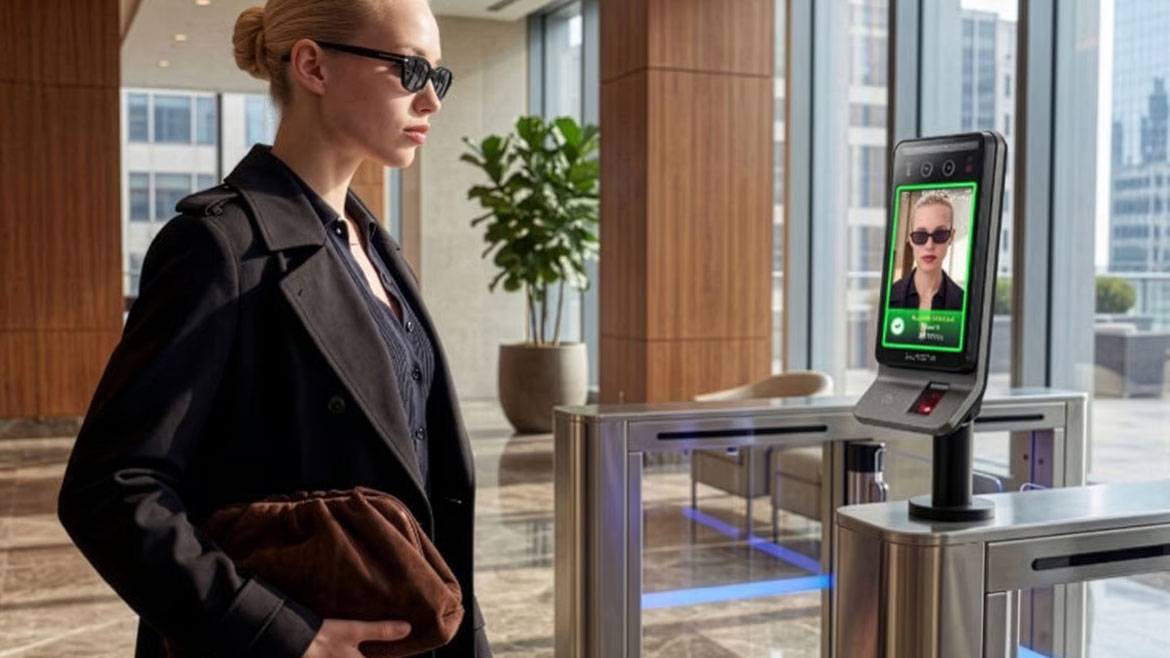
“Biometrics aren’t going to replace every other credential type tomorrow. But the barriers that kept them out of reach for so long are coming down, and the organizations that recognize that early will be better positioned for what access control is becoming.”
Becoming Part of the Ecosystem
Wider security industry trends are also having a big impact on biometric adoption, particularly artificial intelligence, and end users’ desire to have more data, more analytics and a connected ecosystem.
“In practical terms, biometrics are becoming a foundational identity layer that extends well beyond the door,” Kim says. “As physical security systems grow more connected and converged with IT infrastructure, trusted identity verification is being applied across a wider range of workflows where accuracy and accountability are critical.
“AI is now fundamental to biometrics,” Kim continues. “It improves authentication accuracy, speed, anti-spoofing performance and system adaptability across real-world deployment conditions. … A key part of our expertise is optimizing biometric AI engines to run efficiently inside embedded access control devices, where processing power, memory, power consumption, device size and response time are all constrained. That is where AI becomes practical for physical access control: not as a vague concept, but as technology that makes authentication faster, more reliable and easier to deploy.”
Another benefit AI is bringing to biometrics is, as the engine behind biometrics, the ability to learn over time, Bransfield says. This means that when someone’s face changes — growing a beard or wearing glasses — the system can learn and adjust in real time. “The result is a technology that can maintain high confidence in identity verification continuously, without requiring a human to step in and course-correct on a regular basis,” Bransfield says. “That kind of autonomous reliability is what makes biometrics practical at scale, and it’s largely why the conversation around these systems has shifted from, ‘Can it work?’ to, ‘How do we deploy it?’”
AI is also serving as a cautionary tale, Murad says. “The rise of AI and social engineering attacks have exposed the vulnerabilities of traditional access control systems that rely on physical credentials, which are easily shared, lost or replicated. Implementing biometric access control makes sharing credentials impossible, and the most advanced biometric devices are virtually spoof-proof, which is a specific concern given the exponential advancement of AI. Businesses are also looking at the costs of a physical/data breach — both financial and reputational — and are realizing that the cost of adoption is quite small in comparison.”
Another aspect of this is the increasing convergence between physical and logical access, something biometrics are well-positioned to help with. “Biometrics are becoming a bridge between physical identity and digital trust,” Kim says. “In physical security, they verify who is entering a facility; in logical workflows, the same identity layer can support stronger access management for systems, applications and operational processes, creating a more consistent and reliable identity framework across the organization.”
Bransfield adds, “One of the more significant things biometrics bring to modern security infrastructure is their ability to connect two worlds that have historically operated separately: physical access and digital identity. … The real power, though, comes from how biometrics function within a broader integrated ecosystem. On their own, they’re a strong identity verification tool. When connected to access control platforms, video surveillance, analytics engines and identity management systems, they become intelligent inputs that can trigger decisions across multiple systems simultaneously.”
All of these factors mean that biometrics is no longer on its own island or siloed, Saunders says. “We are seeing more interest in integrating biometrics directly into access control head-end systems, rather than managing them as a separate software environment. That makes biometric identity part of the broader security workflow instead of a standalone function.”
Bragg agrees. “[Biometrics] are becoming part of broader security and operational workflows, working alongside access control, video surveillance, visitor management and other systems. This integration helps organizations make more informed access decisions while improving visibility into who is accessing specific spaces and under what circumstances,” he says.
“That’s the direction the industry is heading,” Branfield says. “Technologies that used to sit in separate silos, including physical security, IT security, building systems and identity management, are increasingly communicating with one another via APIs and native integrations. Biometric data is becoming one of the key inputs that ties those conversations together, helping create environments that are more responsive, more accurate and less dependent on human intervention.
“Biometrics aren’t going to replace every other credential type tomorrow,” Bransfield concludes. “But the barriers that kept them out of reach for so long are coming down, and the organizations that recognize that early will be better positioned for what access control is becoming.”
Biometric Use Cases Today
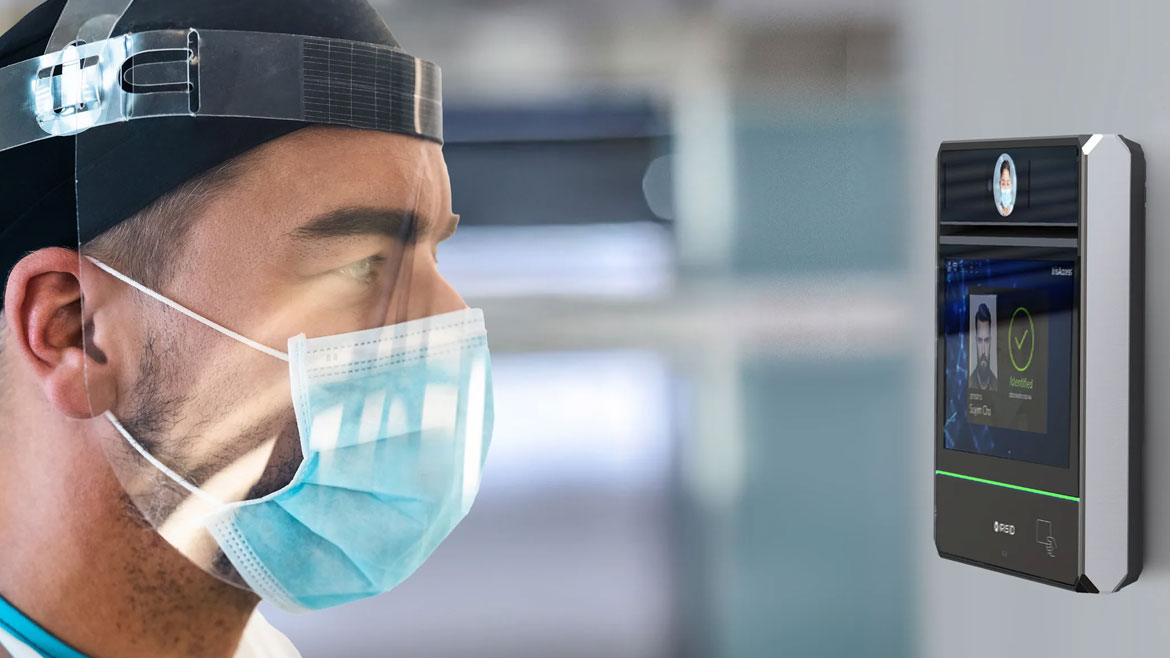
Biometric providers share some of the top examples of where biometrics is being used today.
“The strongest use cases fall into three categories,” says Ben Saunders of HID. “The first is convenience, where biometrics make access easier by reducing reliance on something a person has to carry. The second is frictionless or high-throughput access, such as turnstiles, lobbies and other entrances where people need to move quickly and securely. The third is high-security access, where biometrics are used as part of multi-factor authentication for areas such as data centers, critical infrastructure and finance environments.”
Jeremy Bragg of Axis Communications says there is a growing interest in combining biometrics with video and analytics to add context at a point of entry. “In one example at a convenience store, video analytics were integrated with an after-hours entry workflow so that customers were prompted to face the camera before entry was granted. In this case, video, analytics and access control worked together to support employee safety and improve situation awareness at the door.”
Jeff Bransfield of ASSA ABLOY says, “We are seeing clear growth in environments where people are moving fast, security matters and nobody wants to be digging through a bag for a credential.”
Some top examples are college athletic programs, where student athletes don’t want to carry a card as they move between locker rooms and training facilities; data centers, where identity verification is critical; and healthcare facilities, where touchless biometrics are popular for hygiene requirements. K–12 school districts are another emerging opportunity where managing credentials across multiple buildings is particularly challenging, Bransfield says.
“Different industries have different drivers, but the underlying logic is consistent across all of them: Organizations want access control that’s tied to the person, not something that can be lost, forgotten or handed off,” Bransfield says.
Looking for a reprint of this article?
From high-res PDFs to custom plaques, order your copy today!