Fire Alarm Control Panels: Top Advice From the Experts
Fire alarm industry experts weigh in on the latest in fire alarm control panel tech, selection, maintenance and installation — and code updates affecting all of the above.
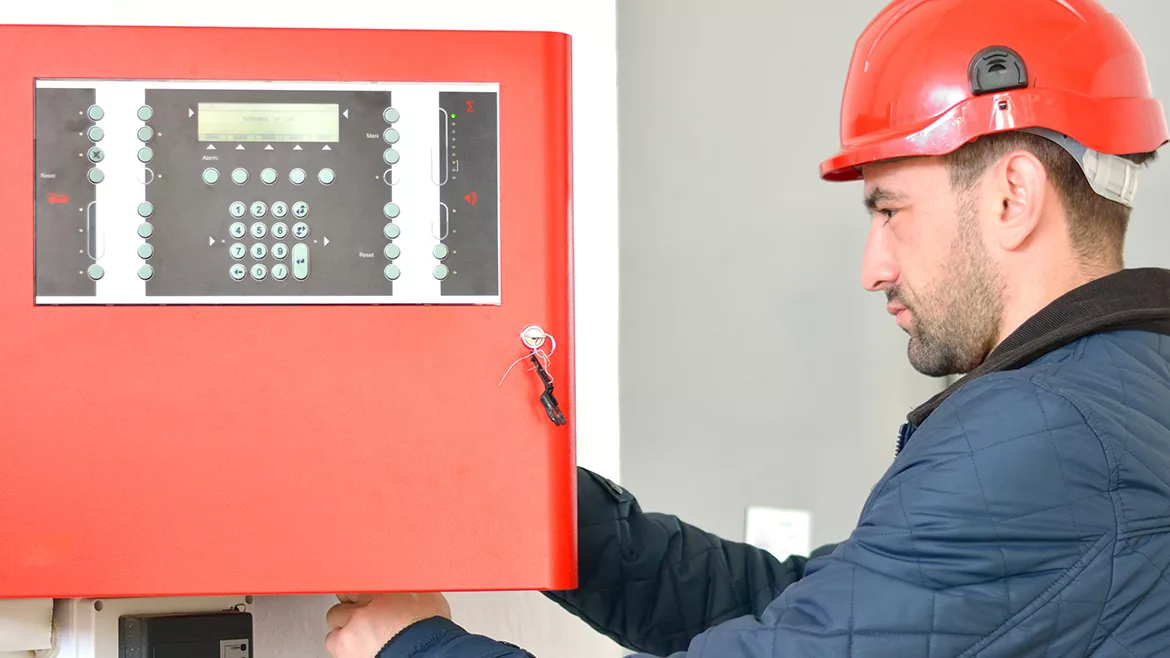
Taking extra care during installation can make future maintenance much easier. SHINYFAMILY/ISTOCK / GETTY IMAGES PLUS VIA GETTY IMAGES
More than anything, the fire alarm industry is driven by code. Advancements in technology in the industry abound, but these new products must adhere to a set of standards and specifications. The selection, installation and maintenance of fire alarm control panels is dictated by the rules set out by that code — which changes every few years. SDM turned to industry experts for their advice on all three.
Technological Advancements
On the technological front, there are a few developments top-of-mind for the industry experts. Most of these technologies are ubiquitous — they’re changing most industries. One such advancement is cloud connectivity.
“Cloud connectivity and remote access are driving significant changes in the development of life-safety systems,” says Rodger Reiswig, Ph.D., vice president of industry relations, Johnson Controls, Milwaukee, WI. “With the adoption of National Fire Protection Association (NFPA) code 72 updates implemented in 2022, manufacturers are now able to integrate enhanced technologies that enable installers, technicians and facilities teams to remotely log in to their systems and conduct testing, programming and maintenance.”

George Brody, president, Telguard, Atlanta, GA, agrees. “While still in its infancy, but already making a big splash in the industry is the adoption of cloud services that complement fire systems. Cloud Services like Honeywell CLSS, Potter Intelliview, and others are focusing on maintenance logging, efficiencies for integrators, inspections and other value-added functions,” he says.
Another advancement is that of the wireless device. “Wireless technologies have really started to reshape the way we think about the fire alarm market,” says Warren Hill, executive director of product management, DMP, Springfield, MO. “Traditional thinking caused us to run wires for every detector, pull station and life-safety device. Advancements in wireless technology are now at a point where wireless devices are replacing wired in many applications because of the ease and versatility of installation, and because of the time and money it can save.
Hill continues, “Battery life, extended range and improved reliability are the driving factors in this wider adoption of wireless solutions. Systems like the XF6 offer a wireless or hybrid solution. If there is an area in a facility that cannot be hardwired, the installing company can take advantage of the significant wireless range supplied by the wireless receivers.”

As for what the end user wants, Kevin Magoon, director of sales, fire & security, Potter Security, St. Louis, says, “We are also finding that end users — especially property managers, universities and school districts — want more information being sent to key stakeholders when an event does occur. Think about our personal lives — we have cameras at our homes that we monitor on our phones, we can open our garage doors remotely, start our cars remotely … the list goes on. Customers will (and are) demanding the same kind of access and integration with our fire panels.”
Looking for quick answers on security topics? Try Ask SDM, our new smart AI search tool. Ask SDM →
And Troy Bonanno, director of sales, fire and security, NAPCO Security Technologies, Amityville, NY, offers the following advice: “Some vendors are trying to force you to do certain things, which is not good for the industry. Everything should be open. Everybody should be able to work on it. It makes it easier for the end user.”
As each industry connects to the cloud, shifts to wireless and begins to operate on cellular connections, once non-existent cyber vulnerabilities develop in seemingly unsuspecting areas. SDM asked subject matter experts: As fire panels switch from POTs to cellular connection, has cybersecurity been a big concern? Here is what they had to say:
Warren Hill, DMP: “More and more life safety systems are being installed using network and/or cellular communications. To ensure the highest level of reliability, increase speed of transmission and reduce points of failure, we removed the Network Operations Center (NOC) from our communications protocol. The XF6 Series is rated for sole path network communication and for sole path cellular communication. When using these technologies, cybersecurity should always be top of mind. This day and age, encryption at any level should be deployed in life safety/security products being installed. XF6 Series panels are fully encrypted. As these systems are being installed, serviced or used on a day-to-day basis, all the information is secure. Any system that communicates to a programming software needs to be secure.
Rodger Reiswig, Johnson Controls: “Cybersecurity is critical for all systems within a building that have internet connectivity. Fire alarms can be a gateway for bad actors to gain access to information throughout the building — not just emergency systems. We will see considerably more guidance on cybersecurity added to NFPA 72 in the 2025 edition to be published in the fall of this year.”
Troy Bonanno, NAPCO Security Technologies: “We are SOC 2 compliant. Everything in our system is redundant. Our software is UL-listed, our dialers are UL-listed, all of our components are UL-listed. Plus, our signals don’t leave the United States, which is big for government jobs, banks and certain companies.
If the signal is bouncing all over the world, you’re open for cybersecurity vulnerabilities. Some dealers don’t know this. That’s the next problem. We’re trying to educate them: this is what we’re doing; ask your provider if they’re doing the same.
It’s important to NAPCO. We go over and above when it comes to UL and NFPA. As a sales director, it bothers me sometimes because it takes a little bit longer to get a product out, but I know once we get it out that it's the best that it can be.”
Kevin Magoon, Potter Security: “Be sure to do your research on any communicator or network device that you will be connecting to the outside world. Ensure that the manufacturer and software provider have validated cybersecurity requirements and ask for a written confirmation of their position/safeguards. Your customers will be asking you for the same.”
George Brody, president, Telguard: “Cybersecurity has been a top concern when dealing with government and financial institutions. Over the past couple of years, it has also become a top-of-mind concern for communications across the different segments. This is where we want to keep two things in mind: what happens when data gets intercepted? And what happens when the pathway is accessed? Devices like Telguard’s that utilize cellular technology in an isolated way play an important role.
First of all, always look for the highest encryption available (e.g., 256-bit AES), so that if data is intercepted, it is unusable. Secondly, be aware of points of entry. When it comes to utilizing a cellular communicator like the Telguard Sole Path, the connection to the supervising station is through the cellular pathway. This means that there is no access to internal internet systems of any kind through the fire system. The big concern here is how much damage can be done if the pathway is breached. When using internet-based devices that rely solely on shared internet access, a vulnerability could be present. With systems like the Telguard units (sole path or dual path), the use of cellular technology allows the communicator to segregate inbound data to the cellular pathway, allowing the premises’ network management teams to maintain a secure firewall strategy.”
Selection, Installation & Maintenance
When it comes to selecting the right panel for the job, the experts all agreed on one thing — the panel should always allow for expansion. “If you’re going to do an eight-zone panel and you have no expandability, the code tells you need to have extra zones just in case the system needs to be expanded in the future,” Bonanno says.
Boyd Ferrin, national sales leader, Pye Barker Fire & Safety, Alpharetta, GA, agrees. “You don’t want to give a customer something that if they want to make a change then they have to change the whole panel or rebuild it. If it’s a large enough expansion, there’s some potential to do that, but give it a little room for expansion when you size a panel. That would probably be my number one advice,” he says.
Bonanno advises, “Never undersell yourself when it comes to power. If you get caught with an underrated power on a panel, you could blow up the power supply. You really need to plan out your panel selection to make sure you know whether or not that building’s going to grow.”

Technologies that will continue to be supported and relevant into the foreseeable future are at the heart of the experts’ installation advice. “Choose to install services that will continue to provide revenue while minimizing the possibility of a future site visit to address an issue,” says Daniel Rosales, senior director of marketing, product management and tech services, Telguard. “Something as simple as refusing to install using existing POTS (plain old telephone service), and promoting current technology like cellular is something that will ensure that the installation time spent on a particular site stays constant. Choosing to install using a dying technology such as POTS, basically guarantees a second site visit in the future to install a replacement device.”
As mentioned, the National Fire Protection Association (NFPA) code changes every few years. These updates can have dramatic effects on installation and maintenance of fire alarm control panels. So what are some of the most impactful recent updates?
“With the 10th edition of UL 864 and recent editions of NFPA 72, many jurisdictions are becoming more sophisticated when it comes to annunciating and working through ground faults on field wiring,” Warren Hill, DMP, says. “Dealers and systems integrators can do preliminary homework to find solutions that comply with these requirements.”
Hill continues, “On a related note, some jurisdictions are setting unique requirements or creating their own approval processes for fire alarm equipment, especially as it relates to communication. The most notable jurisdictions to have their own requirements are FDNY, CSFM and LAFD.”
Magoon points to codes that affect first responders, “Fire Service Access Elevators (FSAE) allow firemen and first responders to utilize the elevator for the purpose of quickly accessing floors as well as evacuating occupants in the event of an emergency. “NFPA 72 2019 section 21.5 requires an approved means for firefighters to monitor smoke and heat conditions in the FSAE lobbies and associated machine/control rooms. This means a dedicated FSAE Status Panel located at the Fire Command Center needs to be included. Our advice is to see if your jurisdiction is enforcing this requirement, but this will become industry standard.”
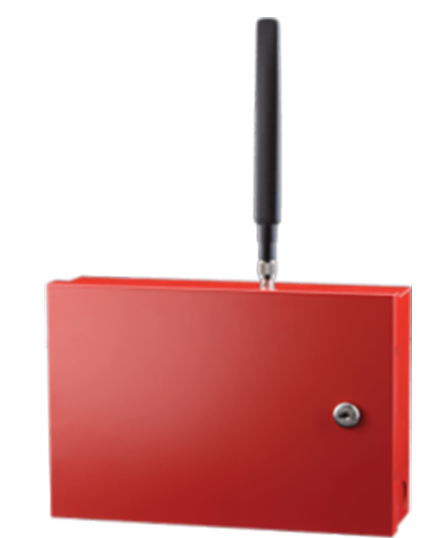
Replacing POTS is a cause that Telguard and others in the fire industry have been championing for quite a while. “Even though it’s 2024, the biggest mistake that is still made is accepting POTS as a viable communications pathway,” Rosales says. “Not only is it a dying technology but it is an uncertain path to take: a path that may pass inspection today, function well for one day and stop transmitting the next. To continue to use this path for remote supervision is a big mistake, and one that integrators should refuse.”
Bonanno adds, “We have a major problem in the United States with POTS lines. They’re going away, but they should have been gone by now. The panels that we make today and the dialers we make today don’t work on a lot of these bad POTS lines, VoIP lines, cable lines, and they don’t meet code.”
Bonanno continues, “It’s an easy upgrade to put a cellular communicator on those jobs. The people that own companies out there need to start getting their POTS lines gone because they’re going to have a problem. They’re not going to work. They may work today, but they’re not going to work tomorrow.”

Rosales concludes, “NFPA code changes have accelerated the use of cellular communications with each edition, especially the use of them as a primary option over POTS. “Telguard Commercial Sole Path Fire devices continue to increase in popularity as a consequence, and we anticipate continuing with this shift to the new norm where cellular is the preferred choice, going forward.”
Being mindful of the lifecycle of the products being installed can help with future maintenance. “Installation will often have a direct influence on ease of maintenance and operation in the future,” Reiswig says. “In addition to a methodical approach to installation, it is also critical to be strategic when programming and labeling systems. This information must be clear to not only system engineers and technicians but also to first responders.”
The maintenance of the fire alarm control panels is again dictated by code, but the experts do harken back to technological advancements as being very beneficial in this area. “Embrace cloud services,” Rosales says. “Cloud services provide vital preventive maintenance information about the system that can help in predicting failures/events and as a result allow the service team to become more efficient.”
Bonanno offers some closing thoughts, “The fire Industry is a code driven industry, a growing industry — above all it’s a great industry.”
Looking for a reprint of this article?
From high-res PDFs to custom plaques, order your copy today!