State of the Market: Access Control
Access Control Technology & Challenges
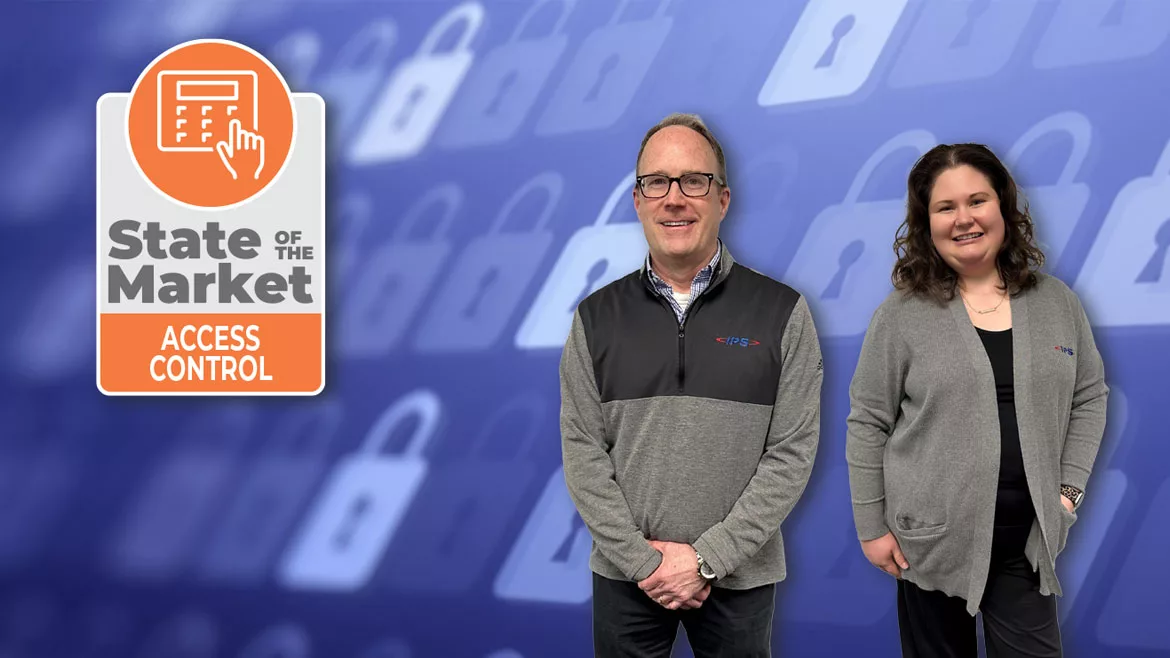
Tim McHugh, business development director, Integrated Protection Services, and Taylor Neal, marketing manager, Integrated Protection Services. Images courtesy of Integrated Protection Services. Background image zneal / Creatas Video / Getty Images Plus / via Getty Images

In the second part of our State of the Market on access control, experts discuss AI, the move to the wallet, as well as some of access control’s biggest challenges in the coming year. Missed part one? You can read it here.
AI’s Role in Access
2024 was the year that AI made a significant splash. It’s top-of-mind for almost everyone across every sector, vertical, market and industry. So what is AI doing for the access control market?
“Questions range from ‘What is AI?’ to ‘How are you using it?’ and ‘How does it affect me?’ It’s almost like the big data discussion back in the mid-2015 era,” Faenza says. “Everybody seems to feel like they’re missing out, so they’re asking how we’re adapting. AI will play an important role in everything from product development to more basic activities, such as online chats and customer service chatbots. We are seeing growth in technical support as this functionality gets smarter. Many people don’t love having to call and talk to another human, so being able to go online and get answers quickly through a chatbot is a great option. The more sophisticated data in the pool, the better those features will become.”
One of the most exciting unlocks I’m seeing in this space is the ability to grant unique, time-bound access credentials via mobile links. This is a game changer for large and distributed enterprises.

Access Attitudes Going Into the New Administration
The United States just handed over its executive branch to its Republican party, and — regardless of political leanings — it has been a tumultuous and chaotic time. With daily tariff threats — and daily rescindings of those same tariff threats — as well as some concerning stock market falls and speculation that we may head into a recession, how is the security industry feeling about the effect this may have on the access control market?
Angelo Faenza, ASSA ABLOY Opening Solutions Americas — “I’m cautiously optimistic about 2025. The only reason I use the word cautious is my concern with the tariff announcements. There’s no question that the access control world would be affected by these because so many companies have moved electronics from the Far East to Mexico over the years. Before the announcements, we were very optimistic that we were headed into a good, solid year for a lot of the same reasons I had already shared. We’re delighted with the expansion. However, if tariffs do hit, I think that it presents a risk for the industry as a whole.
That’s just looking at it from a geopolitical standpoint. That’s really our only worry. In terms of the market itself and based on what we’ve been experiencing, the outlook continues to be healthy. The channel partners have plenty of work, and whenever we talk to them, they always say they are looking for labor. That’s a good sign because when you don’t have enough labor, it means you have a lot of work coming in. It’s also a bit of a worry because if you don’t have enough labor and technicians to do the job, that means timelines may be pushed farther out than originally planned. So, when I say cautiously optimistic, that’s because of some of these potential impacts. But I do not see anybody cutting back on security. In fact, I see it going the other way, where people are going to demand more security.”
Ben Brydges, dormakaba North America — “Every time a new administration comes in, you have to try to understand where they’re going to go. I think this one offers a very unique situation for us with a number of executive orders that were signed in the last couple of weeks. We’re still trying to navigate through what some of those mean. We’ve heard a lot of threats of tariffs, but there’s nothing really been decided or imminent yet. We force ourselves as a global manufacturer across multiple different countries — even here within North America — to consider all of the options and potentials. We have to really dive in, understand our risk and our exposure, and come up with potential contingency plans based on some of the things that have been stated. Whether these things come to fruition remains to be seen, but we need to at least be prepared and be thinking about those different situations.”
Josh Cummings, Paladin Technologies — “It could present some challenges to conducting business. On the flip side, I’m intrigued by this push to develop more technology within our borders. There’s a lot of silicon chip manufacturing that’s being spun up and technology that’s being developed, and I think that’s great. We need to be able to do more of that and not outsource as much of it. So there’s some give and take there, but it’s going be an interesting year to see what the effects are. We’re trying to plan accordingly and talk to our customers about the potentials for tariffs and what that might do.”
Daniel Gundlach, vice president, head of business unit North American Market, physical access control solutions, HID, Austin, also points to improvements beyond just a product’s capabilities. “AI is a top trend while at the same time we and many other manufacturers in the industry are still figuring out where and how it can benefit our industry best,” Gundlach says. “When they think of AI, everybody thinks of the product and of course the product is one thing, but also the customer experience is important. How do you order a part, for instance? Can AI help you? People need to be experts in ordering card formats et cetera. With the help of AI, can we collect this information all together as if you had asked chatGPT? Of course we want to make sure it is 100 percent correct, but we are looking at AI both in terms of the product as well as in terms of customer service and customer experience.”
To pivot to product, how is AI affecting access control? “I think we’re all looking for new contactless ways with AI assistance to make access control smoother and faster,” Napco’s Black says. “It’s an improvement when you talk about personal health, fewer touches through things like facial recognition with the integration into cameras. I think that’s going to be one of the other big trends moving into the next year or two. There’s a lot of uncertainty about how the AI is working, but it’s definitely proving itself. If you use it correctly within access control, it can be a powerful combination.”
Gareth O’Hara, chief commercial officer, Paxton, Greenville, S.C., agrees highlighting the possibility of AI being deployed to flag unusual access activity. “AI is another technology that continues to grow in use and popularity,” he says. “When implemented effectively, AI enhances access control and video solutions with advanced video analytics and predictive algorithms to identify suspicious activity more rapidly. Additionally, AI can help in predictive maintenance and management of access control systems, ensuring they remain efficient and secure.”
The flagging of these incidents — as well as the response and even prediction of — is also on the mind of John Nemerofsky, chief operating officer, SAGE Integration, Kent, Ohio. “We’re seeing different AI starting to integrate with access control for predictive things like incident reporting,” Nemerofsky says. “Instead of a guard having to say there was a door propped in my Dublin tower, or a door propped in my San Francisco tower, AI and AI agents are going to respond to that saying the door was closed — the door was reset one minute later. That’s going to generate a report. I think we’ll see the adoption of AI and how it integrates with access control continue to evolve in 2025.”
Looking for quick answers on security topics? Try Ask SDM, our new smart AI search tool. Ask SDM →
Another opportunity with AI is the processing of data. The security industry generates quite a bit of data, and manually reviewing that or trying to harvest meaningful insights from that data has been a challenge. But AI can streamline this process substantially.
“I would say one of the more exciting things that we’re talking to our customers about is the ability to access their data,” says Kyle Gordon, executive vice president of sales, marketing and commercial excellence, AMAG Technology, Hawthorne, Calif. “Symmetry has nearly 3 million lines of code. There’s so much data there that the customers can leverage, but making that data available in a form that works for our customers has been a struggle in the past. What we’re doing with our technology is enabling access to data in a form that makes sense for the customer. We’re getting out of the report game. There’s a ton of companies out there that can build really great reports. In my opinion, access control companies shouldn’t be one of them. They should be focused on keeping bad people out, letting good people come in through sophisticated and secure credentials. Let really good report companies have access to that data so that the customer can use it in a way that works for their business. When we talk to our customers and we show them where we’re going in terms of data access, it gets them very excited.”
Another rising opportunity that is a byproduct of all of this innovation is the increased need for data centers — and those data centers need to be secured. “As technology increases with cybersecurity, AI, and encryption — all of those things require a tremendous amount of data processing Brydges says. “So you’ll see many more data centers being developed and built and those need to be secured at multiple levels — from the entrance all the way up to the server racks.”
D’Agostin says there’s been unprecedented growth in data centers. “We expect to see further expansion in the data center sector due to the AI boom,” she says. “To meet the capacity expansion requirements, data centers will continue to be built at rates that have never been seen before. Data centers prioritize a modern, secure dual factor access control solution to protect critical infrastructure.
Moving to the Wallet
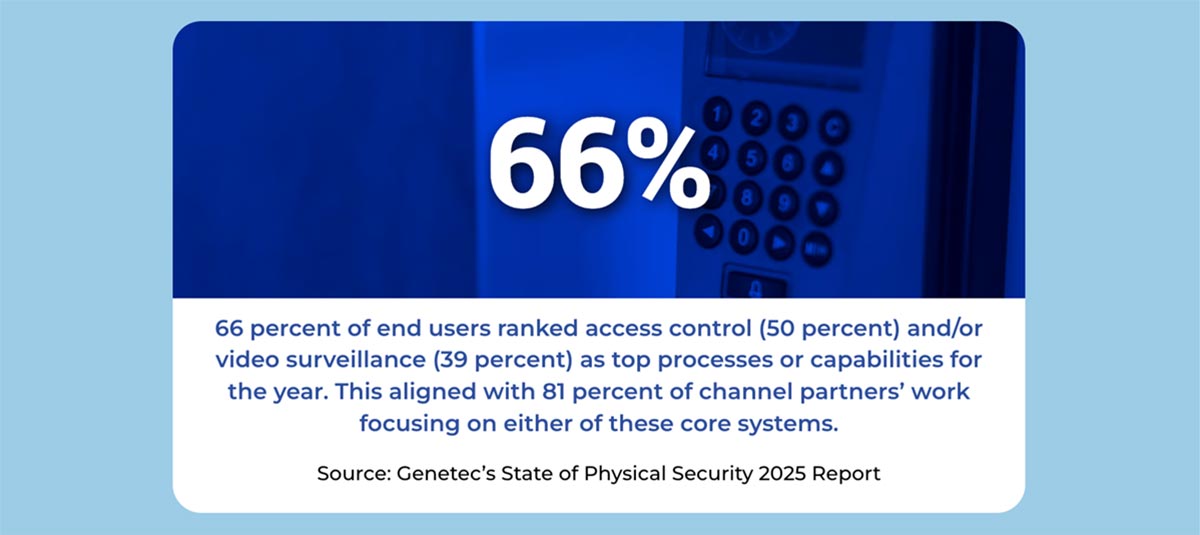
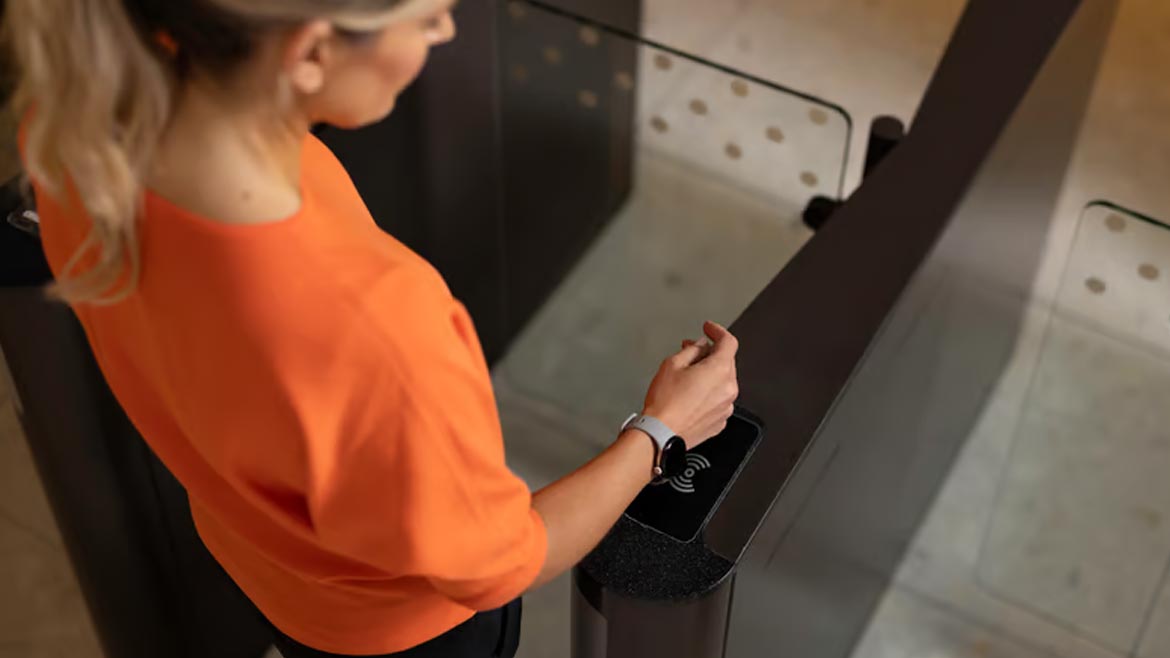
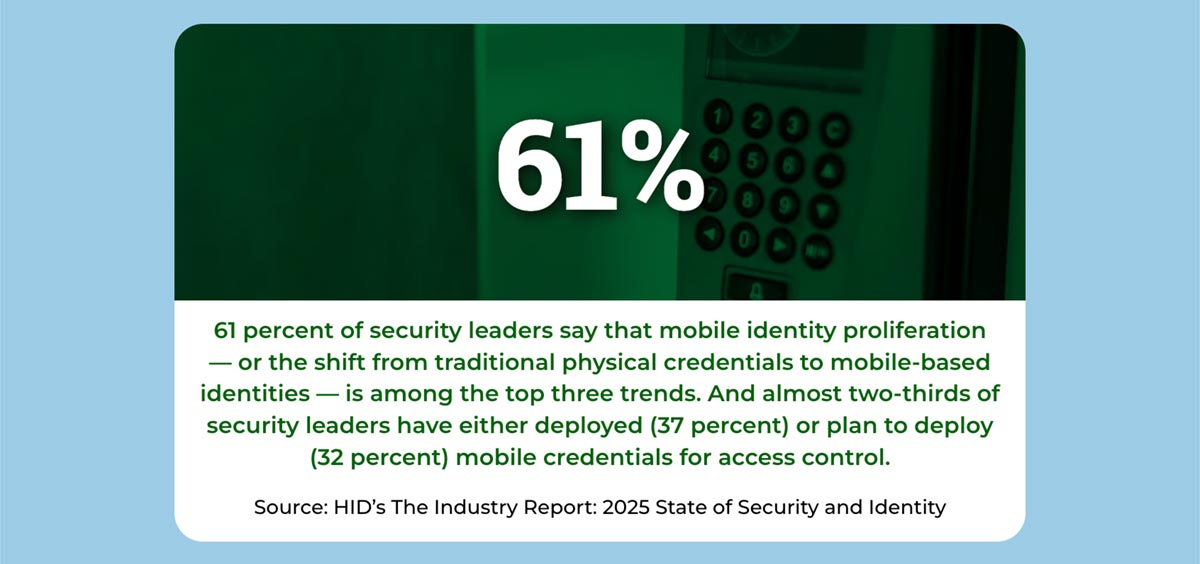
If it’s not already apparent by what the experts have said thus far, the market has been trending towards mobile for some time. “Overall, the integration of smartphones in access control systems reflects the industry’s move towards more advanced and user-friendly security solutions, ensuring a secure and seamless experience for all users,” O’Hara says. “This trend is not just a passing phase but rather a significant evolution in the security industry, driven by technological advancements and the need for more efficient and reliable security solutions. As these systems become more sophisticated, they will continue to play a crucial role in safeguarding assets and information in various sectors.”
Jake Leichtling, director of product management, access control, at Verkada, San Mateo, Calif., agrees wholeheartedly. “Mobile credential adoption is transforming the access control industry — whether it’s digital IDs, hotel room keys, or mobile boarding passes,” he says.
Leichtling takes it one step further, adding, “One of the most exciting unlocks I’m seeing in this space though, is the ability to grant unique, time-bound access credentials via mobile links. This is a game changer for large and distributed enterprises. Think about it: on any given day, maintenance technicians, contractors, and job candidates may all need access to different spaces within an organization — each requiring a unique level of access depending on the nature of the visit. With live links, each person receives a unique, time-limited access link directly to their mobile device, allowing them to access precisely the doors they should be able to unlock during their visit. This not only enhances security but also creates a smoother, more efficient experience for everyone involved.”
But there’s one location that many experts expect that mobile credential to be housed in the future — the wallet. “I would suspect in 2025 we will see more customers move from wallet proof-of-concept to wallet main adoption,” Gordon says. “2024 was a big proof-of-concept year for the wallet — they may have started with the executive suite, or they may have started with one building. If I were to kind of bet on one thing taking off or really gaining momentum this year, I would think it’d be the wallet.”
If you’re a young person who loves to work with your hands and you’re skilled, you could have a remarkable and profitable career in an industry that has been so kind and good to so many of us..

OSDP & Cybersecurity
Alongside all of this growth and development in terms of technology is the evolution of regulation and standards to ensure cybersecurity and efficiency in the access control market. One of the biggest standard developments has been the Open Supervised Device Protocol (OSDP), which standardizes communication between access control systems and devices. “Our flagship panel is the M2150,” says Kyle Gordon, AMAG Technology. “It’s our workhorse, I would say it’s 90 percent of our installations globally. … We released that in the latter part of last year with OSDP enabled, so that was a big driver. OSDP in general continues to be a big driver in the space.
“Everyone is excited about wallet and mobile and all those things, but the first thing that we need to do in this industry is get people to communicate on a secure protocol,” Gordon continues. “There’s a massive gap out there right now. Everyone’s talking about OSDP, but very few have actually implemented readers and panels to ensure they’re communicating that way.”
Josh Cummings of Paladin Technologies, agrees, saying, “OSDP is starting to become more of a mainstream topic. As we’re looking at these refreshes of this infrastructure that’s out there, people are taking advantage of this time to bring OSDP into their environment where maybe it wasn’t thought of before.”
The development of these standards and regulations are in part driven by an increased concern over cybersecurity. “In addition, there is continued concern about cyber threats and their impact on us,” says Angelo Faenza, ASSA ABLOY Opening Solutions Americas. “And it’s not so much from opening an email and clicking on a wrong link, but more about products that sit on the network; are they cyber secure? There is a lot of attention on cybersecurity and how our products control access to vital spaces from server rooms and server cabinets to data centers and more.”
Because of rising cybersecurity and privacy concerns, meeting some of these standards and getting certain certifications is becoming table stakes, says John Nemerofsky of Sage Integration. “Because of privacy concerns, integrators need to be SOC2 compliant. It’s become table stakes to be at the game,” he says. “Any fortune 500 or privately held 200 company is asking for your SOC2 compliance. If they’re not asking for it, it’s coming up in [a] data sheet that you need to fill out. If you’re working globally, you need to be ISO 27001 to do the same deployments.
DMP’s Hill sees the future of mobile credentials the same way. “I think we’re going to continue to see the usage and adoption of mobile wallet credentials grow,” he says. “People always have their phone with them everywhere they go and why not be able to use this as a secure form of having access to the doors that I need to get access to every day — whether that’s my home or whether that’s my business. We’ve invested in that space and I know a lot of our competitors are headed that same direction. We’ve got people in the verticals that we focus on that are getting closer and closer to adopting these technologies and so I think that wallet adoption’s going to continue.”
Upgrading Aging Tech
With how rapidly technology is improving, there’s one opportunity that experts pointed to time and time again — upgrading aging technology.
“I think the biggest challenge for integrators coming up this year is the transition of older technology into newer technology,” Axis Communications’ Druktenis says. “A lot of times they hear customers say they’re kind of over this old system and I want to step into the new world. That requires ripping out a bunch of hardware to support that. The trick there is trying to reuse what customers already have in place and then start to migrate them into a more modern access control solution. That is the nice thing that we’ve seen by having partnerships with some of these third parties — I’ll keep going back to Genetec just because that’s our strongest relationship. But they have the ability to continue to support those older technologies and then start supplementing that with the newer door controllers that we offer, and getting them moving into a modern access control solution.”
McHugh offers a similar perspective on this opportunity. “Updating legacy systems and migrating in the cloud, those opportunities continue to be out there in mass,” he says. “We’ve got a lot of customers whose servers are getting old — they’re on borrowed time. We are very excited to continue to migrate them over to the cloud, so that they’ve got a great system up and running all the time.”
Josh Cummings, executive vice president, technology, Paladin Technologies, Vancouver, adds, “I expect this year to be stronger. There’s a lot of aging technology that is needing to be replaced and it’s been put off for a while now or it’s coming to that point. There’s a lot of technology that can’t support the latest IT standards and cybersecurity standards that needs to be refreshed.”
Offering another integrator perspective, Utah Yamas Controls’ Stephenson says, “We also have a lot of existing systems. We’ve been around for 35 plus years and we have a ton of just older technology out there. There’s been a big push to upgrade all of those readers and upgrade all of the technology so they can go to more secure card formats or mobile credentials, or even upgrade to biometrics.”
Biometrics & Beyond
Looking into the future, some experts seem to think biometrics could be the future of access. Alcatraz AI’s D’Agostin says they prefer to authenticate with biometrics. “The recognized benefits of using biometrics continue to drive adoption,” she says. “Facial biometrics provide a highly secure, convenient and frictionless form of authentication. Two specific areas where Alcatraz saw significant year-on-year growth were biometrics in both data centers and financial institutions. We saw the largest surge in implementations to date, mainly driven by increased demand for highly secure access control solutions in zero trust environments. We also saw high growth for outdoor biometrics for data centers, corporate campuses and critical infrastructure. Key features like outdoor facial authentication, privacy by design, and AI technology attracted very strong interest in adoption.”
ASSA ABLOY’s Faenza sees the potential of biometrics to be realized by the industry. “First of all, I think biometrics in this country have generally been underutilized,” Faenza says. “The COVID pandemic taught us a lot about touching surfaces, but I’m really interested in the facial identification aspect of biometrics because it allows us to have an impact in places where we may not have before. One example is any high school or college where athletes are coming off the field or off the court; it can be inconvenient to carry a key or card and even a cellphone. Where do you safely stow those when out practicing or playing or in a weight room working out? With an iDFace reader, for example, you don’t have to worry about carrying those to enter a facility; your credential is your face, which is always on you.”
Hill is another proponent of biometrics’ potential. “One of the things that gets asked quite frequently is, ‘Is this industry starting to adopt biometrics more broadly?’ I think it’s poised to,” he says. “It’s a little bit more costly than some industries want to accept, but I think we’re going to get to a point where people start to use their face as a credential to get into a building or to access a door. There are some people that have concerns about facial recognition, and I don’t see broadly used other forms of biometrics like fingerprints or palm reading or things like that; but I know they’re out there and at some point I do believe that the market will start to adopt those as a common form of credential.”
Beyond the cost concern, Hill mentions there may be a problem with the perception of biometrics. “I think there are some concerns around those forms being not as secure — not as safe — but I do think that we’re going get to a point where they’re accepted as secure,” he says. “Maybe they’re used for two-factor authentication — maybe it’s your Iris and a pin code or maybe it’s some form of a physical credential as well as some type of a biometric — but I think we are going to get there.”
Steve Everts, sales director, Detection Systems & Engineering, Troy, Mich., is a bit cautious on the immediate viability of the technology’s adoption. “I think biometrics will be around, but I also think the fob that you carry in your hand isn’t going away,” he says. “There’s so many of them out there, and they’re not going anywhere. It’s going to take so much money and effort to replace that — not only the fob, but a reader that’s capable of reading the biometric.
“Biometrics are becoming more and more of a thing, because of different cloning technologies for fobs,” Everts says. “You can take some of the older fobs to Home Depot and they’ll copy it for you, which is completely insecure. You’re spending all this money to secure your building and then Home Depot can copy a card for you. With biometrics, we’re talking seven to 10 times the cost for a reader, and then a subscription on top of that. That’s a tough ask for a lot of these companies out there. But biometrics is the big thing that is coming that can still read physical credentials, but also read your face. We’re getting more and more requests especially for specialty rooms like your server room or IT room, but maybe not the entire building.”
Access Challenges
So far, a portrait has been painted of the current state of access control as far as what has worked and what has promised to work. But what about some of the challenges that the security dealer/integrator may face now or in the near future?
“I think the challenge continues to be how do you educate,” AMAG’s Gordon says. “The speed at which new technology is being brought to market is daunting. For the manufacturer, it’s one thing. Sure, we need to be aware of everything, but we really need to concentrate on our technology. For an integrator who’s trying to be a service provider within security for multiple categories, intrusion detection, video, access control, perimeter detection — you name it — it’s very difficult to stay apprised of all these new technologies and to vet all the new technologies and also ensure that your fleet is trained on all these new technologies.
“I think the challenge for integrators is how do they continue to make sure that they’re staying up to speed on the things that their customers need,” Gordon continues. “They’re trying to make sure that they're doing the job the best that they can at the job that they’re currently contracted to do, all while keeping an eye out for other ways to do it more efficiently and effectively.”
Brydges believes this to be the biggest challenge to the dealer/integrator as well. “The challenge within that is all of the different offerings and all of the different options available,” he says. “Every couple of weeks a new entrant comes into the security industry with a great new technology or great new application and then sometimes that demand could be generated at the end-user level. When the integrator gets a request and then they have to educate themselves on that product, and be able to impartially discuss those options with the end user and provide the best solutions.
“I think integrators have a challenge ahead of them as all of this technology moves so quickly,” he continues. “Integrators just have a unique challenge with helping the end user make the right choice. And then where does the end user put their training efforts and where do they maintain their expertise due to all these increasing numbers of potential partners? The integrator is a trusted partner in this.”
Looking for a reprint of this article?
From high-res PDFs to custom plaques, order your copy today!