SDM EXCLUSIVE – Part 1
State of the Market: Fire & Life Safety Advances
October 13, 2025
SDM EXCLUSIVE – Part 1
State of the Market: Fire & Life Safety Advances
October 13, 2025The fire alarm industry saw steady growth in 2024, driven largely by a wave of new infrastructure projects, particularly in the energy and industrial sectors, which demand comprehensive fire detection solutions.
By any measure, the market for fire, life safety, and emergency systems in 2024 and 2025 remained strong, even amidst some political and economic uncertainties. The fire and life safety market, like the security industry overall, is often described as “recession-resistant” — with the added advantage of being required by code.
This is one of the things that makes it an attractive niche for many security dealers and integrators. But, for the same reason, fire-related technology has sometimes tended to lag behind the greater security industry when it comes to adopting the latest cutting-edge solutions. Now, that is beginning to change, and manufacturers, systems integrators, and code-making bodies are all taking notice.
“2024 was a record-breaking year for ORR Protection and a strong year for the fire alarm industry overall,” says Rick Reynolds, executive vice president, business development for the Louisville, Ky.-based integrator, specializing in fire. “Demand grew across mission-critical environments as organizations prioritized compliance, resiliency, and uptime protection. For ORR, revenue and net income reached all-time highs, driven by significant growth in sectors like data centers, power generation, connected communications, modular construction, and battery energy storage systems. Compared to 2023, we saw measurable increases in both new project volume and recurring revenue tied to service and monitoring.”
Reynolds also points to growth in AI infrastructure impacting fire and anticipates continued double-digit growth up to 25% for 2025 over 2024, supported by a “strong backlog and healthy pipeline across all regions.”

Alpharetta, Ga.-based Pye-Barker Fire & Safety, ranked No. 4 on the 2025 SDM 100, had similar experiences, according to Boyd Ferrin, national sales leader. “I have taken a small sampling of some of our companies in other areas, and we all believe that 2024 was stronger than 2023,” he says. “There are a couple of reasons for that. One was a carryover from 2023, and we were able to land some good projects in 2024.”
While the political climate did hinder business somewhat as companies were uncertain how things would play out in 2024, Ferrin says that tentativeness opened up post-election. “Fire is code-driven and necessary, so it is somewhat resilient to political issues,” he says. “2025 started out a bit sluggish, and part of that was the political changes and government monies and uncertainty. But that has calmed down.”
Darrell Sackwar, director of fire alarm and life safety business development, Convergint, Schaumburg, Ill., partly attributes pent-up demand from the post-COVID chip shortages to his company’s double-digit growth in 2024; but, he adds that growth is normal for the company. “For Convergint specifically, we really doubled down our efforts in fire,” he says. “We have a national support team, and we do a lot of education and information sharing across Convergint. … Having more and more Convergint offices getting into fire gives us a bigger footprint. It took us from a group of offices that offered fire to much more of a national presence, which changed the game.”
Gregory R. Breyer, vice president, design and compliance, Zeus Fire and Security, Paoli, Pa., has a similar tale. “The fire alarm industry remained strong throughout 2024, with continued growth across inspection and testing, service, and installation,” he says. “We saw a notable expansion within our fire alarm pillar, driven by both increased market demand and our commitment to elevating team capabilities.”
Looking for quick answers on security topics? Try Ask SDM, our new smart AI search tool. Ask SDM →
Looking for a reprint of this article?
From high-res PDFs to custom plaques, order your copy today!
On the vendor side, the fire market was equally strong, notes Tom Karl, vice president, corporate sales, NAPCO Security Technologies Inc., Amityville, N.Y. “2024 was a banner year for NAPCO, as our national account partners continued to improve the reliability and safety of their subscribers by replacing copper POTS lines connected to their fire alarms with cellular multi-carrier fire communicators,” he says. “This not only increases reliability over copper communications, but it also offers substantial savings to the subscriber, while at the same time increasing the fire contractors’ RMR.”
The fire alarm industry remained strong throughout 2024, with continued growth across inspection and testing, service, and installation. We saw a notable expansion within our fire alarm pillar, driven by both increased market demand and our commitment to elevating team capabilities.
The Cyber Side of Fire
The more connected — and interconnected — fire alarm systems get, particularly as they move into remote services and cloud environments, the more important it is to stay up to date with cybersecurity requirements. This is something NFPA recognized starting in the 2022 edition of NFPA 72, and it has only grown in relevance since then, says Gregory Breyer of Zeus Fire and Security.
“It has become a critical consideration for system design, installation, and maintenance,” Breyer says. “As fire and life safety systems become more interconnected, protecting them from cyber threats is essential.”
NAPCO’s Tom Karl agrees. “With today’s evolving threats — deepfakes, AI-generated malware, and increasing cloud vulnerability — dealers must take greater precautions in choosing manufacturers,” he says. “NAPCO’s SOC 2-certified Network Operations Center (NOC) meets the highest standards for data protection.”
As more customers seek to share information to and from panels and use AI tools and automation, integrators need to be careful when choosing solutions for their customers, Karl adds. “While large organizations, in particular banks and financial institutions, now routinely require SOC2 compliance, it’s an important safeguard for all dealers to look for in their manufacturer partners,” he says.
Telguard, Atlanta, also references the sunset of “plain old telephone service,” or POTS, as being integral to their business success. “Telguard had another excellent year in the commercial fire alarm industry with our focus on cellular and dual path commercial fire communicators,” says George Brody, the company’s president. “Consistent increases in replacing POTS communicators for cellular technology … as well as builds, upgrades, and retrofits in key vertical markets contributed to continued growth.”
Rodger Reiswig, vice president of industry relations, Johnson Controls, Milwaukee, observes, “The fire alarm industry saw steady growth in 2024, driven largely by a wave of new infrastructure projects, particularly in the energy and industrial sectors, which demand comprehensive fire detection solutions. This trend reflects market projections that the fire detection and suppression sector will grow at a 3.5% compound annual rate (according to Grand View Research). We’re experiencing this growth in real time. … As infrastructure investment accelerates, we’re seeing that contractors and building owners are prioritizing user-friendly, high-quality systems that meet evolving local, state, and federal fire code and safety compliance requirements.”
Grand View Research estimates the 2024 North American Fire Market revenue at $30.3 billion and forecasts an increase to $37.4 billion by 2030. Another research firm, Markets and Markets, tracks the global fire market, estimating it to be around $75.1 billion in 2025, with the North American market accounting for the largest share.
SDM’s own research, the 2025 Industry Forecast, also reflects growth in 2024, with those characterizing the fire alarm/emergency communications market in 2024 as “very good to excellent,” rising 5 percentage points over the previous year to nearly 50%. Even better, 51% predicted an increase in fire-related revenue in 2025.
But these numbers only tell part of the story. In part one of this two-part article, SDM looks more in-depth at the market trends driving the fire alarm industry.
Market Trends & Drivers
While no one is suggesting that fire alarm systems are not still a code-driven purchase decision, there are some impactful changes in customer expectations for this have-to purchase, along with some voluntary upgrades in the mix. There are also some fast-growing verticals with an extensive need for complex fire and life safety systems.
“Everyone knows fire alarm systems are required by code, but we are also seeing some optional systems for high-value facilities because they are so critical,” Sackwar says. “The data center explosion has systems going in that are in excess of code because of what is being protected.”
Sackwar also notes that in some cases insurance providers are requiring more than just code. One example of this is automated warehousing. “Those machines are extremely expensive, and loss of production would be tremendous, so we are seeing insurance companies requiring pretty sophisticated systems,” he explains.
“In 2024, we saw a clear shift in customer priorities, with increased demand for integrated fire and video solutions at outdoor energy sites, as well as growing interest in monitoring platforms that offer data analytics and compliance tracking,” says Lee Kaiser, vice president, engineering and training, ORR Protection. “Additionally, more clients, particularly those with hybrid or modular infrastructure, are seeking flexible service models that align with their evolving operational needs.”
Another important factor is increasing attention to — and enforcement of — compliance issues.
“The fire alarm industry is inherently code-driven, and, in recent years, we’ve seen heightened attention to compliance,” Breyer says. “This trend not only strengthens public safety but also creates more opportunities for Zeus to fulfill our mission of protecting people, property, and business profitability.”
Breyer points to the most recent editions of the International Building Code (2024) and NFPA 72 National Fire Alarm and Signaling Code (2025) as being particularly influential in the evolving requirements for professional certification and licensing and raising industry standards.
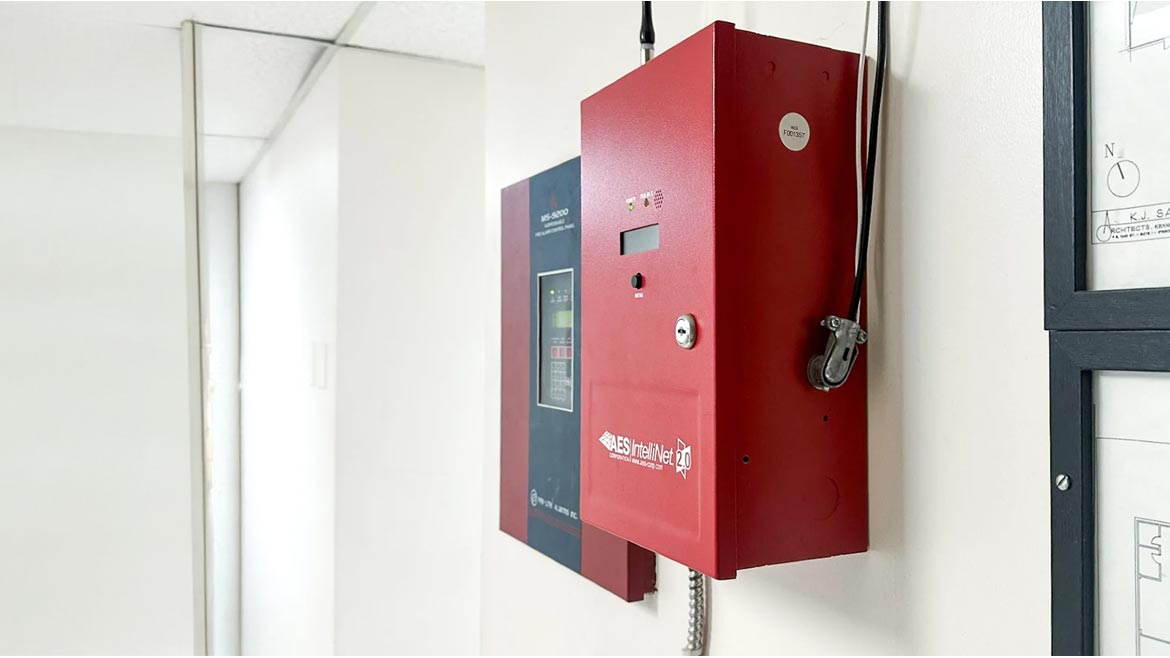
High upfront costs and the complexity of retrofitting older buildings have slowed adoption — particularly among smaller businesses and budget-constrained organizations. That said, fire protection remains a compliance-driven, mission critical need. These structural tailwinds are expected to outweigh the headwinds, supporting continued industry resilience and expansion.
Code Update
When it comes to fire alarm code-making bodies, one of the biggest ones to pay attention to is NFPA 72, the National Fire Alarm and Signaling Code. This code is updated every three years, with the most recent edition being 2025. However, not all states and municipalities follow the same version, with many Authorities Having Jurisdiction (AHJs) lagging one or two editions — and in some cases even more — behind the “current” edition.
Still, when it comes to new projects and staying up to code, the most recent edition is always the best starting point, with the caveat that you need to check with your local AHJ to be sure they will accept any suggested changes. So, what are some of the latest changes to NFPA 72?
According to NFPA, the latest edition covers the application, installation, location, performance, inspection, testing, and maintenance of fire alarm systems, supervising station alarm systems, public emergency alarm reporting systems, fire and carbon monoxide detection and warning equipment, and emergency communications systems and their components.
The major change to NFPA 72 in 2025 was a new chapter on cybersecurity; new requirements for acoustic leak detectors and thermal image fire detectors; requirements for smoke detectors on high ceilings; a new notification mode for use in spaces with populations sensitive to sudden, loud sounds; a detailed voltage drop calculation method; and new requirements for auxiliary service providers.
“This past year, we saw an update from NFPA 72 take effect,” says Rodger Reiswig of Johnson Controls. “With technology in fire and life safety evolving at a rapid pace, keeping up with the latest NFPA codes and standards is critical for protecting people and property and delivering uninterrupted service across all types of facilities. Professionals across the board have picked up the pace throughout the year in bringing their systems up to code and evaluating areas for improvement to make sure they’re ready for the next revision cycle in 2028.”
The first draft meetings for the 2028 edition of NFPA 72 began in July, with the second draft meeting due to be held in July 2026. A draft will be written at the technical meeting in June 2027, with an expected publication date later in 2027.
James Guzikowski, senior category strategist, ADI | Snap One, Melville, N.Y., says that stricter code enforcements — fueled in part by ongoing government mandates and increased funding for public safety upgrades, urban development, and new construction — are reshaping market expectations. “These trends are not only driving adoptions today but are poised to continue shaping the industry’s evolution in the years ahead,” he says.
Reiswig agrees. “Evolving fire codes are raising the bar for compliance,” he says. “New and updated regulations are requiring detection platforms to harden systems against cyber-attacks, deliver more advanced detection and alert capabilities, and communicate emergency information to fire professionals with minimal delay. These requirements are increasing end-user demand for code-aligned, future-proof fire alert systems while also challenging manufacturers to meet higher technical and security standards without slowing time to market.”
Another historical influential market driver — and potential hinderer — is the general economy. For the past several years, there have been fears of a looming recession that never materialized. And, starting in 2025, on-again/off-again tariffs have created a new level of worry.
“Market uncertainty and interest rates are suppressing some construction efforts, but we are still seeing a lot of upgrades,” Sackwar notes. “There are a lot of outdated systems in the fire market. Change in occupancy and repurposing of buildings changes their requirements for fire systems, so we continue to see growth. Even in years past when the economy slowed, we still saw a lot of repairs and upgrades.”
That said, interest rates have created more hesitancy to invest in new builds, Sackwar adds, but it isn’t hurting business. “That is a slight hindrance,” he says. “For us, there is so much market share and business out there, and we continue to get better and better every year with internal efficiencies; I don’t see it slowing us down at all.”
That seems to be the general opinion of most experts interviewed for this article.
“While we are cautious of the macroeconomic challenges and the impacts of tariffs in 2025, both the industry and our organization have demonstrated resilience and strong performance,” Breyer says. “Despite these external pressures and impacts on the business, overall market demand for our services has stayed robust. Looking ahead, the company is forecasting sustained growth during the second half of FY25 and remains on track to achieve our performance targets for the year.”
As a distributor, ADI | Snap One hears from a wide swath of dealers and integrators. Guzikowski is optimistic, based on that feedback: “Certain challenges have tempered growth. High upfront costs and the complexity of retrofitting older buildings have slowed adoption — particularly among smaller businesses and budget-constrained organizations. That said, fire protection remains a compliance-driven, mission critical need. These structural tailwinds are expected to outweigh the headwinds, supporting continued industry resilience and expansion.”
In part two, we will talk about new technology, challenges and future opportunities.