Welcome to Video Monitoring: ‘Lessons Learned’ & Practical Advice From Experienced Dealers
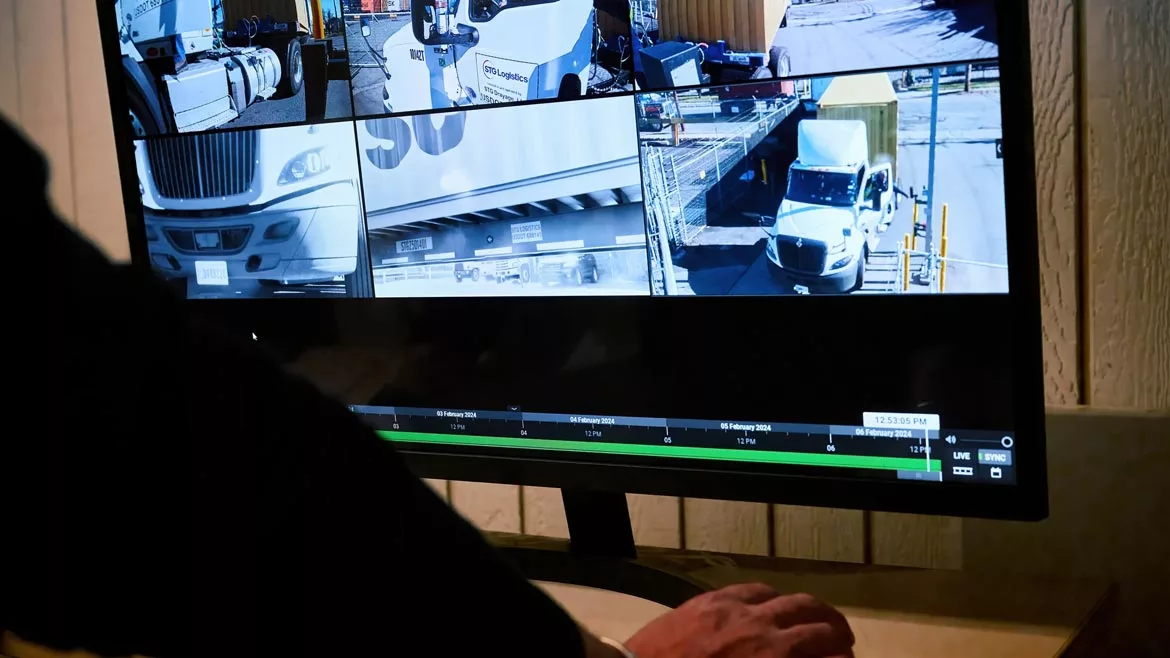
If you’re just getting into the video monitoring market, this article is for you. The following dealers, who all own their own monitoring stations, answered two key questions to help other dealers get into the rapidly-expanding world of video monitoring:
- Eric Hinderliter, vice president, monitoring and response center, Allied Universal
- The collective Allstate Security Industries team
- Sean Moening, vice president of product management, AMAROK
- Ed Burnett, chief of security and operations, Cloudastructure
- The collective Custom Alarm team
- Jeremy Daumen, vice president of branch operations, Doyle Security
- David Charney, senior vice president, video command center, Everon
- Sean Foley, chief revenue officer, Interface Systems
- Kylie Smith, business development, video monitoring and security, KMT
- Aaron Duxbury, general manager, remote services of Protos Remote Services, Protos Security
- Jeremy White, founder and CEO, Pro-Vigil
- Shane Sullivan, CEO, Solid Security
- The collective Zeus Fire and Security team
SDM: Can you share some “lessons learned” since launching your video monitoring services? What can other dealers/integrators learn from mistakes or missteps you may have made?
Hinderliter: The setup is key right at the start. Really understand the customer environment and ensure that your solution fits well within your capabilities. Set that programming, get the alerts correct at the start, then baseline site activity. You do that initial setup; you’ve got things deployed; it’s working, but you have to continue to review the data, make adjustments and fine-tune that to ensure that you’re delivering a good service, that you’re not generating a bunch of noise in your environment. All of those would impact potential ROI margins.
Allstate Security: Video monitoring is much more than installing cameras. The operational side matters just as much as the technology itself. Early on, we learned how critical proper camera placement, lighting, analytics configuration and customer education really are. A great camera in the wrong location can create more problems than solutions. We also learned that analytics are incredibly powerful, but they’re not “set it and forget it.” They need to be tuned and adjusted based on the environment and the customer’s goals. The biggest takeaway is that successful video monitoring requires commitment. It’s not just another product line; it’s an ongoing managed service that requires strong processes, trained operators and constant optimization.
Moening: One of the biggest “lessons learned” has been the value of standardization. From hardware requirements to customer interaction, having clear documentation, SOPs and defined processes across every team is essential for delivering a consistent customer experience.
Burnett: The work that happens before installation determines whether monitoring succeeds or fails. You can have world-class AI and an exceptional monitoring team, but, if the foundation isn’t right, you’re managing problems instead of preventing them. One of the most consistent conversations we have is with clients who want to save money by pinching on equipment. It’s a reasonable instinct; the equipment is already there, already paid for. But an aging camera isn’t necessarily as effective as newer models. Resolution, field of view, low-light performance and placement all affect what the system can actually do. Our job is to set honest expectations early. We can work with what’s there, but clients need to understand how equipment choices affect outcomes. We’ve learned that requirements you think you understand from a blueprint or a phone can look completely different on the ground. The property walk is where you catch the problems before they become expensive corrections. Any shortcut taken here shows up later, and it always costs more to fix after installation than to address in the design phase.
Custom Alarm: Early on, we provided services that weren’t always clearly defined or monetized. For instance, schedule management and monitoring adjustments. These items take time and can be offered as an additional service offering. Additionally, from an operational standpoint, we found that, on job sites in different environmental conditions, the “burn-in” time may take several days if not a week or two to learn in the analytics and normal scenes.
Daumen: Make sure you have a technical program manager internally that “owns” the platform — someone who understands the technology, logs in daily to the software to get a snapshot of all accounts and any major issues. This employee can support pre-sales efforts and own the handshake of sales/operations to the customer experience and follow up. Differentiate between indoor/outdoor confined areas and outdoor high traffic. Customers need to be charged accordingly because the latter does pull a lot of bandwidth from your central station and support team, and we need to monetize that effort. Make sure you include language in your agreement that protects you from a massive spike in events at any given account. Vendors will charge for this activity, and you’ll need to make sure that you’re covered if something out of your control were to happen at the site or with analytics. Have a 20-30-day “burn-in period” for each account going online. Let those signals come in with no central station response for a good stretch of time so there is plenty of runway to address analytic issues, customer-created issues (cleaners, overnight employees, environmental, parking lot regulars, etc.). The last thing you want to is to go live too quickly and have a flood of false alarm signals come in and overwhelm your central station. This hurts credibility with the customer and responding authorities, not to mention the internal bandwidth impact and potential charges from the vendor.
Looking for quick answers on security topics? Try Ask SDM, our new smart AI search tool. Ask SDM →
Charney: Figure out your technology stack and your business process. I see failure points come from vendors that offer way too many different paths. Also, understand who the go-to-market team is. What is the plan to go to market? Are you going to blanket the country and say, “Hey, everybody, we offer a video now!” Are you going to specialize? Are you going to qualify properly? Subsequent to that is things that are strategic in value. What is the price we want to come in at? What is our contracting and financial strategy, meaning do we want to give away hardware in return for picking up the services? Do we want to sell the normal hardware? Make sure you know what position you are in the marketplace. What are you trying to be, and how are you going to get there?
Foley: Learn everything you can from your customers’ business. Get people embedded in them. Our strategic accounts program is one of our secret sauces, and it has nothing to do specifically with monitoring technology or the science behind it. It’s about having an individual embedded in an account that knows it inside and out, that is there to help larger, more sophisticated asset protection teams get done the things they want to get done. On the technology side, you have to do your homework, take your time and make sure that what you’re selecting is who you’re deciding to work with. I’ve had situations where the audio and our entire monitoring operation went down for a few hours, and then it was just full-on panic. That was a long, long time ago, and we’ve corrected those things, but that was the result of jumping into some technology relationships that were a bit untested at the time, and we paid the price for it.
Smith: We’re not the type of company that’s just going to put something out there, and I think that’s where people do go wrong. They don’t fully think about the “what if’s” until something actually happens. The other side is having the funds to do it. In our industry, we primarily care about technology and safety. But, when you really look at the industry, a lot of companies are behind the ball on a lot of technologies. If you’re still pen and paper, it’s going to be very difficult in the video monitoring space.
Duxbury: Success in video monitoring is operational, not just technical. Many providers underestimate the complexity of delivering consistent service at scale. It requires disciplined SOPs, defined escalation paths, strong Q&A processes and tight integration between technology platforms. We also learned that speed of execution matters. Selecting and integrating the right AI platform took longer than expected and delayed our ability to fully meet client demand. In hindsight, getting that decision right earlier would have accelerated both client adoption and recurring revenue growth. Finally, client expectations are evolving quickly. They are no longer satisfied with simple alerting. They expect measurable outcomes, transparency and flexibility in how services are delivered.
White: Hardware alone doesn’t build a monitoring business. We initially had to figure out mobile surveillance from scratch. There were no off-the-shelf solutions that met our needs, so we pivoted and designed our own units. That was the right call, but it came with real learning curves around manufacturing, serviceability and redeployment at scale. If you’re treating trailers or cameras as a one-and-done project sale rather than a fleet and logistics business, you’ll run into problems fast. Another hard lesson: AI implementation requires discipline. When we tested third-party AI platforms early on, we ran into reliability issues at scale. The sheer volume of video we process broke systems that weren’t built for it. That pushed us toward developing our own proprietary models, which gave us control over accuracy, roadmap and performance. Integrators who over-rely on third-party AI are handing over control of their service quality.
Sullivan: Video monitoring isn’t just a bolt-on. You don’t just go onto an existing camera system and say, “Hey, let’s throw video monitoring on top of this.” It really has to be an entire operational workflow, and they really should see it as a new market that they’re entering because it is its own animal. Finding the right vendors and partners is critical. We made a couple of mistakes early on. Find the right piece of technology that’s going to provide your analytics, the right manufacturer for your cameras and then the right central station that’s going to be handling the signals. It really needs to be a cohesive, structured plan.
Zeus Fire and Security: Video monitoring success depends just as much on operational design as it does on technology. Early in the evolution of video monitoring, many providers underestimated the importance of properly configuring analytics, understanding customer workflows and aligning monitoring protocols to the specific environment. A “one-size-fits-all” deployment rarely works. Different vertical markets have different risk profiles, operating hours, lighting conditions, traffic patterns and response expectations. Another major lesson is that false alarms destroy trust very quickly. Video monitoring is most effective when customers understand the operational process, escalation paths and the role analytics play in reducing nuisance events. Proper site design, camera placement and ongoing optimization matter tremendously. We also learned that adoption improves significantly when video monitoring is positioned as a business operations tool, not just a security tool. Customers increasingly use these systems for operational awareness, safety, process monitoring and liability reduction.
SDM: What advice would you give other dealers/integrators who are considering adding video monitoring services now?
Allstate Security: Don’t underestimate the operational side of video monitoring. Technology matters, but processes, training, support and customer communication matter just as much — if not more. Focus on proper system design, analytics configuration, operator training, cybersecurity, customer education and long-term service and support. Most importantly, focus on solving real customer problems instead of simply selling cameras.
Moening: Do your due diligence and spend time vetting potential video monitoring partners. I would recommend attending site visits, asking detailed operational questions and ultimately evaluating how their technology, response process and support align with your business goals. We found value in trialing solutions firsthand to understand what performs best in real-world environments. The right partner should not only deliver accurate and reliable monitoring but also elevate your reputation and customer experience.
Burnett: Start with data security, and don’t treat it as an afterthought. Your customers need to control their own surveillance data — not a third-party vendor, not a platform that requires a service ticket and a 48-hour response window. Every intermediary in that chain is an additional vulnerability point for a data breach, and, when something goes wrong, that exposure belongs to you, too. The second piece of advice is to think carefully about the model you’re plugging into. A service ticket approach to monitoring is yesterday’s infrastructure. Customers expecting real-time response and direct access to their own data will not tolerate waiting two days for someone to pull footage. If the platform you’re building on can’t deliver that, the relationship has a ceiling. Choose partners who make your customers more capable, not more dependent.
Custom Alarm: Start simple and look to focus on one vertical. It could be one where you have seen an uptick in vandalism or maybe even businesses that have existing cameras that are calling you to request assistance searching for past video footage. Then make sure to train your sales team on the outcomes and not just cameras. Make sure they understand that we want proactive monitoring to avoid incidents, not to have great camera resolution to see the incident after it already occurred.
Charney: Make sure you understand how the solution works and really think through the pricing model. Make sure that you understand what is palatable for a customer and what the unique options are. Sometimes it’s a little bit trickier on the service models versus a hardware sale in understanding your cost basis. You have to predict what next quarter’s labor might be for a service you haven’t yet provided on a site that has an unknown amount of activity. That leads to a very big challenge for a lot of integrators who are used to buying a widget, marking it up a certain percentage and putting an assumed labor rate overhead in, maybe with some project management fee or a safety net. That’s a very different thing to price out. Make sure that you think through the pricing or how you’re going to charge for this, and make sure it makes sense for yourself, as well as for the end customers.
Foley: If you’re starting small, start by working with a third party monitoring operation. There are a number of them out there, so dip your toe in the water. Once you get into being a central station and get into monitoring, it brings up a whole host of legal, regulatory and financial issues, as well as employment issues. You’ve got to staff a 24/7 operation. You’ll want to get it certified, so you need UL to come and certify your location. It takes the investment in a security company to a whole different level, and you’ve got to be ready to take that on. Most security integrators are either going to get to that via some type of acquisition structure, or they’re going to have to go out and raise a lot of money to do it. I’ve done it. It’s exciting, but it is a very big thing to take on.
Duxbury: The opportunity is real, but it is easy to get wrong. The gap between offering monitoring and building a scalable, profitable recurring revenue business is significant. Most challenges are not technical; they are operational. Organizations that succeed build structured processes, define service tiers, invest in training and standardize execution. Those that struggle tend to bolt monitoring onto an existing business without the necessary operational discipline. It is also important to focus on a specific vertical early. Specialization improves training, consistency and service quality.
White: Speaking specifically to the mobile model, treat it as a fleet and logistics business, not a product sale. You need a clear plan for utilization, redeployment, maintenance and the customer experience that goes on top of the hardware. Many integrators are used to installing equipment and moving on. Video monitoring is different. You’re in an ongoing service relationship, and the value you deliver every month is what keeps customers. Don’t underestimate the operational investment required to do this well. The monitoring infrastructure, the AI, the trained operators, that’s not something you bolt on quickly. If you’re going to compete on outcomes rather than price, you need the foundation to back it up. Partners who go to market without that infrastructure will struggle to retain customers once expectations meet reality.
Zeus Fire and Security: First, focus on operational execution, not just technology. Technology matters, but the customer experience ultimately depends on how well the service is designed, monitored and supported. Second, be disciplined about site design. Video monitoring is only as effective as the camera layout, field of view, lighting, mounting locations, analytics configuration and ongoing maintenance behind it. A poorly-designed site will create missed events, false alarms and customer frustration no matter how advanced the platform is. Third, set clear customer expectations. Customers need to understand what the system is designed to detect, what it may miss, how events are verified and when escalation actually occurs. Fourth, choose your verticals carefully. Trying to serve every market at once can dilute operational effectiveness. Dealers who build expertise around specific customer environments tend to scale more successfully because they understand the risks, workflows, site conditions and customer expectations within those markets. Fifth, invest in education and onboarding. Video monitoring works best when customers understand the workflows, escalation paths, analytics capabilities, limitations and operational value of the service. Finally, avoid positioning video monitoring as a commodity. The industry is moving toward outcomes-based services. Customers are increasingly looking for strategic partners who can help improve safety, visibility, operational efficiency and business resilience. That requires more than installing cameras; it requires thoughtful design, clear expectations, disciplined operations and a service model built around results.
Looking for a reprint of this article?
From high-res PDFs to custom plaques, order your copy today!