Video Solutions
Is the Traditional Megapixel Discussion a Thing of the Past?
AI and LLMs are reshaping how security professionals evaluate megapixel cameras. Here’s why image quality, metadata and application-specific performance now matter more than resolution alone.
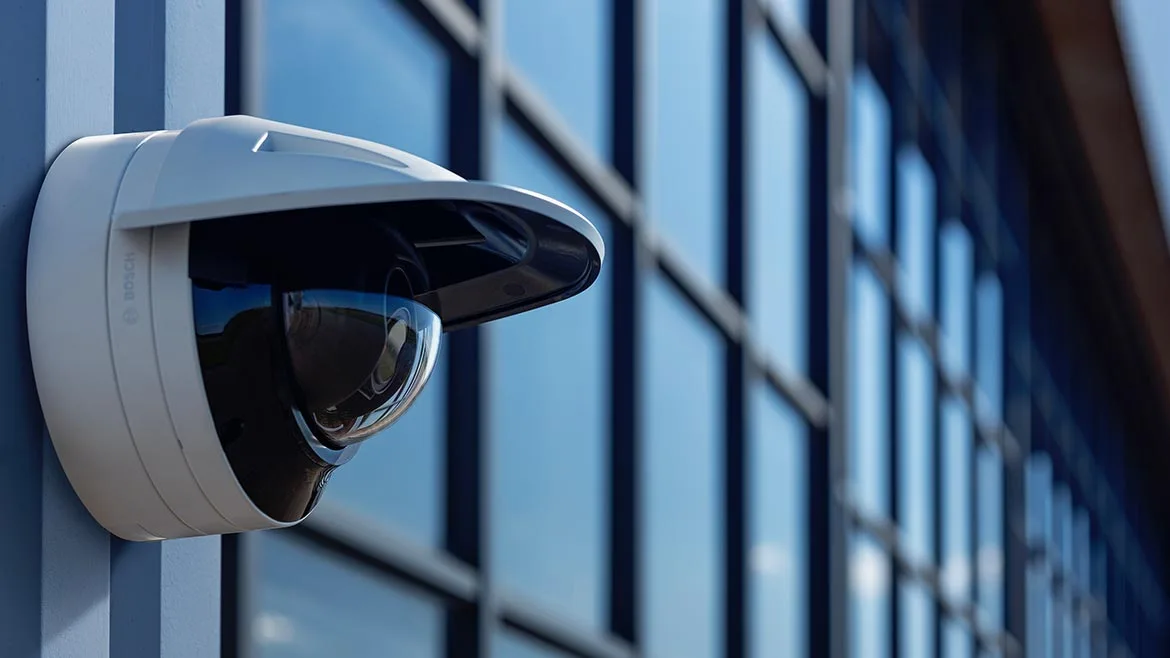
The importance of high-resolution cameras isn’t going away, but megapixel count is no longer leading purchasing decisions.
Agentic AI and large language models (LLMs) are changing the camera pixel game. The discussion of which camera to use in certain security applications once started with the question, “How many megapixels does this camera have?” Now, more common upfront questions from security integrators and dealers are, “Does this camera capture the information AI needs for this application?” and “How much useful data can this camera provide to AI systems?”
Historically, buyers equated higher megapixel counts with better performance because they provided maximum flexibility for post-forensic investigations. But, because of the proactive nature of AI solutions, there is much more to consider. “Today, image quality, camera placement, field-of-view and pixel density at the target are often more important than simply adding more pixels,” says Rui Barbosa, category manager for surveillance products, i-PRO Americas, Houston, Texas.
This evolution has reinforced the importance of capturing the right level of image detail for specific use cases. “The industry has long recognized that higher resolution can provide more useful information, but, as analytics become more common, organizations are placing greater emphasis on ensuring cameras capture the visual data needed for both human operators and AI,” says Steve Burdet, manager, solutions management, Axis Communications, Chelmsford, Mass. “That may be contributing to broader adoption of 5MP cameras over what was once a predominantly 2MP market.”
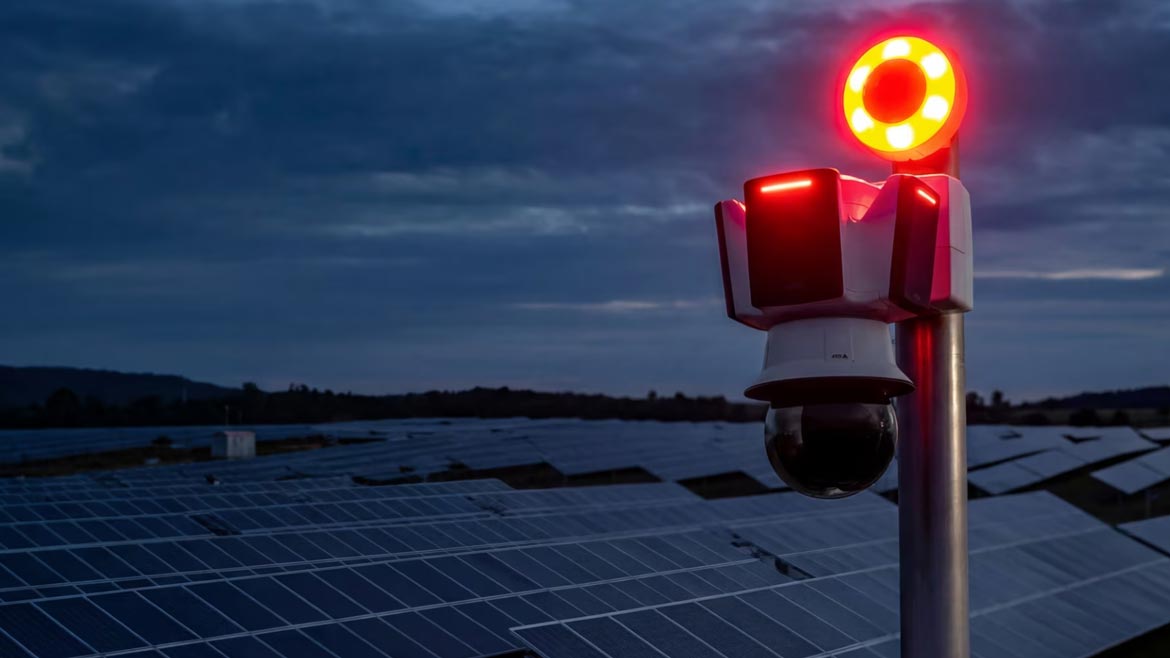
Another shift lies in what the camera is capturing — because it’s not just video footage. “The industry’s focus has shifted from simply capturing video to capturing meaningful data that AI can analyze accurately,” says Dave deLisser, vice president of product management, IDIS Americas, Coppell, Texas. “Early analytics were designed to detect basic motion or object presence, but today’s AI solutions are expected to classify people and vehicles, identify attributes, recognize behaviors, support forensic investigations and provide actionable intelligence in real time.”
Plus, deLisser adds, AI is only as good as the data it receives, and high-quality imaging remains the foundation of effective AI performance. “As large language models become more integrated into security workflows, they will increasingly rely on rich metadata generated by AI analytics,” he says. “That makes accurate image capture even more critical because better images produce better metadata, better search results and, ultimately, better operational decisions.”
AI-driven applications such as object classification, behavioral analysis, people counting, vehicle identification and forensic search all benefit from having more pixels on target. That said, resolution is only one part of the equation. “Sensor quality, low-light performance, dynamic range, lens quality and edge AI processing often matter as much as megapixel count,” says Jennifer Hackenburg, product marketing director, Luminys Technology Solutions, Irvine, Calif. “Understanding this broader context is essential for making informed decisions when selecting video technology for security applications.”
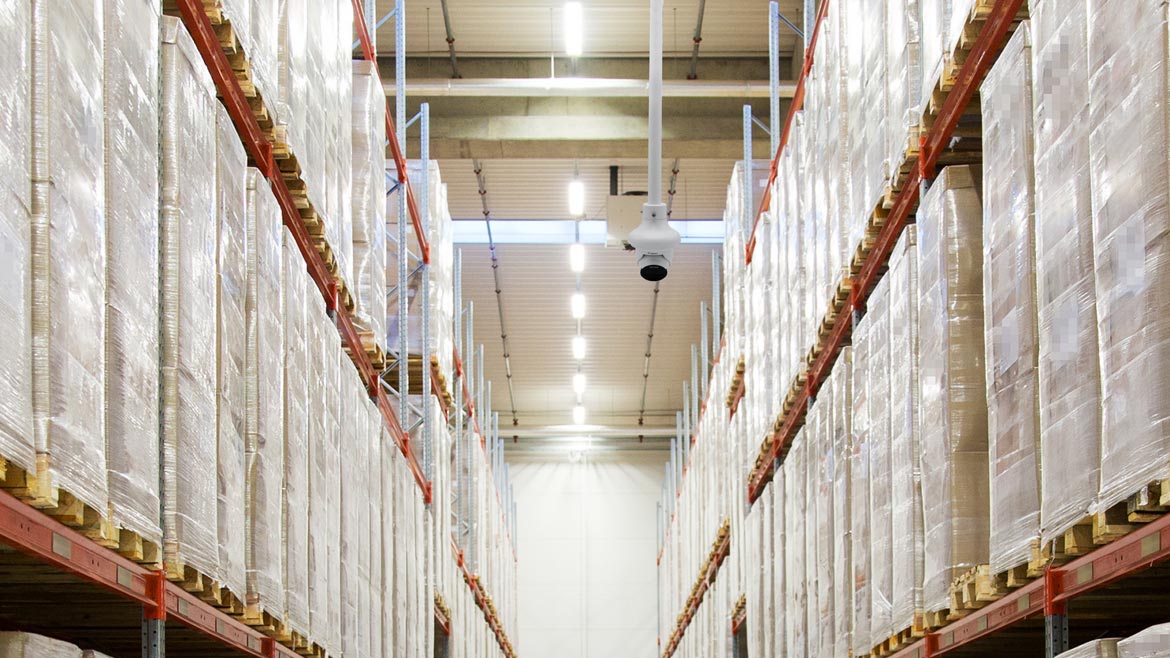
Experts anticipate image resolution and AI capabilities will continue evolving together. “AI systems will evolve toward more advanced reasoning and multimodal analysis, and, as a result, high‑resolution imagery will remain essential,” says Mark Nolan of Hanwha. “Richer pixels produce richer metadata, and richer metadata is what future AI, including any LLM‑enhanced workflows, will require.”
Overall success will depend less on megapixel count alone and more on how effectively cameras generate useful data for AI applications. “Future advancements will likely focus on better AI models trained on surveillance-specific data, edge AI processing directly within cameras, scene-aware image optimization, intelligent bandwidth management and multimodal AI that combines video, audio, access control, sensors and metadata,” says Jennifer Hackenburg of Luminys Technology Solutions. “Organizations will move toward deploying the right camera for each use case, rather than the highest-resolution camera everywhere.”
Over the next few years, Chris Cataldo of Speco Technologies expects 8MP cameras to continue gaining market share. “We’re also beginning to see the impact of LLM technology on the recorder and VMS side of the industry,” he adds. “These technologies will help power advanced smart search capabilities, allowing users to find critical events more quickly and spend less time manually reviewing footage.”
When Megapixels Matter
Advanced AI applications cannot perform well if the image quality at the point of capture is poor. AI excels at enhancing video and improving its usefulness, but it cannot recover information that was never captured in the first place. “Features such as object detection, attribute extraction, ANPR and BestShot rely on fine visual details that cannot be recovered if the source image lacks clarity,” says Mark Nolan, vice president of sales, South Central and national pre-sales engineering, Hanwha Vision America, Teaneck, N.J.
Looking for quick answers on security topics? Try Ask SDM, our new smart AI search tool. Ask SDM →
Detecting faces, clothing colors, vehicle types and license plate characters are all tasks that degrade immensely when resolution or sharpness drops. “This is why strong imaging fundamentals, such as true day/night, true WDR, large aperture lenses and advanced sensor designs remain important even as AI capabilities continue to improve,” Hackenburg says.
Thus, the megapixel cameras chosen for sites that require such capabilities should be able to deliver high quality images in all conditions — dynamic lighting, low-light and demanding operational scenarios, says Matthew Cirnigliaro, head of product marketing – North America, IQSIGHT, Fairport, N.Y.
“Any application where a high level of detail is required will benefit from higher-resolution images,” says Chris Cataldo, product manager, IP video, Speco Technologies, Amityville, N.Y. “Applications such as facial recognition, license plate recognition, vehicle detection and text recognition all perform better when analytics have access to more visual data.”
Other examples include business intelligence analytics, forensic search and post-event investigations, crowd analysis and people counting, perimeter protection across large areas, multi-camera tracking and trajectory analysis, retail analytics and loss prevention, object classification and anomaly detection, intrusion detection and intelligent auto tracking. “These tasks depend on fine visual details and accurate pixel‑level interpretation,” Nolan says. “Deep‑learning models need sufficient pixel detail to accurately classify and detect small objects, extract attributes and generate reliable metadata.”
Additionally, AI is frequently used in applications that extend beyond security, at which point a megapixel camera may perform better. “One example is retailers using computer vision to detect spills in aisles,” Cirnigliaro says. “In this case, a higher pixel density is required for accurate detection, so selecting a camera capable of 4K resolutions will yield more effective results.”
Ultimately, AI performance is often directly tied to image clarity and pixel density, both of which improve with higher resolution.
“The industry has long recognized that higher resolution can provide more useful information, but, as analytics become more common, organizations are placing greater emphasis on ensuring cameras capture the visual data needed for both human operators and AI.”
Key Takeaways
- AI shifts camera selection beyond just megapixel counts.
- Resolution remains important, but application requirements drive purchasing decisions.
- Better upfront imagery produces stronger analytics, metadata and investigative outcomes.
AI Changes Expectations
The use case for megapixel cameras is no longer just to capture more detail and record video for forensic use later. Now, megapixel cameras are expected to enable systems that can understand and act upon what they see. As AI continues to evolve, organizations will:
- Increasingly evaluate surveillance solutions as complete platforms rather than individual cameras. “Image quality, analytics, cybersecurity, regulatory compliance, ease of deployment, interoperability and lifecycle value will all play important roles in purchasing decisions,” deLisser says.
- Place greater emphasis on image quality, low-light performance and metadata generation. “These factors directly influence AI effectiveness,” Hackenburg says. “The most successful deployments will balance resolution, AI processing, storage and bandwidth requirements to maximize actionable intelligence.”
- Prioritize cameras that provide the detailed visual data needed to improve detection accuracy, event classification and investigative workflows. “These emerging technologies will play a pivotal role in refining IP camera analytic detection, especially when paired with professional central station monitoring services,” Cataldo says. “More accurate detections and fewer false notifications help operators spend less time sorting through events, improving response times and helping stop crime faster.”
Barbosa concludes, “Megapixel cameras will continue to be important, but future security systems will be evaluated less by their resolution specifications and more by the quality of the intelligence they produce.”
“The most successful deployments will balance resolution, AI processing, storage and bandwidth requirements to maximize actionable intelligence.”
Looking for a reprint of this article?
From high-res PDFs to custom plaques, order your copy today!