1-on-1 With a Winner: Shari Wilson, 2025 Monitoring Center Manager of the Year
SDM spoke with the 2025 TMA Monitoring Center Manager of the Year, Shari Wilson of ADT, who shared what aspects of monitoring keep her in the industry, how she shows her commitment to and appreciation for her team, and what she does to stay ahead of industry trends.
SDM sat down with the 2025 TMA Monitoring Center Manager of the Year, Shari Wilson, who earned this designation through the TMA Excellence Awards, sponsored by SDM. With over 42 years of experience in the industry, Wilson shares how a purpose-driven approach has shaped her career, why she still describes her work as “saving lives for a living,” and how that ethos influences everything from technology adoption to frontline operations.
SDM also spoke with Wilson about her deep commitment to her team, lessons learned from her involvement in navigating major acquisitions and developing a culture of transparency and accountability. Wilson offers a compelling view of the technologies set to reshape monitoring. Her message to industry leaders stands out: embrace innovation, engage teams early and never lose sight of the human connection at the heart of the work.
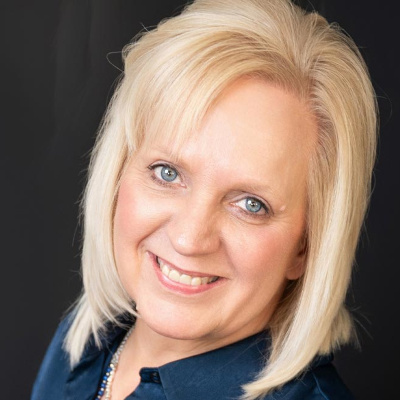
Please introduce yourself and tell us about your role at ADT.
I’m Shari Wilson, director of monitoring at ADT. I oversee all of the monitoring operations at ADT, which includes our emergency dispatch team, our health monitoring team, our bilingual monitoring team, and our mobile security team called ‘Safe by ADT.’ As far as my role, I save lives for a living. I think that’s the biggest thing that I do and have a passion for and am honored to lead the team that does this day in and day out and with excellence every day. My primary role is to make sure we’re delivering best-in-class service and that we are maintaining compliance and then continuously improving to keep our customers safe. That’s what we’re here to do.
How did you get involved in the monitoring industry, and what about the industry has kept you on this career path?
I started in the industry … 42 and a half years ago. I was a 911 operator when I initially was drawn to the industry and had moved to Wichita, Kansas, another city, and was looking for a job. I saw the posting about this particular position, and so I started with a local company called Multimedia Security. The day I started, they were super excited. They doubled in size, and they were up to 700 customers and were having a big cookout. That’s where I initially started.
Multimedia Security came about as a local cable company, Multimedia Cable Vision, had decided to get into the security business, which is what many cable companies were doing at the time. When I first started, there were not any computers, so when you received an alarm, there would be a receiver sitting on your desk, and a little ticker tape would come out with the account number and the zone number, and you would look it up in a book, and that would have all your customer information, and you would use a time clock to document every action that you took. That’s how we worked alarms 42 years ago. Of course, technology has changed, and computers eventually came around. Of course, in 42 years, a lot has happened.
From day one, I was just really drawn to the purpose of our work. We have a noble purpose in helping people when it matters most. Over the years, I’ve stayed because my job is always challenging. It’s always changing. I’ve been lucky enough to be a part of helping with some large acquisitions and integrating operations together, and, of course, implementing industry standards as those standards have changed throughout the year. I think my biggest passion is mentoring and developing people in this life-saving profession. That’s what keeps me here day in and day out is I feel like I make a difference every day.
What would you say so far has been the biggest challenge in your career? And how did you handle it? And, from that experience, what are some “lessons learned” that you would share with other leaders?
I think some of the biggest challenges, being in the industry as long as I have, the companies I work for were growing through acquisitions. Managing through those acquisitions and integrations has been probably some of the biggest challenges as we bring different companies together, different cultures, different systems. Everyone has a different process and thinks it’s the right one. It really was important for me to be adaptable and have good communication throughout those processes.
Looking for quick answers on security topics? Try Ask SDM, our new smart AI search tool. Ask SDM →
The lesson I think I learned was that transparency is key, and being empathetic is key. People need to feel that they’re informed and they’re valued as you’re going through those changes. When you’re not informing and you’re not being transparent, then it does cause them to feel unsettled. Leadership is really about trust. It’s not only about strategy, but it’s also about trust. I feel like that was probably some of my biggest “lessons learned.”
Something that stuck out so prominently in reading your nomination and even in your responses just now is your very deep commitment to your team. Let’s dive into this topic and start with the hiring process. What qualities do you look for and value the most when you’re hiring new employees, and why is that?
The monitoring role has changed over the years. When we first started, really you followed step one, step two, step three, and then you cleared the alarm and you did the same thing on the next one. The role has really changed, so really looking for team members who are clear communicators, they have that customer first mindset, they’re going to do everything they can to take care of that customer. They also have to stay very calm under pressure, and I think the biggest change has been really looking for those critical thinkers because a lot of information is coming at our operators every day, and they have to use that information to make a decision on what the next best course of action is. That’s where the job has really changed, instead of just a very standard process. Really, now they’re making judgment calls based upon what they hear or what they see on a video.
What is the extent of your involvement in training new operators, and how do you determine when they’re able to be on their own?
I’m deeply involved and work very closely with our training team on strategy and content, so I help with reviewing curriculum and helping to sign off on that. One of the big initiatives that I led and am very proud of is our resiliency training for mental wellness. As the job role has changed, we saw the need for some type of resiliency training for our agents. It’s one thing when you hear a customer tell you what happened; it’s totally different when you hear or see it yourself. So we wanted to make sure that we help them with that self-care and their mental wellness. We did work with our emergency communications partners and developed resiliency training. It’s a three-module training for our operators, and we talk about it as part of our monthly performance reviews. What are they doing for self-care? Making sure that they’re making that a priority, because it’s a priority for us as well.
As far as training, we don’t just train for compliance. We also train for confidence. When operators feel like they’re ready and that they can demonstrate accuracy and they know what they’re doing, then they’re going to assist our customers so much better than when they’re feeling unsure. We really want them to feel confident in what they’re doing and understanding our processes and procedures. Once we feel like they’ve got all of that together, then they’re ready to graduate and begin assisting our customers.
You’re responsible for a lot of specialized teams. How do you balance the responsibility of multiple teams and ensure that each one is operating effectively?
Yeah, it is a large team, but it works very well together. We have a lot of structure and a lot of communication. We do daily stand-ups at the beginning of each shift, talking about the day before, what are our opportunities and then what’s the day and plan for the day ahead. Everyone understands what we’re going after, what our key performance indicators are. We just have strong alignment across all the leaders, regardless of what group they’re a part of.
It’s really about keeping the teams focused, keeping them informed, and making sure that they know what the game plan for the day is. Each team has its unique needs. But the common thread, I would say, is we are a group of strong accountability, but also strong collaboration. I just really feel like the team works cohesively together. If one area needs help, we’ve got a team of people who can assist in that area as well. They just really have strong situational awareness and take the actions that are needed to make sure our customers are always kept safe.
You are deeply committed to the development of your people. Can you speak a bit about the initiatives you’re involved in and share why you think feedback opportunities and team-building exercises are so important for ADT and for the monitoring industry as a whole?
Our customer experience workshops, we take our outlier agents on customer experience based upon customer surveys, and we invite them to a workshop. It’s a three-week workshop where we share calls and have a lot of discussion about what went well, where was the opportunity on the call. By the third meeting, they’re bringing their own calls that they feel like they have opportunity on, and they share with their peers, and there’s a lot of discussion and growth surrounding that. We’ve seen a lot of value in just that sharing of that experience.
Our leaders, including myself, we consistently do skip-level meetings as well so that we have an opportunity to hear from our frontline operators — what’s going well and what’s not going so well.
Our leadership book club, we started a few years ago. Different leaders attend at different times, but the group comes together and has such great discussion. That’s one of my favorite meetings are the book clubs. You really see people really sharing and really growing together.
All of these are designed to create engagement and growth from our frontline operators and through our leaders as well. We are building our future leaders of ADT, so we want to make sure that we have programs in place to help them in their personal and professional growth as well. In monitoring, the work can be intense at times. We really want people to feel that they’re connected and they’re valued and just that these sessions really help for them to have that connection point.
You’re also involved in a lot of business employee resource groups (BERGs). Can you speak to the importance as well of these specific groups and what you hope to accomplish or exemplify by being involved?
We actually have quite a few business employee resource groups here at ADT. Those are three that I’m involved in, but there are many more as well, and I do try to attend their sessions when I can.
As a female leader in ADT, I do feel it’s important to be a part of the women’s group and help with developing and supporting the other women at ADT. We do have a lot of men that attend as well, so it’s not just for women. The mental wellness group is, you do see the monitoring team joins this one quite a bit, which is understandable in the roles that they hold and the things they might experience. Very active group. They have different guest speakers at times. They also do meditations every week. Everyone gets an opportunity to work through that. And then sustainability is really a lot about our community. We go out and we do cleanups around our communities and try to figure out what are ways that we can help with our environment and sustainability?
All of those are things that interest me and I’m passionate about. Those are the three that I’ve decided to be a part of, but there are many others that are just as. I do feel like the most important outcome we’ve seen through our BERGs is the feeling of inclusion that our employees have. They’re able to attend and be with other people who have similar interests and share their experiences. I do try to stay as involved as I can and lead by example to show that diversity is important to us and mental health really matters here. I do feel like this has helped with our retention and with morale, and we constantly are encouraging people to participate in a BERG, go check one out. I’ll go with you. Because once they go to one, they want to go again. Every employee is given time off the phones to attend their BERG meetings so that they have that opportunity to be a part of it.
One issue impacting the monitoring industry are missed signals. You handle these with lessons learned and corrective measures implemented to prevent recurrence. What does that process look like?
We are a technology company, so we do use advanced technology to flag missed signals, and then we have some internal protocols that we use for customer outreach and documentation. I think most importantly is we use these as learning opportunities, and there’s a complete root cause analysis anytime there is a missed signal, and then we implement corrective measures. Some of the times, that may be a system change or a system upgrade. It could be some type of targeted training, depending on what the situation was. It’s really all about learning and improving, not just fixing the problem of going on, but let’s continue to be better and make ourselves better. That’s really, I think, the most critical part of it is making sure that we get to the root cause, we solve for it, so that it doesn’t happen again.
Something else you take the lead on is the rollout of major developments for your team. How do you get your team onboarded with new technologies and opportunities? And what advice would you give to other leaders and managers who are in charge of similar processes?
Change can be really intimidating or unsettling for some people. Some people, it’s energizing; for other people, not so much. What we have done is start with pilot programs. We have a specialty team that we typically run any new programs through. We gather feedback and lessons learned from them so when we roll out to the larger group, then we have a better training curriculum or whatever it is that needed to be changed.
I think, most importantly, is make sure people understand the benefits behind the change or the “why” behind the change; otherwise, it is sometimes very scary for some people. AVS-01 is a great example. We’re a large group, and there was a lot of training that needed to happen in order to get that implemented within our team. We used very structured rollouts and then we did reinforcement training. We continue to do reinforcement training. It’s a part of team We share different scenarios and we have discussions surrounding “how would you score this?” We audit and listen to make sure that the appropriate scripting is followed.
My advice, I guess, for others would be to involve your team as early as you can. Figure out who those key people are that really are the voice for their teams. And then explain the “why.” Celebrate little milestones. Sometimes it’s easy to forget to do that, you’re on to the next project and put that one behind. Celebrate those milestones along the way. I do feel like adoption is a lot easier when people are part of the process. As early as you can, have them in testing, gather their feedback, gather their insight, and you’ll see people embrace the change.
How do you keep up with and even stay ahead of some industry trends? And what are some current or upcoming trends that you believe will have the biggest impact on the monitoring industry in the near future?
We are moving at warp speed right now, so it’s a little bit hard … but I do try to stay engaged with TMA and other industry partners. I’m always exploring, especially right now — as everybody else — AI and any enhanced verification tools that will help our monitoring jobs or make them easier or could improve the customer experience. We’re really trying to take a look at it with our customer experience being our North Star all the time. … ADT is a large, so we always want to make sure that we’re implementing that and applying that as a leader in the industry.
ASAP to PSAP integration is another big one for us. The time savings when you can electronically dispatch is amazing, the accuracy. The more agencies that we’re able to do that with just really helps our operations. And then mobile safety is really continuing to shape our industry. We do some really cool things in that arena and are really excited to what the future looks like there as well as we continue down that roadmap.
When you ask about the biggest impact, I do think it’s going to come from more automation probably and then AI-driven decision support. That will ultimately improve our accuracy and speed as information is presented for an agent in an easy, understandable fashion.
As a final wrap-up question here, is there anything else — from your commitment to your team, what you see ahead, to closing advice for other managers — that you would like to share with our listeners?
Monitoring has always been a part of my career. I have led other teams, as well, and customer service teams and provisioning teams throughout my years with the company. But I do feel like monitoring is more than a job. It’s really a calling, and that’s why you see a lot of tenure, a lot of times, in this role, because people really feel like what they do matters, and they see how it matters when you’re protecting people and the things they care about.
I would say, as far as advice for other managers, would be invest in your people. You’re building your future leaders. Embrace technology. That’s moving fast right now. Do everything you can. Be a sponge. Seek out information. Be curious. But through all that, just never lose sight of the customer and make sure that your customer is always your North Star there.
I do feel like the future of monitoring will be shaped by innovation and then the human connection working hand-in-hand. There is still a place for that human connection, and customers put a lot of value on that. The company that can put those two together will be the company that stands out in the future.
Looking for a reprint of this article?
From high-res PDFs to custom plaques, order your copy today!