Understanding Unified Systems
Understanding what is — and is not — a true unified platform can create competitive advantages when selling, installing and supporting one.

One potential application for unified systems is to incorporate visitor management, access control, video and other systems into a single, comprehensive solution that can increase security and improve efficiencies across the board. PHOTO COURTESY OF AMAG TECHNOLOGY
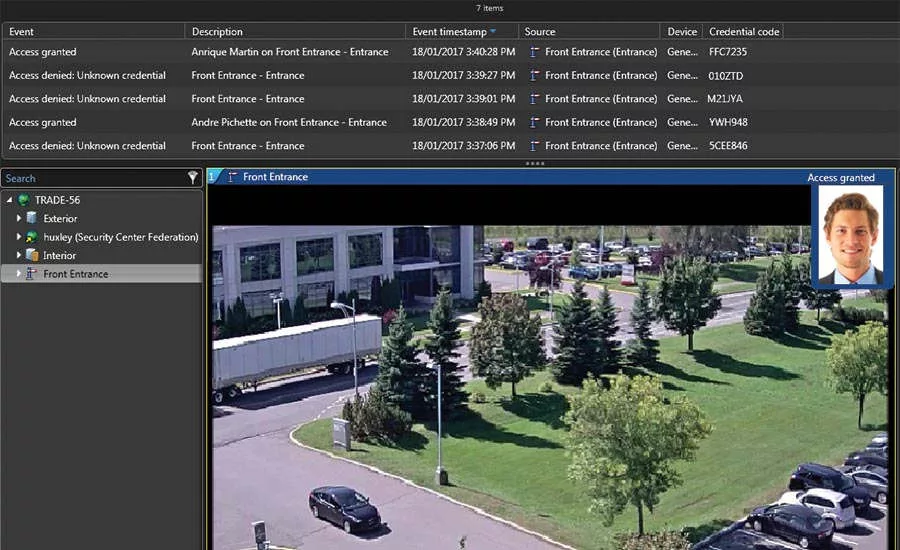
The main benefit of a truly unified system is the consolidation of security applications into a single interface, which enables a clear, consistent approach across the entire security environment. PHOTO COURTESY OF GENETEC
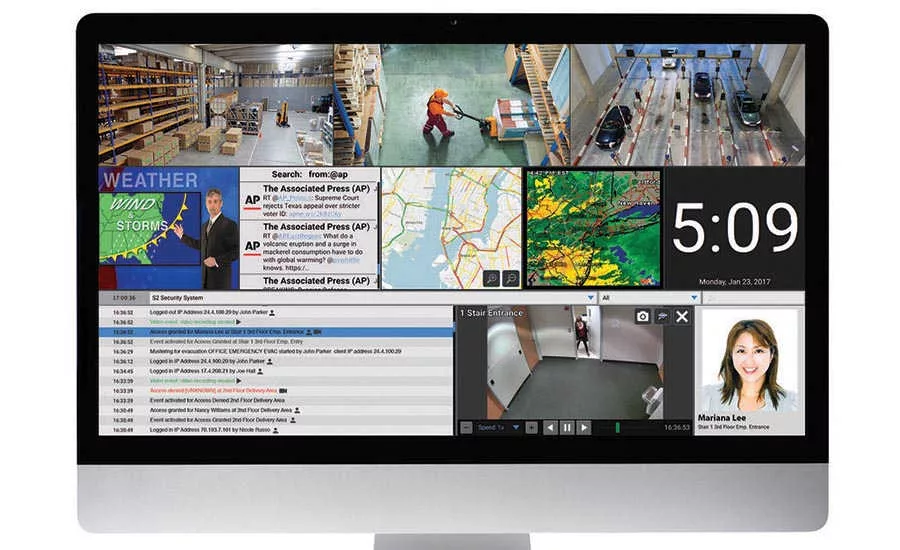
Looking ahead, unified platform vendors will continue working to improve the user experience and strengthen the connections between systems to more easily collect, compile and analyze the valuable data each system generates. PHOTO COURTESY OF S2 SECURITY
As integrated systems become more common in security, one of the more recent buzzwords gaining traction in the industry is “unified systems.” There is a general understanding that this has something to do with systems that work together well, but first things first: What, exactly, is a unified system?
According to Jimmy Palatsoukas, director of product marketing at Montreal-based Genetec, the term refers to a single platform that manages a variety of security devices, including cameras, door controllers and readers, intercom devices and intrusion panels.
“This means that there is an actual server-based architecture that is multi-purpose,” he says. “The ‘core’ unified platform provides 70 to 80 percent of the core capabilities that are common across security systems — cybersecurity, alarm management, user management, LDAP connectivity, multi-site management, reporting and so on.”
From an operator standpoint, Palatsoukas adds, a unified system offers a single client application for monitoring, managing alarms, running reports and audit trails, for example, for all embedded security systems — simplifying each of these processes and more.
“With a unified system, operators no longer need to jump between security apps to respond to a situation or monitor doors and cameras,” he says. “Everything is consolidated, and operators benefit from a consistent and clear approach across security activities.”
In a unified environment, each system, regardless of vendor, is no longer viewed as a standalone solution, but rather a seamlessly integrated part of the whole.
“Unified systems provide a user experience in which individual security applications such as access control and video completely interoperate to the point that they are not distinguishable,” says John L. Moss, CEO, S2 Security, Framingham, Mass. “These systems are more powerful, productive and scalable than the independent applications.”
Looking for quick answers on security topics? Try Ask SDM, our new smart AI search tool. Ask SDM →
Now that the definition of unified systems is out of the way, what factors are important for security integrators to know when it comes to selling, installing and supporting these systems?
With regard to installing, the primary point is for integrators to understand whether or not the solution they’re deploying is actually a unified platform in the first place. This can be — and often is — a source of some confusion for many, including vendors.
“If an integrator is working with different software vendors for ACS (access control system) and video for example, it is not unified,” Palatsoukas says. “If they are deploying a third client application to ‘unify’ ACS and video, then it is not unified — it is integrated. And if the products they are deploying are marketed by a single company but were developed by multiple sub-companies, then they are still working with independent solutions and it is not a single unified platform.
“(In these situations), enabling new embedded systems — such as activating ACS on a video-only unified platform — becomes a simple exercise of updating the software license,” he adds. “A true unified platform, on the other hand, supports multi-site monitoring, centralized alarm management and global reporting for all embedded systems.”
In terms of the “nuts and bolts” of installation, the process is generally no different with a unified system than deploying separate systems and devices. The difference, Moss says, lies in the configuration.
“Because more intimate relationships exist between the data in different applications, the configuration of the unified system has to specify those relationships,” he says. “For example, the definition of an access control point in the unified system includes the specification of the cameras that can see that access point. Access control can be automatically encoded as video metadata so that you can ask for video of a specific person over time or see all the people who have gone through a given opening within a particular timeframe.”
Following installation, the next phase of a project is support, which is another key difference between unified and non-unified systems. This is yet another way for integrators to know whether they’re deploying a true unified solution, Palatsoukas says.
“If once they deploy a multi-purpose platform and they are apprehensive about upgrading one system, such as the VMS only, or if they upgrade and it breaks compatibility, then that is another clear sign it is not unified,” he says. “With a unified system, they can upgrade the platform or enable embedded modules at any time and compatibility is always preserved. In many ways, supporting unified systems is much less complex than separate systems.
“Support becomes easier because they are sending a single unified tech on-site for any maintenance; they are upgrading a single platform so updates are more efficient; they never worry about compatibility; and they can assess the health of the unified platform in less time because it is a single platform,” Palatsoukas adds. “When they need support from the software vendor, they call on a single unified platform vendor as opposed to multiple vendors for ACS, VMS, etc.”
With all this in mind, it’s finally time to address integrators’ sales processes for unified systems.
“For all these reasons, positioning a unified platform is much simpler for the integrator,” Palatsoukas explains. “They no longer have to position multiple software vendors, know the selling pitches for each, and engage in endless discussions about interoperability. They position and sell one platform that addresses a variety of security needs and outcomes.”
The unified model also provides ample opportunity for integrators to cross-sell solutions. For example, they might sell VMS as part of a unified platform first, then enable access control using a simple license change.
“This is important because end user needs and expected outcomes will change over time,” Palatsoukas says. “They will want to address a variety of other security needs or expand over time, and a true unified platform will offer them an unlimited source of opportunity.”
And, he adds, working with vendors to close deals is also simplified.
“When they need to involve a software vendor to win a project, they can rely on a single unified software vendor that presents a consistent, cohesive message,” Palatsoukas says.
Knowledge is the most important thing for integrators when it comes to selling, installing and supporting unified systems, says Jody Ross, vice president, global sales and business development for Torrance, Calif.-based AMAG Technology.
“Integrators must be well-versed in the unified technology they promote, including the differences between competing platforms and what features and benefits will best support their end user’s needs,” she says. “Understanding not only their customer’s security requirements, but also their business goals will assist them in delivering an end solution to mitigate risk, meet compliance and save money. When an integrator is able to link security goals with business goals, and deliver a unified system that helps their end user’s overall business, they will have a customer for life.”
THINKING AHEAD
The third important question for security integrators is where are unified systems today and what might the future hold?
Without question, Palatsoukas says, the market demand for unified platforms has been steadily increasing for more than a decade.
“Initially, vendors relied on integration of multiple independent security solutions,” he says. “That said, end users are increasingly aware of the limitations in this approach. Through education and due diligence, their demands for true unification are increasing.”
While it’s hard to predict exactly what vendors will do in the future, eventually, Palatsoukas says, those that want to remain viable will make a stronger push to deliver true unified systems.
“Few vendors today offer a true unified platform. Most rely on technology partners and vendors for other pieces of the puzzle but still label the solution — incorrectly — as unified,” Palatsoukas says.
Many vendors have gone down the route of adding video to their ACS solution, and vice versa, but because this has been primarily achieved through mergers or acquisitions (or OEM/private labeling), the end product is less than unified and suffers from the same chronic problems of integrated solutions (incompatibility issues, new client apps for unified monitoring or alarm management, doesn’t scale the same way for all security apps, and so on).
Much like today’s solutions, the unified systems of tomorrow will continue to address common issues often associated with integrated solutions: compatibility issues, new client apps for unified monitoring or alarm management, scalability differences between solutions, and others. Rather than rely on mergers and/or acquisitions to add solutions and systems to the mix, many vendors are at least exploring the possibility of offering products they’ve developed in-house.
“While one company can’t manufacture every aspect of a security system, the core technology delivered must be from a single platform,” Ross says. “We are seeing more companies develop products outside their main expertise to deliver unified solutions to end users. Customers prefer to utilize a single user interface and work with one company, rather than multiple companies, when issues arise or their needs change.”
No matter where the evolution of unified systems may go, Moss says data and more user-friendly interfaces will be key drivers of whatever changes occur in the space.“The future will provide richer user experiences that allow for deeper exploration of the data that these systems acquire,” Moss says. “Relationships between different objects or areas of a facility will be expanded. For example, this reader is adjacent to that reader, and this camera is on the other side of that door. User interfaces will be more graphical and intuitive to operate, incorporating relationships built in during configuration with the metadata generated during system operation.”
Common Efficiencies
Genetec’s Jimmy Palatsoukas says that regardless of the applications, devices and systems they comprise, all unified systems should deliver on a variety of efficiencies. These include:
-
deployment of a single platform as opposed to multiple platforms from different vendors;
-
training on a single platform as opposed to being trained on a variety of platforms by different vendors;
-
reduction in the number of servers as multiple security applications can reside on the same appliance;
-
achieving deployment and maintenance synergies;
-
operators no longer have to specialize for video or access control — they can become unified operators that are fully knowledgeable about multiple security applications given that they are working with the same user applications and workflows; and
-
integrators no longer need to send a tech on-site for video and another for ACS.
Looking for a reprint of this article?
From high-res PDFs to custom plaques, order your copy today!