ESA’s Research Center Is Designed to Help Security Dealers Grow Their Businesses

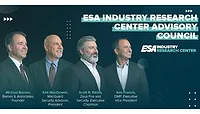
At the 2026 Electronic Security Expo, the Electronic Security Association (ESA) announced the launch of the ESA Industry Research Center, designed to give the security industry a new lens into performance, growth and what’s ahead.
ESA created the Research Center as “one of the last pieces of the puzzle” in its mission to serve its members. The Research Center is essentially “by members, for members,” in that it will utilize data from member companies to help those companies improve their businesses.
However, the Research Center will not be limited solely to ESA members; in fact, it’s a primary goal of the team to have non-members looking at and utilizing the research. “The idea is to collect data from sources as broadly as we can without getting too far outside of the core part of the market that ESA members belong to,” said Mike Barnes, founding partner, Barnes Associates Inc. “But it will certainly have relevance outside of ESA members as well. We’re trying to understand the contours of the whole industry.
“And I think ESA members want us to go broader than that,” he added. “They want to understand how big the ocean they’re swimming in is.”
The Research Center will deliver meaningful economic and industry insight to help integrators and dealers make smarter business decisions, including, but not limited to:
- Capital Spending: The nature of business is getting more sophisticated. “We’re trending towards larger companies, faster-growing companies, and you need to be making decisions months in advance of when you’re going to need the money,” Barnes said. “Then, you need to make sure you have the money to make big capital spending projects.”
- Sales and Marketing Initiatives: The core of the Research Center, the ESA Industry Performance Index (IPI), will indicate when there are strong headwinds, which are not ideal to sell into. “If the industry’s slowing down a little bit, taking a breath, which it does sometimes, you want to have as much indication that’s coming as far in advance as you can,” Barnes said.
- Pricing Models: From Zeus Fire and Security CEO Scott Elkin’s perspective, this is a key business decision that the IPI will help with. “We’ve got a number of different levers we can pull to make systems priced attractively for end users to continue to add value,” Elkins said. “A lot of our services are essential. By understanding if there are headwinds, we can determine how to best price those systems so we can be successful as operators and integrators, and so our customers can ultimately get the resources and tools they need.”
- AI: The AI component of the IPI is designed to determine how fast AI is advancing to help integrators keep up with evolutions. “You don’t want to be getting too far ahead of everybody, where you’re maybe plowing the deep snow for everybody else,” Barnes said. “But you also don’t want to lag too far behind. You have to stay competitive and up to speed.”
The Research Center is backed by the macroeconomic forecasting firm Beacon Economics and led by ESA Chief Economist Christopher Thornberg, a founding partner of Beacon Economics. Taylor Criddle, vice president of advocacy and public affairs, ESA, who spearheaded this initiative, came across Beacon Economics through its work with the California Chamber of Commerce, as well as other associations. “We wanted something that’s current, relevant, independent and objective, and they provide that,” Criddle said. “We had an opportunity to look at some of their work in tangential industries, and it spoke directly to what we’re looking for.”
It was important for ESA to launch a data-focused initiative because of where the industry is now and where it’s heading. “There’s been a significant maturation in the industry over the past 10 or 15 years,” Elkins said. “Mike has been providing tremendous reports and tremendous data to the industry, but even Mike would acknowledge it’s taken us, as dealers, a long time to adopt it because we’re a highly fragmented industry made up of about 15,000 family businesses. A lot of decisions over the course of any company’s history have been instinct and gut feeling, which have served a lot of companies really well in this industry. But you can’t go out and raise a lot of money for a company on the premise that ‘this is what’s going to happen’ if you can’t defend it.”
This is especially true now, as private equity continues to express interest in and enter the security space. “As we see more private equity in the industry, all of a sudden, gut instinct and feeling don’t matter,” Elkins said. “Data and results do. In order to get there, you’re going to need good data to support your decisions. That’s never been more important in this industry than it is today.”
Looking for quick answers on security topics? Try Ask SDM, our new smart AI search tool. Ask SDM →
The initiative is still in its early stages, which means there are many more developments ahead. Elkins even predicts that insights from the Research Center will inform future sessions at ESX, as the data will uncover timely headwinds that security companies are facing. “It’ll help inform what our members need to know and want to know, and then we can back it up with additional programming to help support them,” he said.
Ultimately, ESA is on a mission to help its members understand the industry to remain competitive and get ahead. “Good policy and good business decisions come from good information,” Criddle said. “That’s exactly what we’re trying to produce here.”
Barnes concluded, “If we can deliver value and help our members do better, the overall industry will do better.”
Looking for a reprint of this article?
From high-res PDFs to custom plaques, order your copy today!