Fire, Failure & Future Growth Take Center Stage at ESX 2026
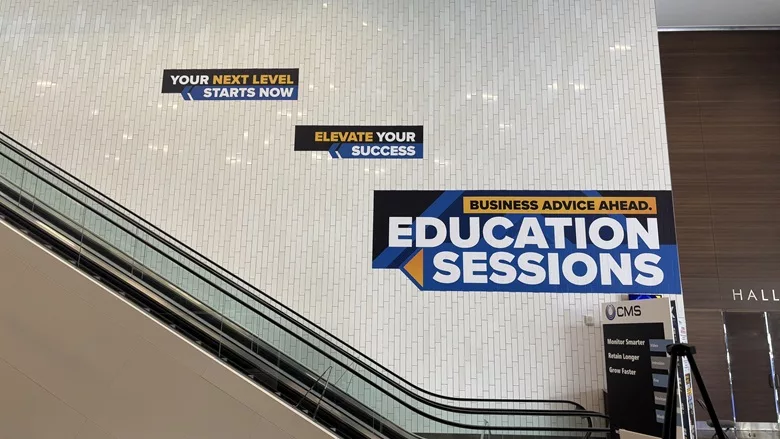
The shifting weather (from blazing heat to pouring rain) in Irving, Texas, reflected the events at this year’s Electronic Security Expo (ESX). Attendees laughed along with Daryl “Moose” Johnston as he talked about what it takes to be a great leader, cried along with George De Marco as he accepted the 2026 Weinstock Award, and opened themselves up to exchanging knowledge and obstacles in various areas of security.
It was my first ESX, so I had a lot to learn and talk about. Here, I recap some of the main events and talking points throughout the show.
Keeping Up & Getting Ahead in the Fire Market
The breakout sessions at ESX offered attendees a chance to “choose your own adventure.” There were clear themes across the sessions: AI, alarms, fire and marketing. In preparation for our State of the Market: Fire & Life Safety, coming up in September, I chose the fire route to learn more about evolving fire codes and diversification.
Moderated by Peter Goldring, president, Goldring Protection, “Code Red: Navigating the Latest Fire System Regulations” featured Gregory Breyer, vice president, design and compliance, Zeus Fire and Security; Mark Popkowski, president and CEO, Modern System Concepts Inc.; and Rick Reynolds, executive vice president, ORR Protection. The session focused on the latest National Fire Alarm and Signaling Code (NFPA) changes as new fire codes continue to reshape how dealers install and service systems.
Reynolds described NFPA 72 as a live document that adapts as technology continues to advance, which can be difficult to keep up with as a dealer. The most recent key changes to NFPA 72 revolve around a focus on documentation, ITM, digital records, expanded IP, cybersecurity, integrated testing and the reduction of nuisance alarms.
Another point the panelists made was the importance of good relationships with AHJs (authority having jurisdiction). Rather than seeing AHJs as obstacles, panelists argued that dealers should consider them to be partners in the fire market, since code interpretation can vary widely across jurisdictions. The panel suggested working closely with AHJs to coach and train them on new systems and technologies. Being involved in an AHJ group can also be beneficial. “And if there is no such group, make one,” Goldring said. “Take them out for bagels. Take them out for coffee. Go visit them at the fire station. Put a presentation on.”
Looking for quick answers on security topics? Try Ask SDM, our new smart AI search tool. Ask SDM →
For dealers who aren’t yet in the fire space and want to get there, the panel highlighted that the cost could be exorbitant. It requires a lot of training, licenses, costly equipment, etc.; but there are ample opportunities to go to market with neatly packaged solutions that are easy for end users to digest. The panel pointed out three key areas that are major opportunities in the fire space today: multifamily, data centers and emergency responder communication enhancement systems (ERCES).
Designed to improve in-building radio communications for first responders, ERCES deployments continue to expand as jurisdictions adopt and enforce requirements. “It’s been out there for a while, but it may not be enforced in your jurisdiction,” Breyer said. “This is a great opportunity to get ahead of something. . . . If you’re not working in the ERCES space, it’s time to get there.”
Additionally, the rapid expansion of data centers is creating substantial opportunities. However, the panel cautioned that these projects often require design-build expertise, advanced knowledge of fire protection systems and an understanding of unique environmental challenges such as high ambient noise levels from AI infrastructure, complex suppression requirements and outdoor support systems.
Joined by Daniel Morrin, supervisor, NECCO Security Co. Inc., Goldring and Breyer also hosted “In the Line of Fire: Smart Strategies for Diversification.” Breyer moderated the session on diversification in the fire space without moving into a new line of business too early or without the right foundation.
The first step to diversification is an internal audit. This could be a SWOT (strengths, weaknesses, opportunities and threats) analysis, a needs and risks assessment or the “lily pad approach,” which encompasses incremental progress and adaptability by taking small steps rather than a huge, sudden leap.
Next, the team needs to be ready before any moves are made. The panel presented a comprehensive list of “ducks to get in a row” before moving around the fire space: know your approach, make sure your compliance standards are up to date, obtain the proper certifications and qualifications, and ensure the right personnel (salespeople, technician and project managers) are in place.
Overall, the panel agreed that taking the first step is the hardest part. They offered a few strategies for this: hiring a subject matter expert, creating a coaching / mentorship program, obtaining the proper training and certifications, and leaning on other professionals in associations like ESA for advice.
Failing Forward for Great Leadership
Speaking of which, ESX was teeming with leaders who were not only ready to share their expertise, but to learn from each other. Scott Elkins, CEO, Zeus Fire and Security, hosted a leadership roundtable featuring Jack Doyle, president and CEO, Doyle Security Systems Inc., and dozens of leaders in the audience who were more than willing to be vulnerable and share their biggest mishaps.
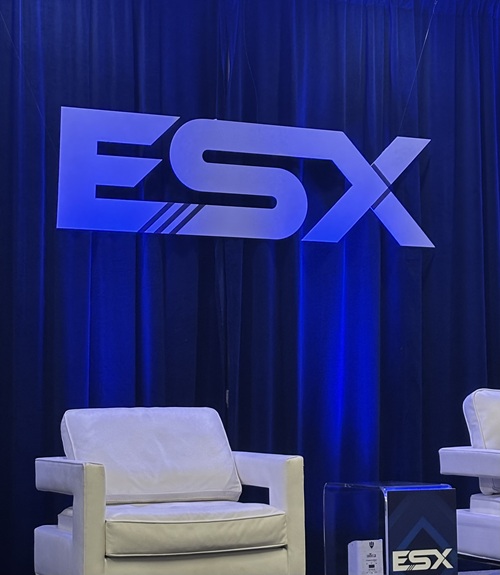 Elkins encouraged everyone to share the biggest failures they faced in their careers: “The customers who thought you’d never lose but did. The acquisitions that didn’t go according to plan. The employee you should have let go six months earlier. The opportunities you’ve missed. The strategies that look right on paper yet turned out to be wrong in practice. The moments that keep you awake at night because the outcomes matter and because people are counting on you.”
The session wasn’t solely a place to vent or confess to missteps; it was designed to emphasize that success is a poor teacher. “Success can reinforce habits that aren’t repeatable,” Elkins said. “Success can make us believe we’re smarter than we actually are. Success can hide weakness. Failure does none of those things. Failure is brutally honest. Failure provides immediate and direct feedback. Failure exposes gaps in our thinking, weaknesses in our systems and, sometimes, if we’re honest, weaknesses in ourselves. And while none of us seek it out, most of us become significantly better because of those failures.
“Leadership is not about avoiding every mistake,” he added. “Leadership is about learning faster than the challenges in front of you. It’s about adapting. It’s about becoming better because of what you’ve been through. And that’s what ‘fail forward’ is really about. … Real growth occurs in moments of challenge, in moments of failure, not moments of success.”
The session had one resounding takeaway: Every leader’s success story has failures, but the best leaders are the ones who aren’t afraid to admit when they failed and to learn from those mistakes.
Small Strategies to Win Big
Another big takeaway from ESX was that small successes are sometimes as important as large ones. This was exemplified by Defined Marketing President Janet Fenner’s session, “Leveling the Playing Field: Competing Online With National Brands,” featuring Kathy Sizemore, CEO, A-Bell Alarms; Marvin Smith, president, Orlando Emergency Signal; and Brian Page, director, data center solutions, Minuteman Security and Life Safety.
This session was designed for small dealers who may not be able to spend $100,000 or more on marketing every single year. However, Fenner said it often takes a customer seven or eight times seeing a brand/logo before they start to become familiar with it, on average, for customers to recognize a brand, and that takes place before the customer decides whether they want to work with the brand. Thus, keeping the brand name and logo out there is imperative for small dealers who want to compete against national brands.
The panel spent the hour sharing anecdotal strategies for marketing on a small scale that could have long-term impact:
- Logo Visibility: Smith’s son loves pizza, so he and his family frequent a local pizza shop. He noticed that the employees were constantly buying new pens because customers kept walking out with them. Smith decided to provide the shop with 500 branded pens so customers who walked away with them were now seeing the Orlando Emergency Signal logo. Smith also allowed his technicians to drive company vehicles even on their days off because he wanted those branded vehicles visible in the community. He instructed technicians to park in highly visible locations, such as end parking spaces near busy roads, so passing traffic could easily see the Orlando Emergency Signal logo. Every trip to a grocery store, drive-through, restaurant or jobsite became a branding opportunity that kept the company’s name in front of potential customers.
- Unique Social Posts: To increase local visibility, Orlando Emergency Signal created a recurring social media campaign called “Where’s Jerry Wednesday?” Every Wednesday, an employee named Jerry visited a local business that the company had secured and highlighted that business on social media. The posts tagged the featured business, which helped expose the company’s brand to the business’s audience as well. Smith described this as a form of “lumberjacking,” leveraging existing relationships to reach other companies’ customer bases.
- Local Government Involvement: Sizemore described how A-Bell Alarms became deeply involved in the local Chamber of Commerce instead of merely joining it. By consistently attending events, serving as an ambassador, winning local awards and becoming a visible participant, her company became the alarm provider everyone associated with the Chamber. Eventually, when the Chamber became dissatisfied with its existing security provider, her company donated security services and became the organization protecting the Chamber itself. Every visitor to the Chamber office now sees her company’s signage and branding.
- Event Visibility: Another tactic Smith recommended was intentionally placing company vehicles at community events, grand openings and ribbon cuttings, even when his company wasn’t directly involved. He cited examples such as grocery store openings, pet rescue events and National Night Out celebrations. He also intentionally positioned the trucks in prominent locations so they would appear in photographs, local media coverage and the view of everyone attending the event.
- Unique & Personalized Outreach: Near the end of the session, Fenner shared a memorable story about a salesperson who struggled to get a meeting with a prospect but eventually secured an appointment. After the meeting, he bought a single shoe from a discount store and mailed it to the prospect with a note saying, “Thanks for letting me get my foot in the door,” which seemed like a silly gesture, but it helped solidify the relationship. Audience members also shared anecdotal stories about personal outreach; they were able to increase customer retention by personally reaching out to customers to thank them for their business or, if they were close to exiting, ask them if there was anything the company could do to win their business back. In a world increasingly dominated by AI and automation, customers, especially those of smaller, local companies, appreciate the personal touch.
Across these examples, the speakers emphasized the same takeaway: small companies win by being visible, personal and memorable. National brands may have larger budgets, but local dealers can create stronger relationships by showing up in the community, using creative, low-cost marketing tactics, leveraging local partnerships and finding ways to keep their brand in front of customers every day.
Success Is Incremental
ESX 2026 demonstrated that success in the security industry is rarely driven by a single breakthrough. It also isn’t achieved alone. Navigating fire codes, embracing failure and implementing creative marketing strategies requires adaptability and collaboration. Dealers face many challenges in the security space every day, but these are most effectively overcome by learning from others, keeping a thumb on the pulse of the industry and being willing to take risks and make mistakes for the next step forward.
Looking for a reprint of this article?
From high-res PDFs to custom plaques, order your copy today!