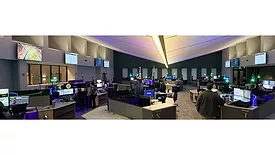
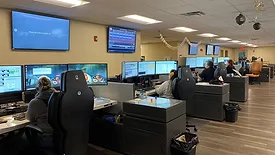
The integration eliminates the need for telecommunicators to manually answer and process thousands of alarm calls each year — reducing delays, improving accuracy and freeing staff to focus on higher-priority emergencies.
The first phase of the initiative deployed the solution through ASAP View, a web-based portal that reduced the city’s implementation timeline by roughly 50%.
The result is faster call processing, better-informed dispatch decisions and the elimination of transcription errors and miscommunication between ECC and alarm-monitoring center personnel.
In 2025, the ECC handled more than 12,000 alarm notifications. With the implementation of ASAP, the center is expected to save telecommunicators between 33 and 133 hours each month, time that can be redirected to higher-priority emergency calls.
By automating alarm data exchange through ASAP Service, HCSO expects to reduce repetitive and time-consuming interactions between alarm-monitoring companies and telecommunicators, freeing personnel to focus on higher-priority voice calls and helping offset staffing challenges experienced by ECCs nationwide.
Launched in 2011 as a public-private partnership, TMA’s ASAP service is designed to increase the accuracy and efficiency of calls for service from alarm monitoring centers to Emergency Communication Centers (ECCs).
The Buncombe County Public Safety Communications Center (BCPSC) became the 145th ECC in the United States and the 13th ECC in the state of North Carolina to implement the ASAP.