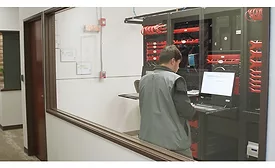
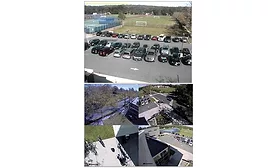
In 2018, host country Russia went to great extent to ensure that it provided the tightest security possible surrounding World Cup events; news reports at the time gave us a glimpse into some of the tactics and resources.
The 2018 World Cup required the involvement of a significant number of service providers and installers, complex integrations, and years of planning to provide physical security to the stadiums. Here’s a peek at a slice of that work.
The World Cup is one of the biggest international sporting events. Almost half of the world’s population tuned in to watch the month-long 2010 World Cup in South Africa, according to FIFA (Fédération Internationale de Football Association).
A recently released report from Parks Associates, “Smart Product Market Assessment: Networked Cameras,” estimates that 7.7 million standalone and all-in-one networked/IP cameras will be sold in the U.S. in 2018, with $889 million in associated revenues.
The highlights of Dahua Technology’s offerings at the recent Global Security Exchange (GSX) show included thermal imaging, the patented Enhanced Power over Ethernet (ePoE), ePoE cameras with new Night Color Technology, and intelligent solutions for key verticals.
Historically, storage has been a challenge for video system designers and installers, with requirements rising along with camera resolutions. The addition of big data, the Internet of Things (IoT), integrated systems and IT applications to the mix have multiplied storage needs exponentially.
Recently, some research and anecdotal evidence have suggested a decline in the use of pan-tilt-zoom (PTZ) cameras compared with fixed megapixel cameras, which seems on its face to make sense.
 RSS
RSS